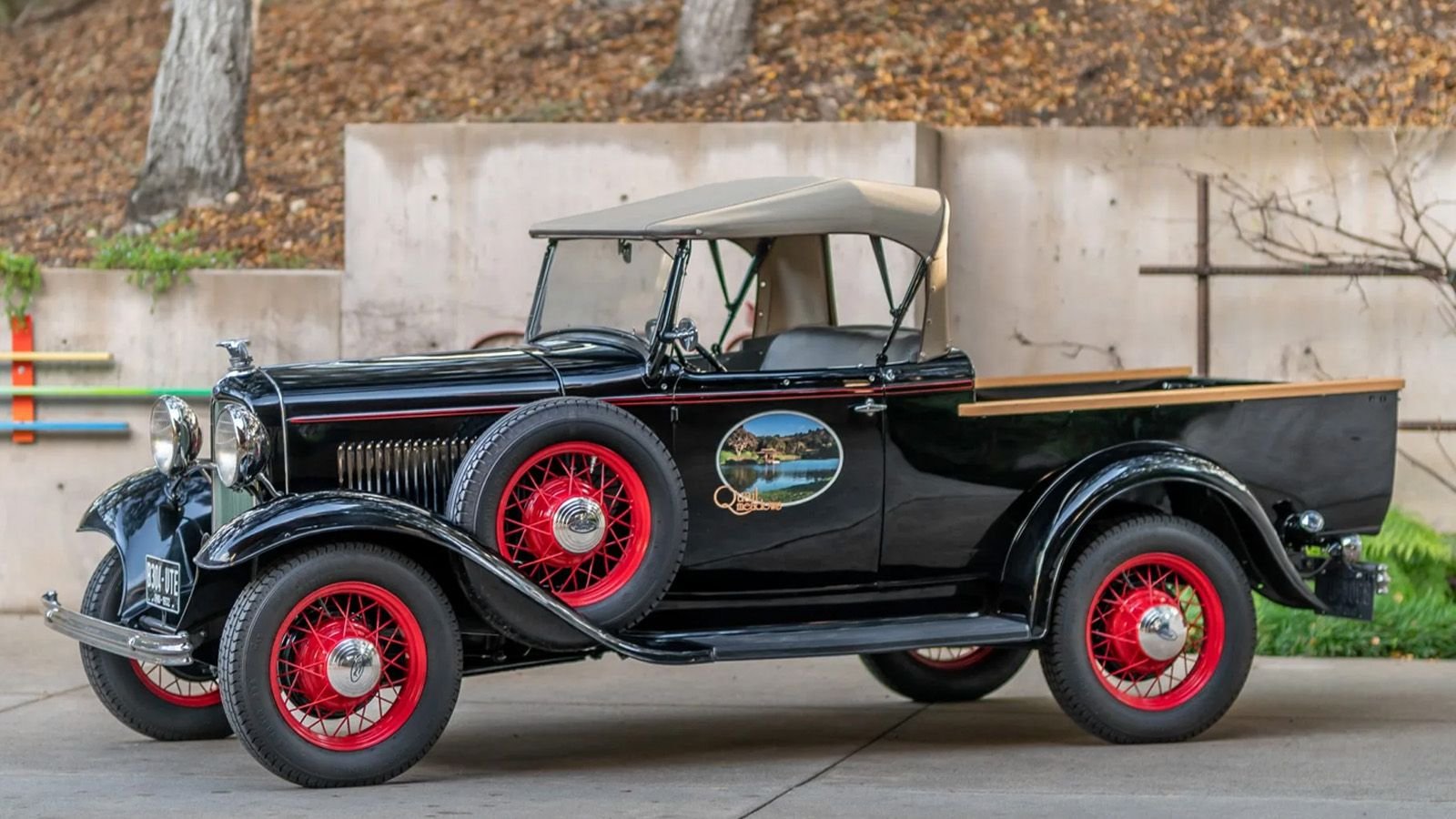
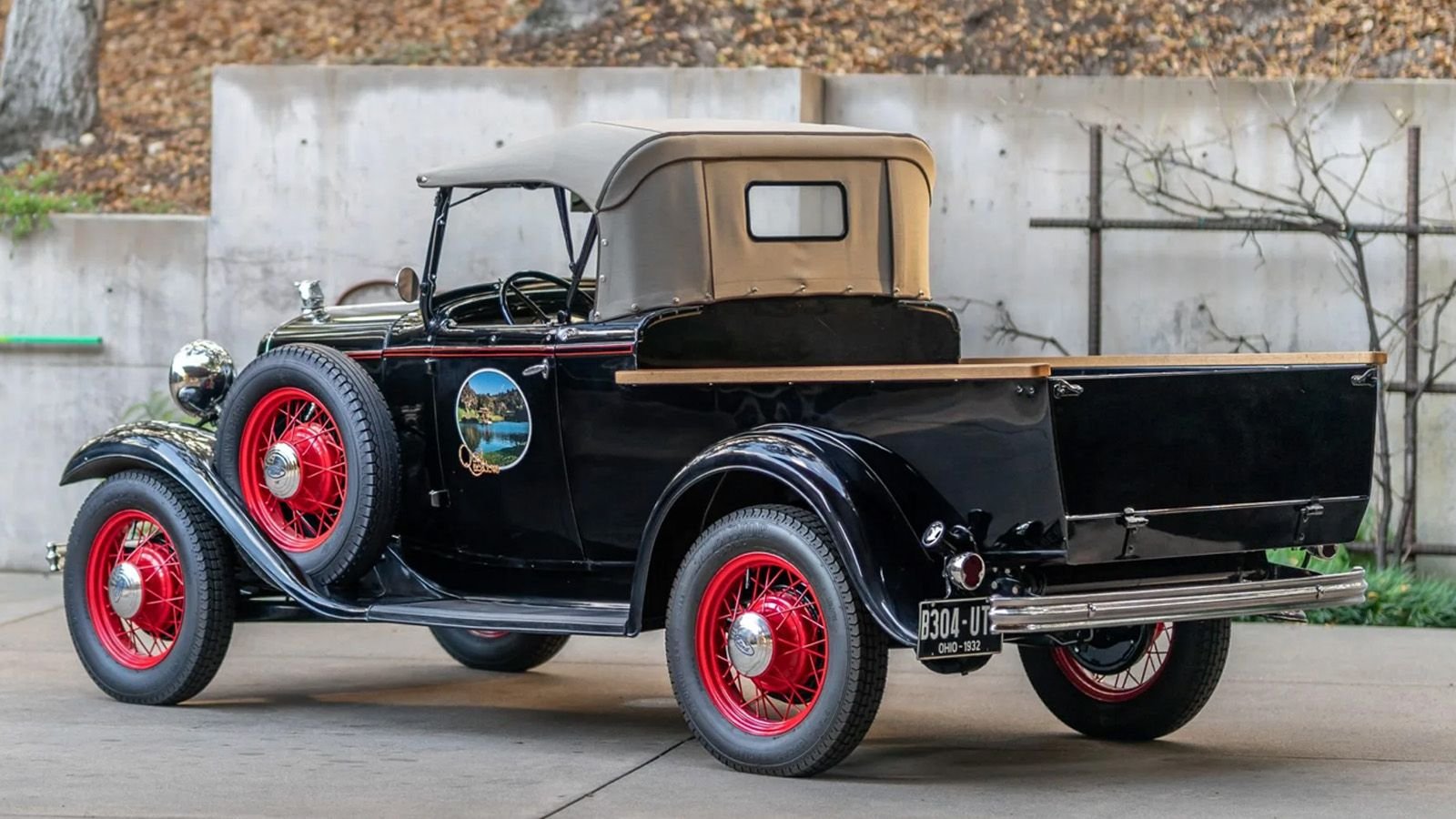
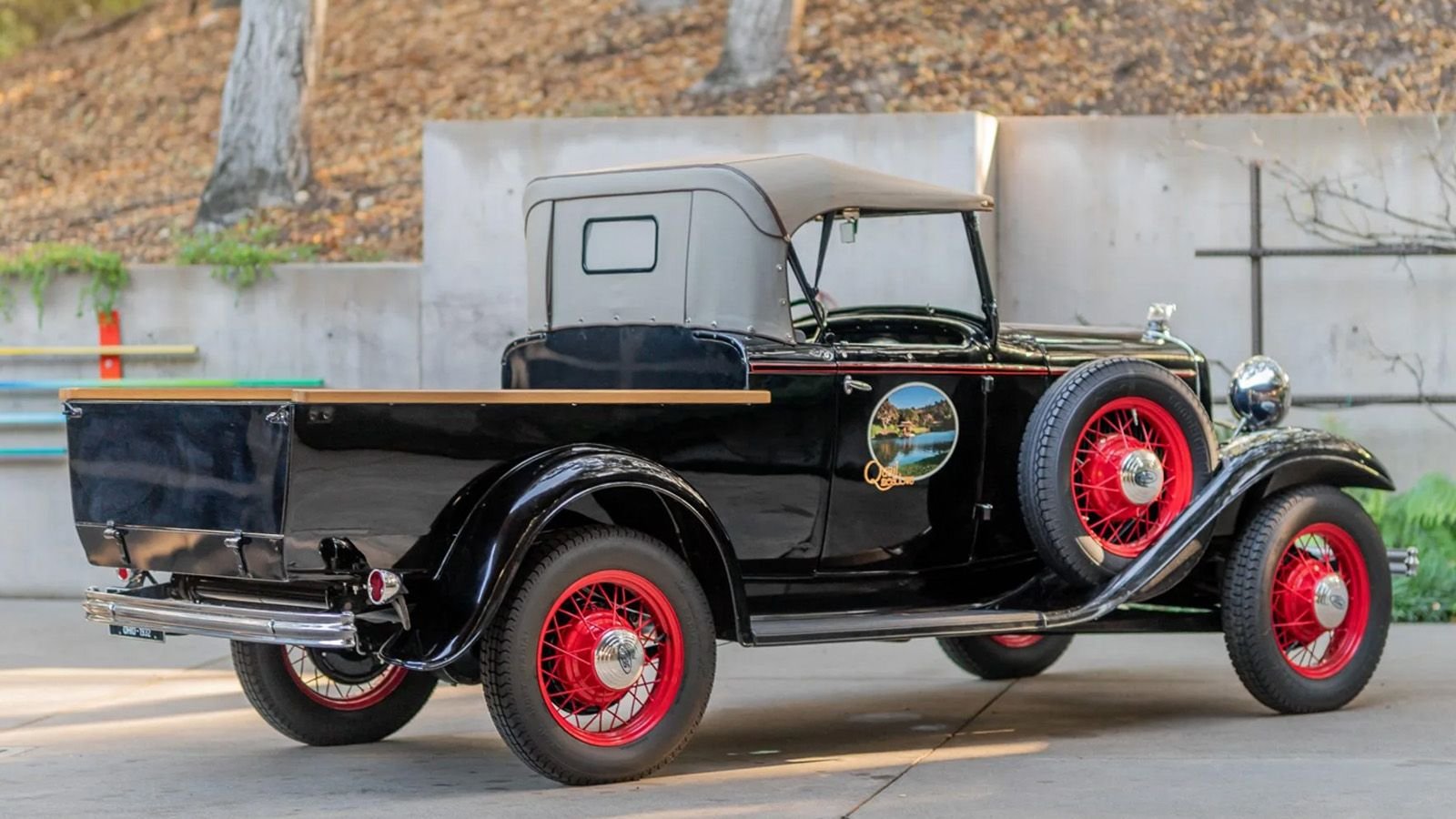
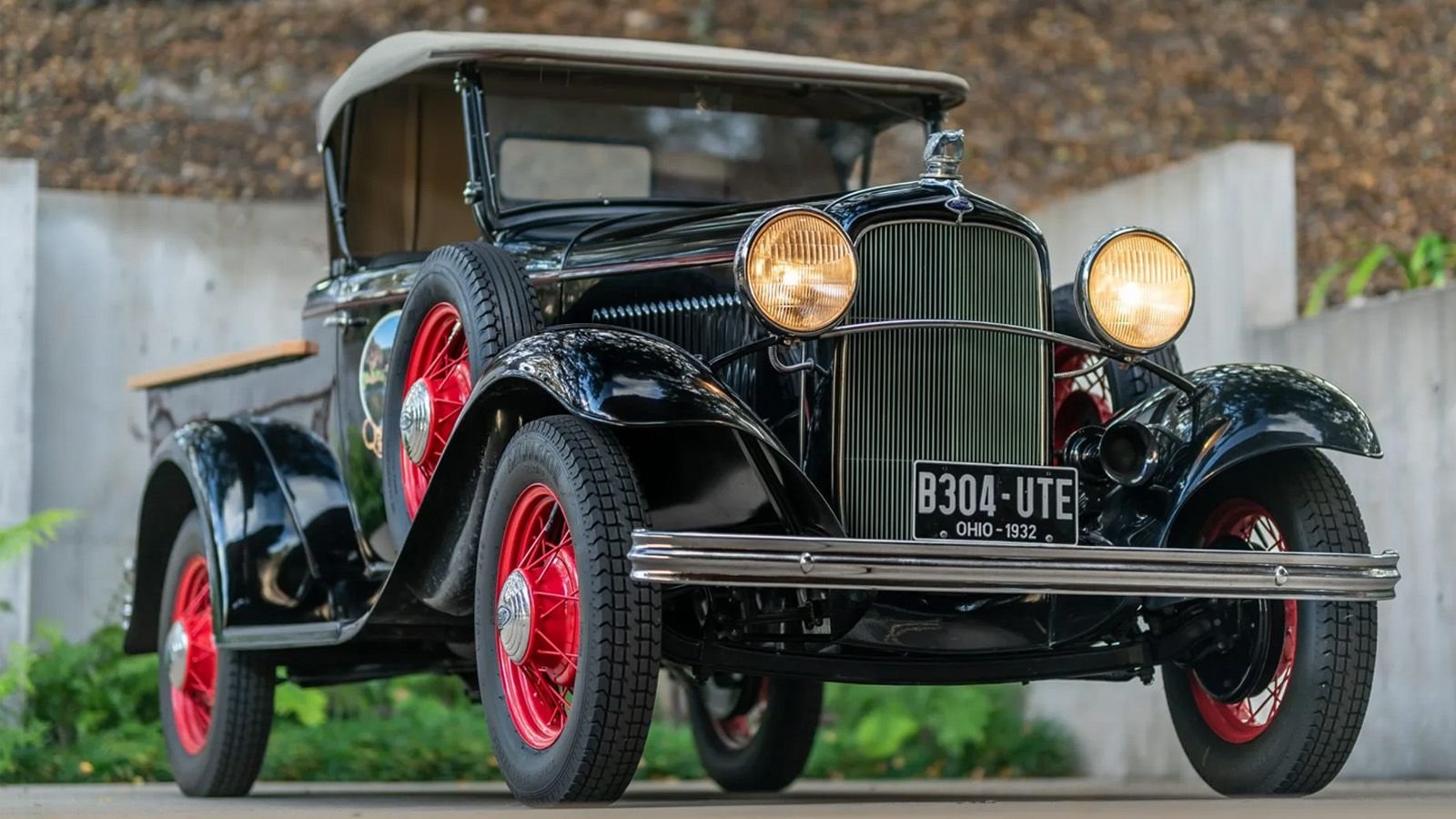
Australian Utility Car is the only surviving example in existence.
Iconic Standard
When young Ford Australia designer Lewis Bandt first unveiled his 'coupe utility' prototype, Henry Ford derisively labeled it a 'kangaroo chaser.' Despite Ford's dismissal, the Ute became an iconic standard, almost everywhere except North America. Shown here is a rare 1932 Ford Model B-304 Welltype Utility Car, believed to be the only surviving example of just twenty-eight originally built.
Photos courtesy of BaT.
Unique Industry
Found on an Australian banana plantation, this Model B-304 was imported to the United States by collector extraordinaire Grant Oakes in 1968. A gifted entrepreneur, Oakes developed a unique process for retooling the massive rollers used in the steel and aluminum industry. In 1963, he launched Service Guide, Inc., located in Cortland Ohio, and now owned by industrial manufacturing giant Siemens
Detail Enthusiast
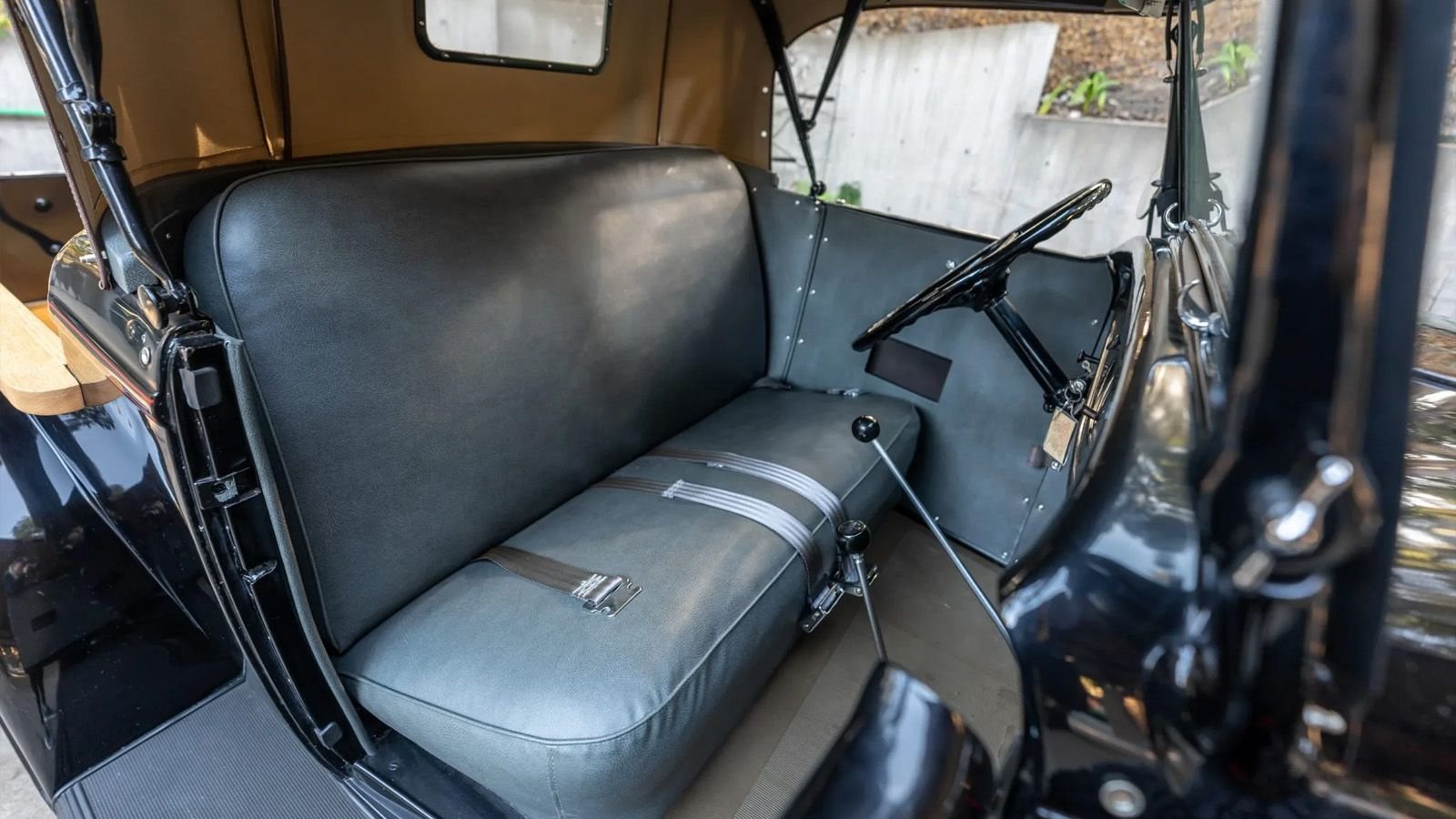
Steel was the family business. Oakes' grandfather started the Oakes Foundry in Warren, Ohio, which has been in continuous operation since 1929. The rare B-304 Utility Car was converted to left-hand drive and meticulously restored after it was imported. Oakes, an avid antique car enthusiast, was also a fastidious collector of furniture, glass, and lighting—a perfectionist with an eye for detail.
Roadster Iteration
The origins of the Australian Ute are a little contested—depending on the source. Bandt did not invent the concept but introduced style and comfort with his 1934, hardtop coupe iteration. Prior to this, the Ute existed only as a soft top, or 'roadster utility.' The idea behind the pickup truck was not new either, with Ford introducing the Model TT in 1917.
Useful Addition
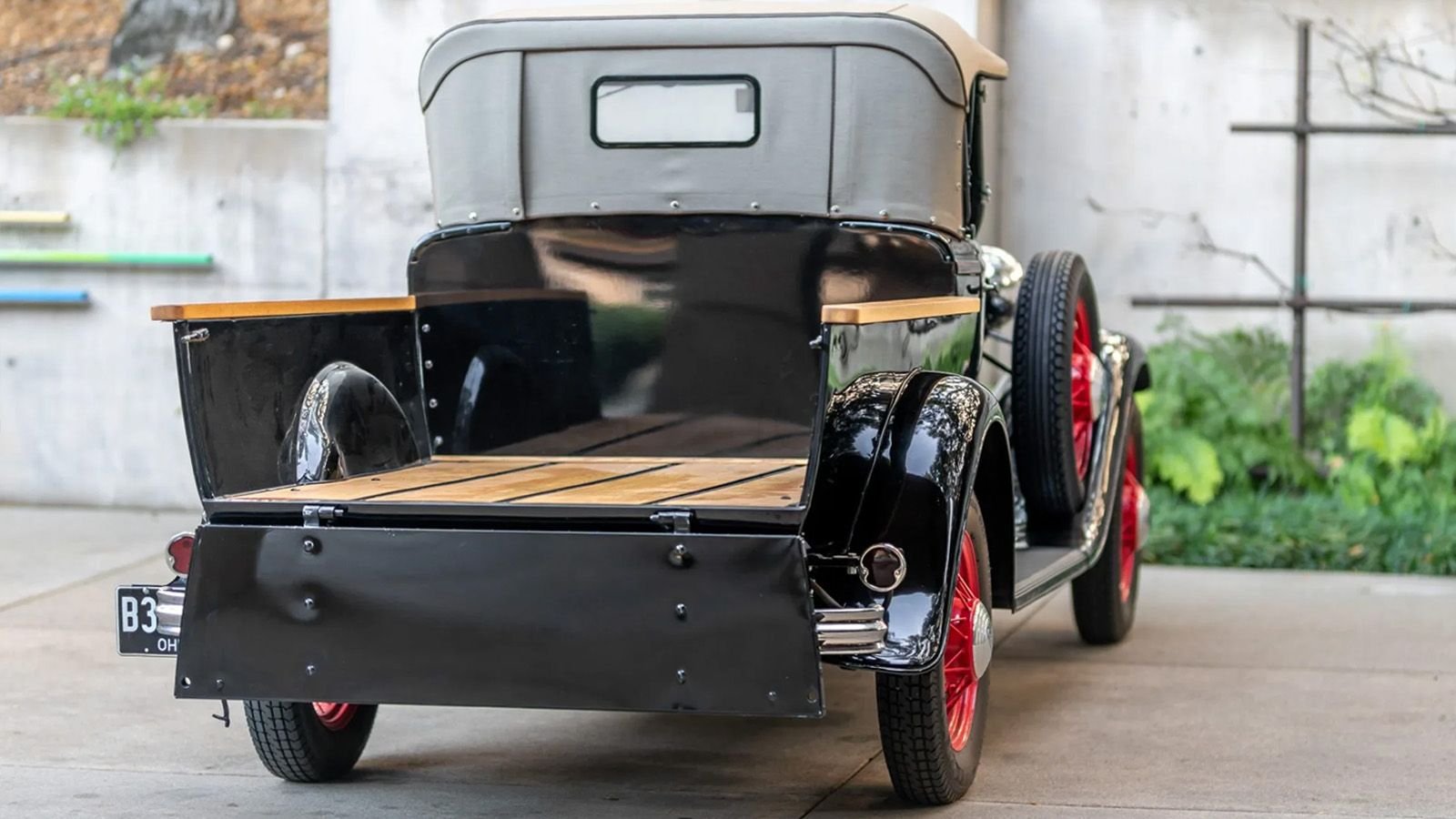
What differentiated the Ute from the pickup truck was its integrated bed that was molded into the cab. The Welltype designation stems from the B-304's 'L-shaped' shelves that were mounted to the top of the bedsides. The addition expanded the box top to a useful six feet wide. The B-302 Standard Utility Car had smooth bedsides, similar to those pictured here.
Removed Point
After a long battle with cancer, Oakes passed away in 2010, at age seventy-one. His extensive collection was dispersed to other holdings, along with his treasured antique vehicles. Despite appearances, Oakes' Utility Car is in fact a B-304—as evident from early documentation. The Welltype shelves were removed at some point after the Utility Car was sold at auction.
Upgraded System
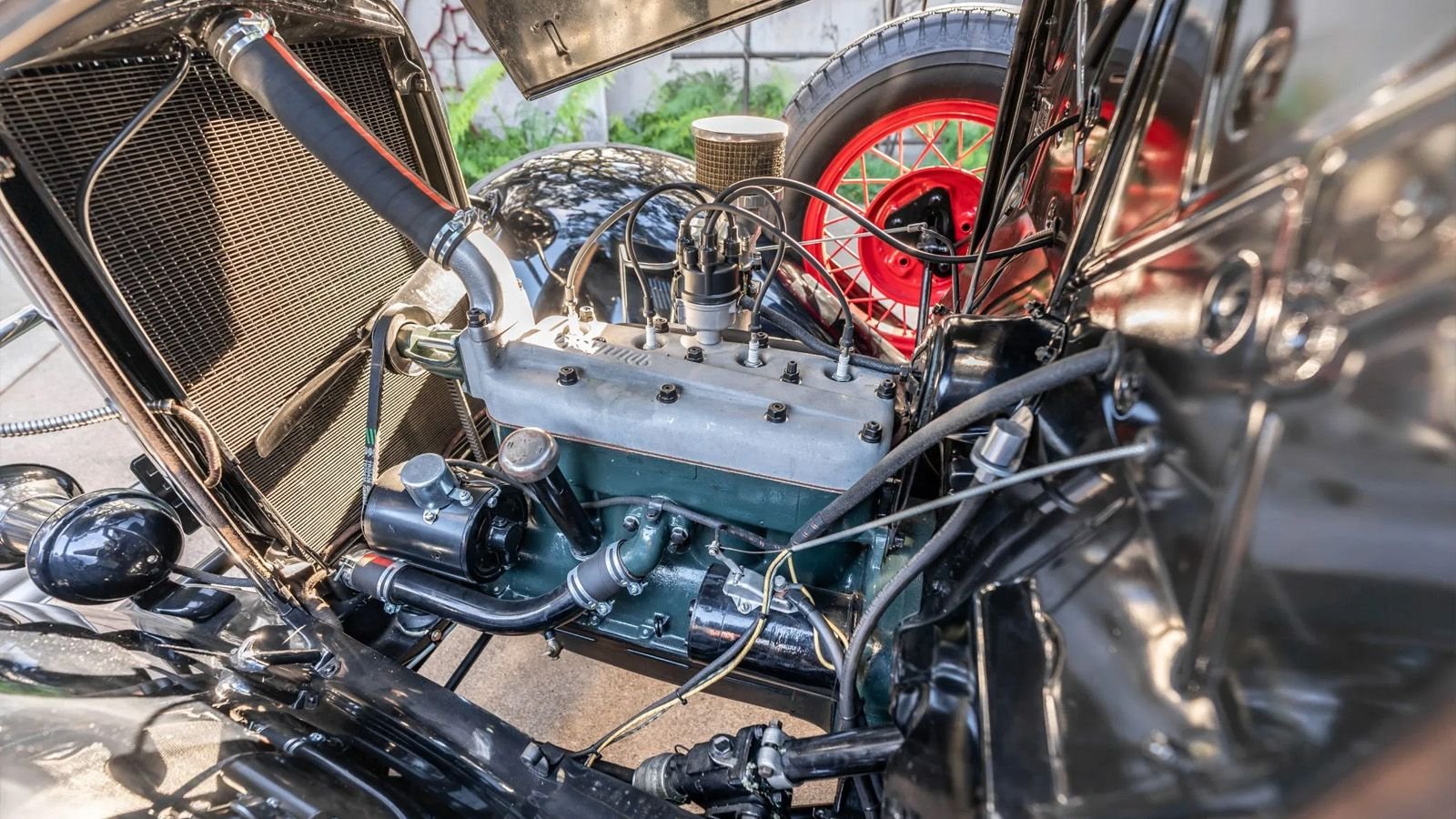
The Utility Car was powered by a 201 cubic-inch inline-four engine. Oakes' B-304 was refitted with a replacement motor in 2018, sourced from H&H Flatheads in La Crescenta, California. The new mill features a high-compression Winfield aluminum cylinder head, an Ansen intake, and a Stromberg 97 carburetor. The electrical system was also converted to 12 volts, along with a new alternator and an upgraded electronic ignition.
Lasting Design
Referred to as the Type 304 in 1932 promotional literature, the Utility Car concept occupies a unique, but the lasting entry in the development of pickup trucks. The Ute design has been copied by countless other manufacturers and is still produced in Australia as the Ranger T6. Through the foresight of one dedicated collector, this sole remaining B-304 has endured as a lasting legacy.
>>Join the conversation about the Ute right here in the forum.
For help with your maintenance and repair projects, please visit our how-to section of Ford-trucks.com.