
Greatest Ford F-Series Nicknames of All Time
F-Series trucks have been with us since 1948 and have spanned 14 generations. These are the best nicknames they have earned during that time.






Intro
With 14 generations of F-Series Ford trucks spanning 75 years, it can be difficult to keep them all straight. Saying you have a fourth gen truck, or a sixth gen truck can be a bit ambiguous. However, over the years many F-Series trucks have earned some colorful nicknames. And if you refer to your truck by the nickname then most Ford enthusiasts will know exactly what you are talking about. But if you are a bit rusty on these, don’t fear. We have collected here a list of the best F-Series nicknames of all time to help you identify these trucks.
1. Bonus Built / Million Dollar Cab (1948 – 1950)
The start of it all was back in 1948. Ford trucks no longer shared any chassis architecture with Ford cars. The trucks could be had with an optional flathead V8 making 100 horsepower. These were rugged and durable trucks that could handle work duty. These were known as ‘Bonus Built’ trucks by Ford. But they were also referred to as ‘Million Dollar Cab’ trucks. That is because Ford spent over $1 million redesigning the cab. That was back when $1 million was a lot of money.
2. Sharknose (1951 – 1952)
In 1951 Ford updated the F-1 to include a new base 6-cylinder engine making 101 horsepower. A wood box floor replaced the steel from the previous year. And you could get the five star cab or the five star extra cab. But it was the new hood and grille trim that earned it the ‘Sharknose’ nickname. One look at the picture above and the origin of that nickname should become apparent.
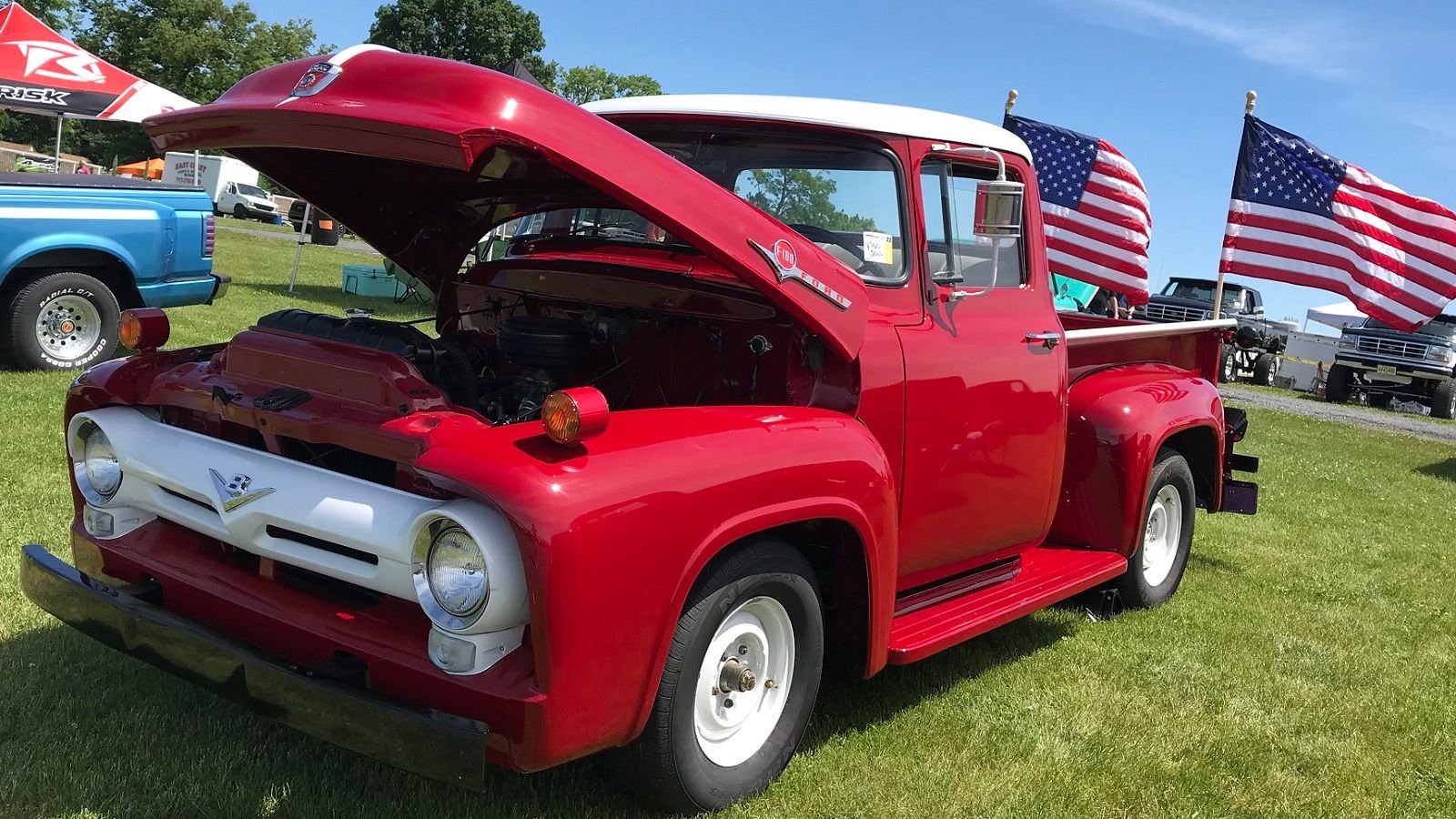
3. Effie / Fat Fender (1953 – 1956)
1953 marked the start of the second-generation of the F-Series. The trucks were redesigned and also renamed. The F-1 became the F-100. The "Ford-O-Matic" automatic transmissions became optional on the F-100 trucks. These trucks also got longer hoods that flowed into the fenders and the cabs had more glass area. The front grille got horizontal bars and the front axle was set back to improve the turning radius. The ‘Fat Fender’ nickname is rather obvious when see the wide fenders on this truck. The ‘Effie’ name is open to a bit of debate. Some say it is a play on the ‘F’ in Ford. These trucks were also marketed as triple economy trucks because they were more efficient. Effie short for efficient. Either way, it is a cool nickname for these second gen trucks.
4. Fridge (1957 – 1960)
Fans of the Chicago Bears may think of William Perry, but the ‘Fridge’ trucks were built before Perry was born. These were the third-generation F-Series trucks, and they came with a whole new look. A wider cab and wrap over hood were two of the trademarks. It also introduced the Styleside bed. They also came with the option of selecting the Y-Block V8 engine making 167 horsepower and 260 pound-feet of torque. These were hard working trucks that also happened to have the aerodynamics of a refrigerator. Get it?
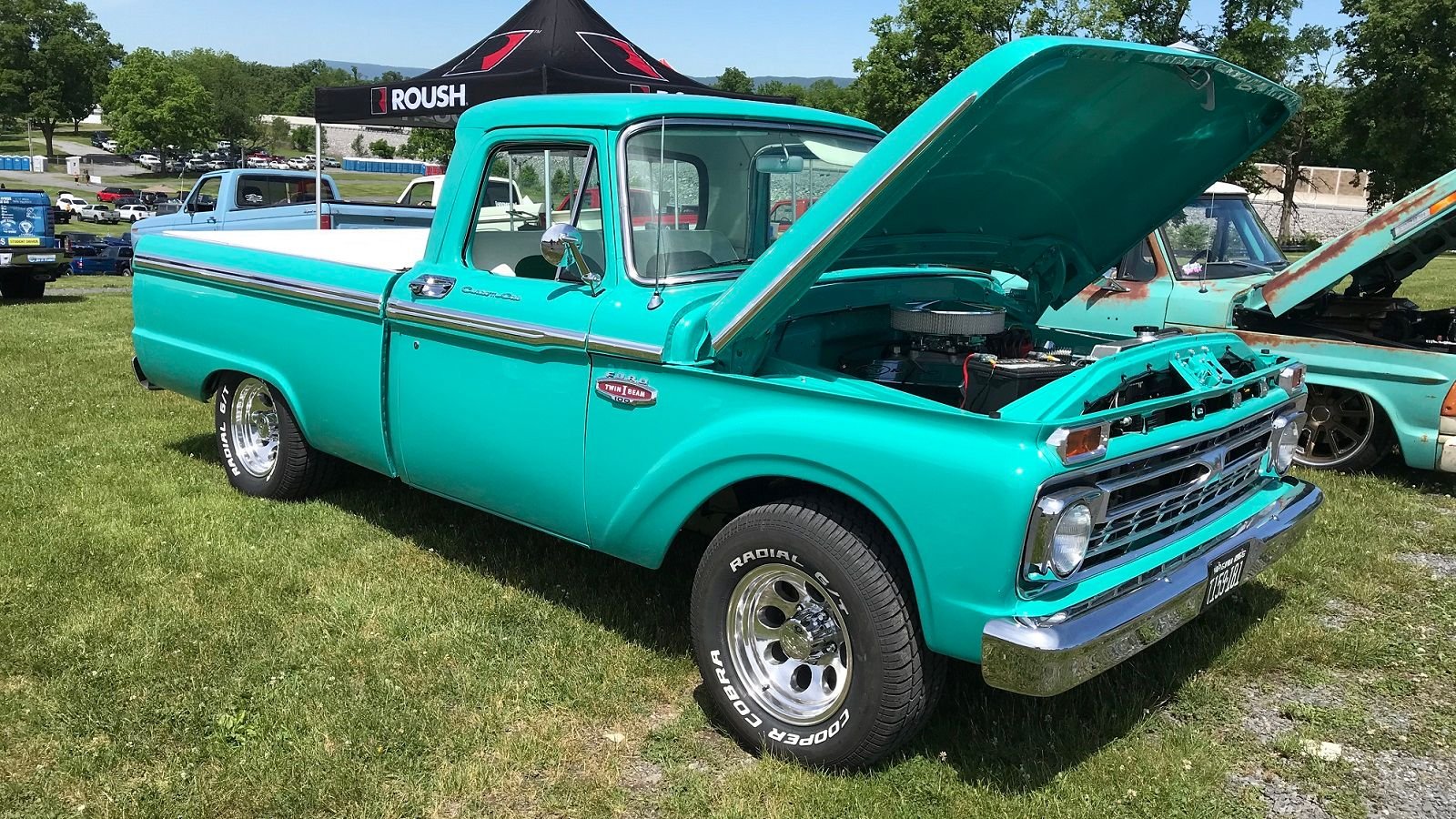
5. Slick Sixties (1961 – 1966)
1961 marked the start of the fourth-generation of the F-Series. One of the more interesting aspects of this generation was the integrated cab and bed that Ford called the Unibody. It was designed to give the truck cleaner lines, and increased cargo capacity. But issues with it led to the next truck on our list. But before we get to that we need to mention that the trucks of the fourth-generation are generally known as ‘Slicks’ or ‘Slick Sixties.’
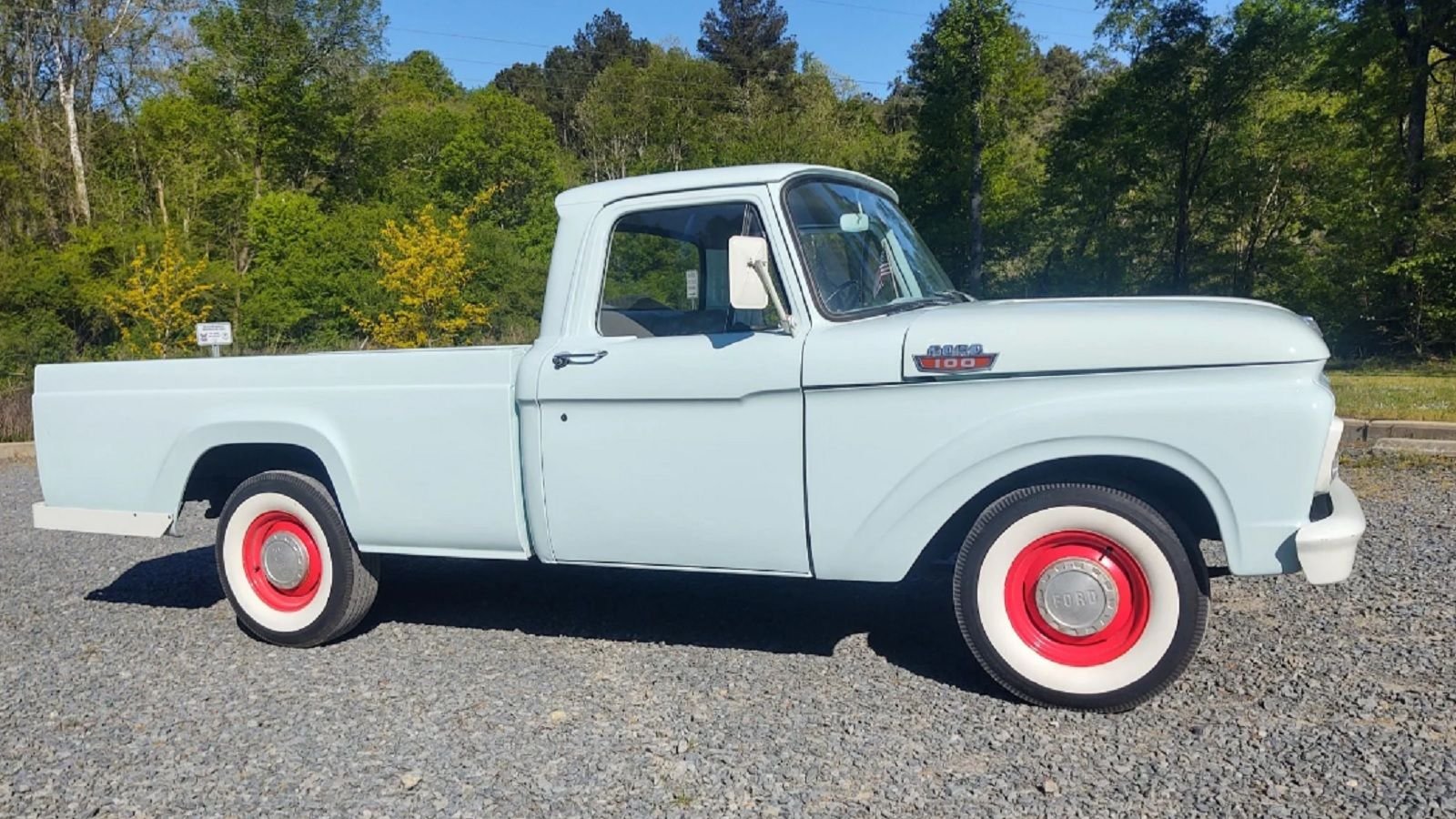
6. Wrongbed (1962 – 1966)
The problem with the unibody design of the fourth-generation trucks was that when the bed was loaded with cargo the truck would flex and it would become difficult to open the doors in the cab. Ford had to scramble to quickly correct this issue. What they did was for the 1962 model year styleside beds they would take the ‘Fridge’ bed from the 1957 to 1960 truck and modify that to fit on the newer truck. It was called the ‘Wrongbed’ by Ford fans because it was quite literally the wrong bed for the truck. The character lines of the bed do not match those of the cab.
7. Bumpsides (1967 – 1972)
The fifth-generation began in 1967. The engines in the 1967 trucks were essentially carryovers from the previous generation. But that changed in 1968 with the introduction of the 360 ci and 390 ci V8 engines. The 390 was good for 255 horsepower and 376 pound-feet of torque. This newfound power was in a truck that was nicknamed the ‘Bumpside’ due to the bump out that runs along the entire length of the truck. These trucks also saw expanded trim levels with the arrival of the Ranger XLT and Explorer Special.
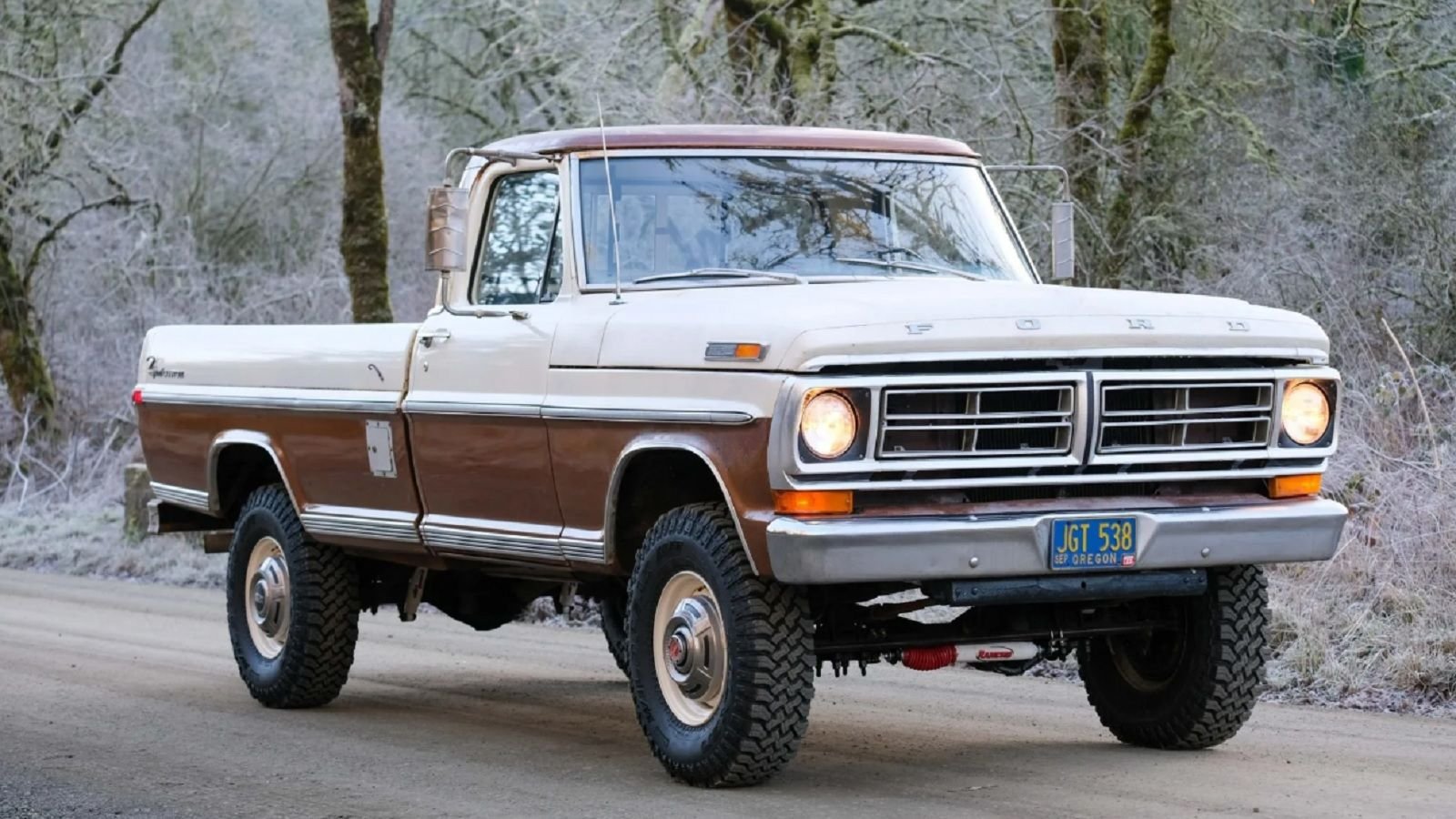
8. Highboy (1967 – 1977)
The ‘Highboy’ is arguably the most famous of all the F-Series nicknames. But this one is applied to the heavy-duty F-250. The 1967 to 1977 F-250 4WD trucks earned this nickname due to the divorced transfer case and longer front driveshaft. To accommodate these items more clearance was needed so Ford added some. The result is a factory truck that looks like it already has a lift kit installed. These are some of the most attractive trucks that Ford ever made.
9. Dentsides (1973 – 1979)
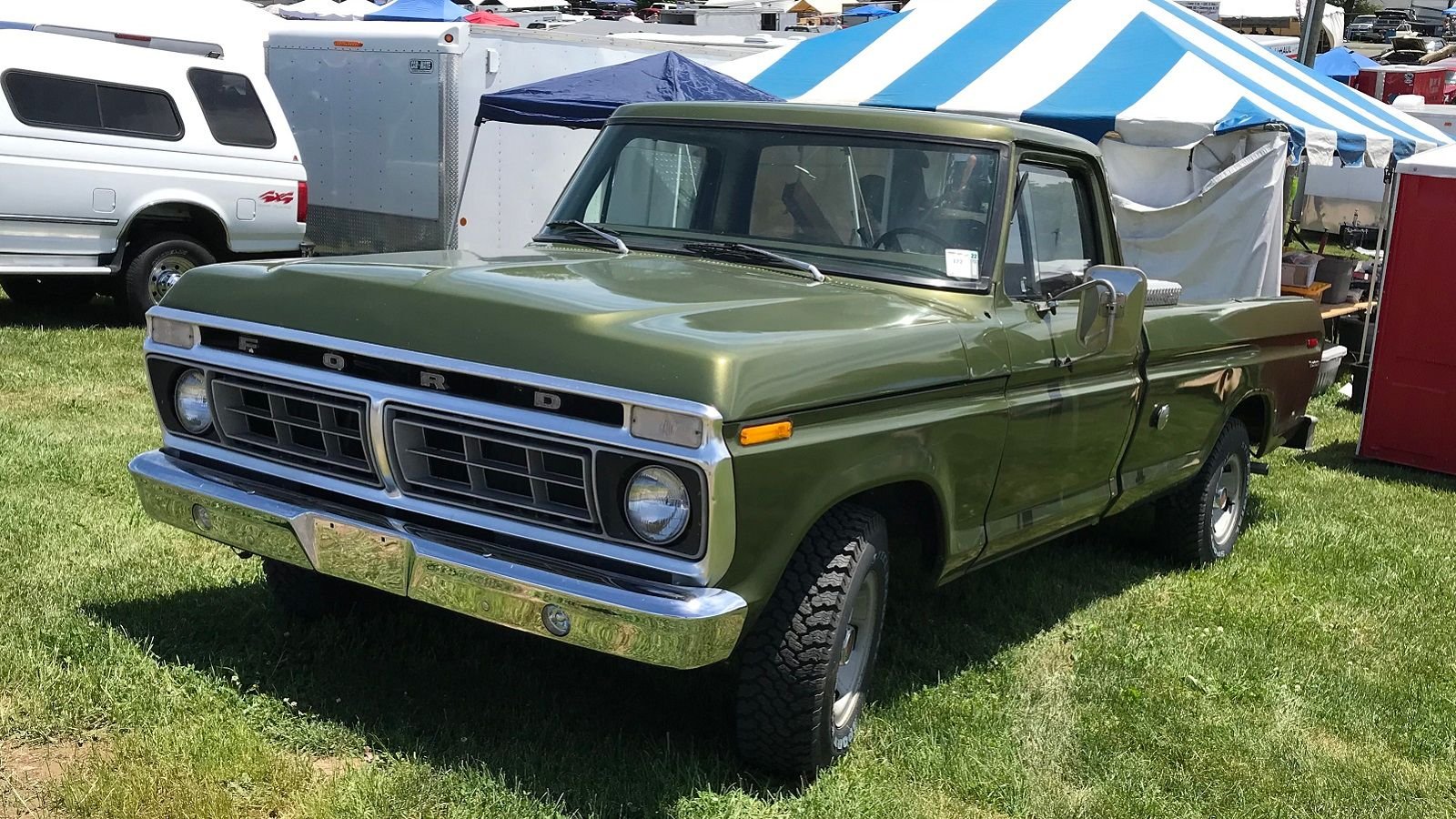
The sixth-generation trucks arrived in 1973. They received a whole new design although they were still riding on essentially a fourth-generation chassis. The ‘Dentside’ nickname comes from the intent that runs the length of the truck. The trucks now had a larger cabin, and the fuel tank was moved from behind the seat to beneath the body between the frame rails. These trucks were all about being safer and more practical as family vehicles. They even made the glovebox larger. These trucks all had to suffer through the oil embargo and tighter emissions. So the big 7.5L V8 in 1979 made only 220 horsepower.
10. Bullnose (1980 – 1986)
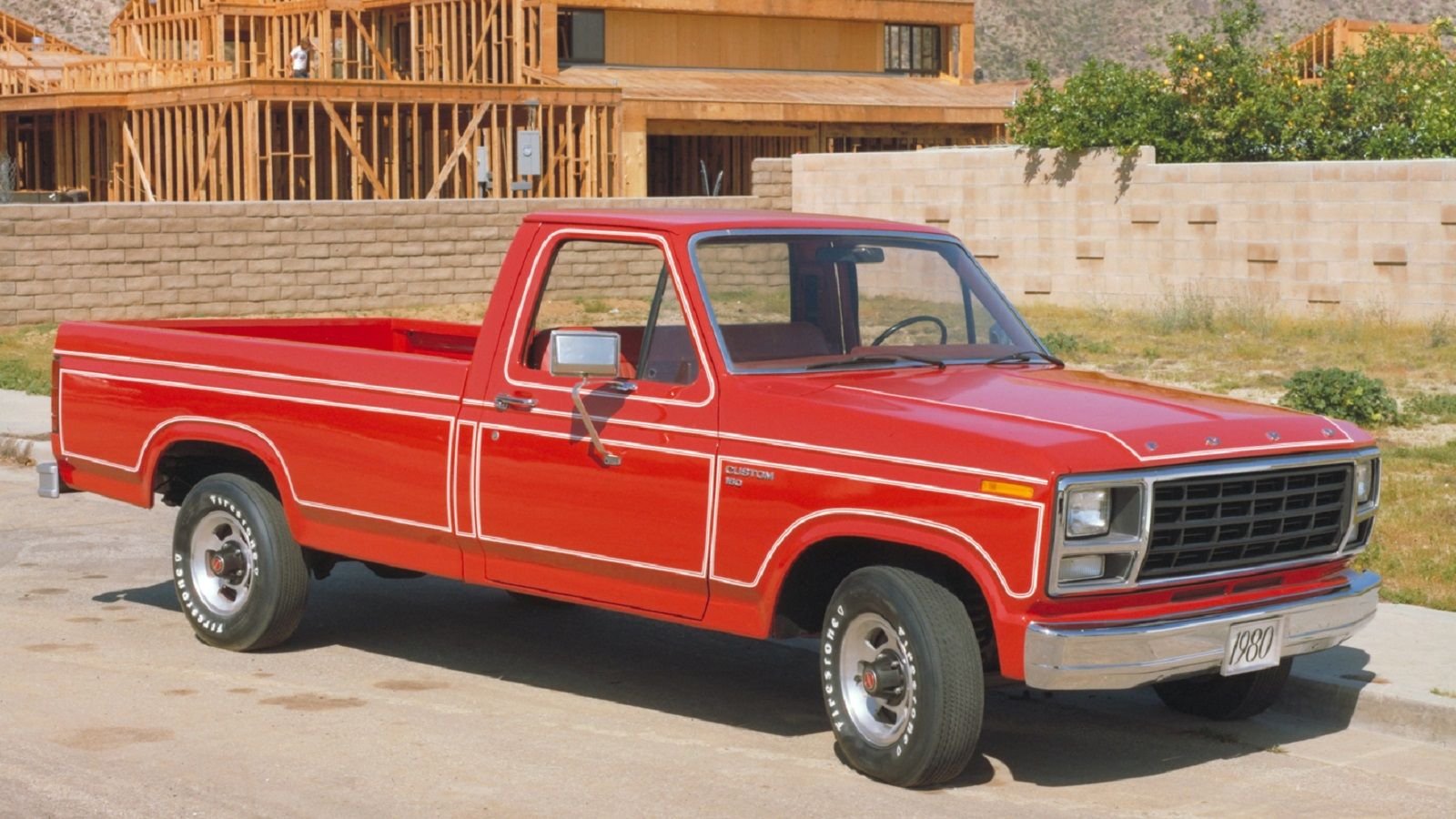
Big news came with the start of the seventh-generation trucks. Ford gave these trucks the first all new chassis since 1965. There were plenty of other firsts for this generation. The first diesel powertrain in the Ford light duty trucks. And the Ford blue oval emblem finally made it to the Ford truck with this generation. Previous nicknames focused on the sides of the truck, but starting with these the focus would move to the front. We present to you the ‘Bullnose’ Ford pickup.
11. Bricknose (1987 – 1991)
The more squared-off front end of the eighth-generation trucks led to the ‘Bricknose’ nickname. Other than the new styling the 1987 trucks came with rear anti-lock brakes as standard equipment. It was the first pickup truck to do so. The old three on the tree manual transmission was replaced with a four speed. By the end of the run in 1991 the trucks had the available Electronic Touch Drive 4WD system. This allowed the driver to shift on the fly at normal driving speeds. Trucks were truly becoming sophisticated.
12. Aeronose / OBS (1992 – 1996)
The nose theme continues with the ‘Aeronose’ ninth-generation trucks. These are also referred to as ‘OBS’ trucks. This stands for old body style, as the next generation saw a large departure from a styling perspective. The ninth gen trucks had a sleeker design compared to previous generations. But perhaps the most exciting point came in 1993 when the SVT Lightning made its debut. The Mustang GT with a truck bed is still revered by fans today.
13. Jellybean / Dicknose (1997 – 2003)
Sorry kids. I don’t make up the news, I just report it. And the news with the tenth-generation trucks is that they are known by a rather crude nickname, ‘Dicknose’ or the much more family friendly ‘Jellybean’ truck. These trucks were completely redesigned from the inside out. It might be the largest single year change ever. It is certainly in the discussion. New styling, more refinement, new modular overhead cam engines, the list goes on. What did not go on, however, was the list of fun nicknames. From here on out things got kind of dull. So, for now we will end the list. But if you fans come up with some clever ones for the newer trucks, please share them with us.