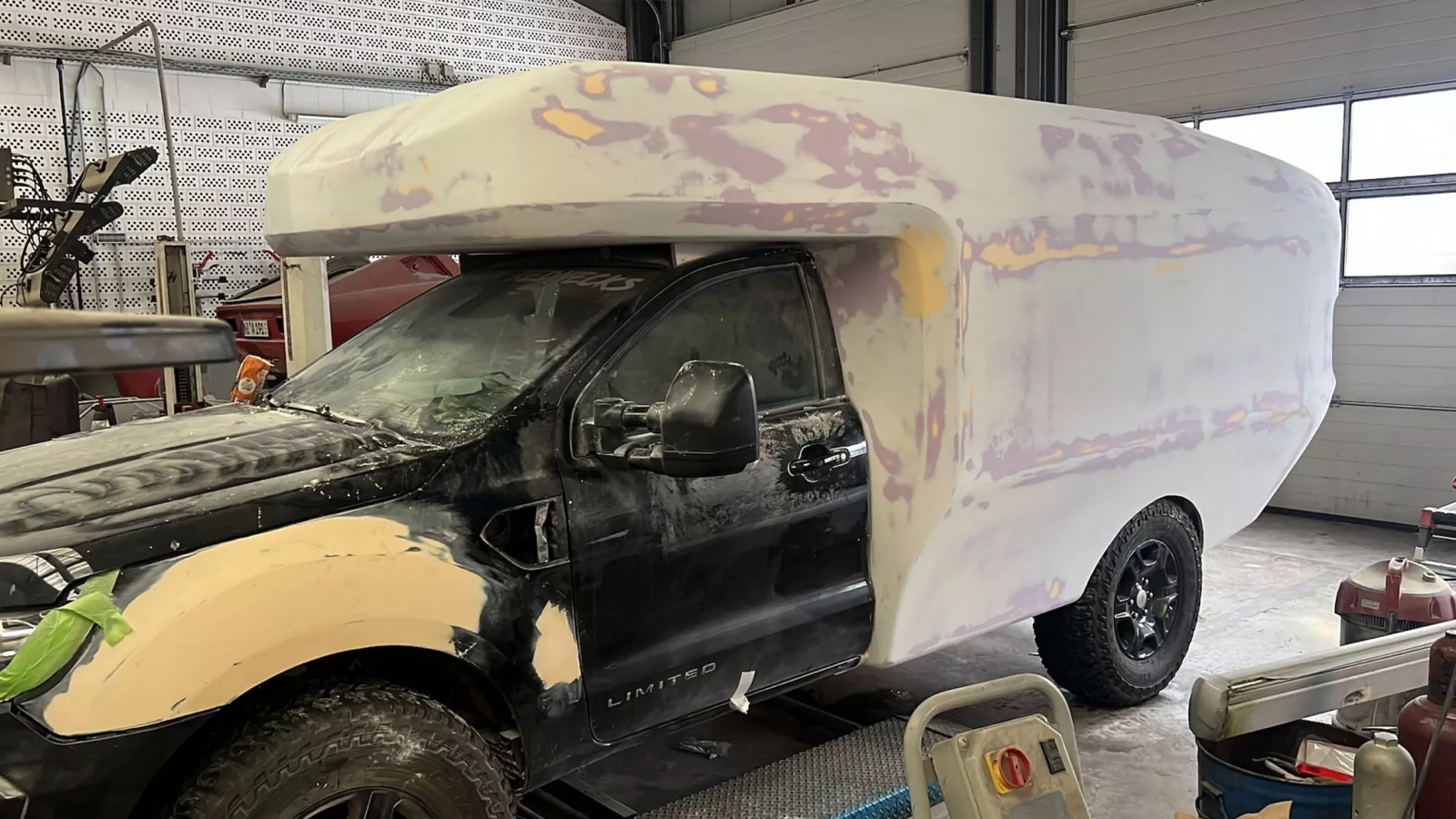
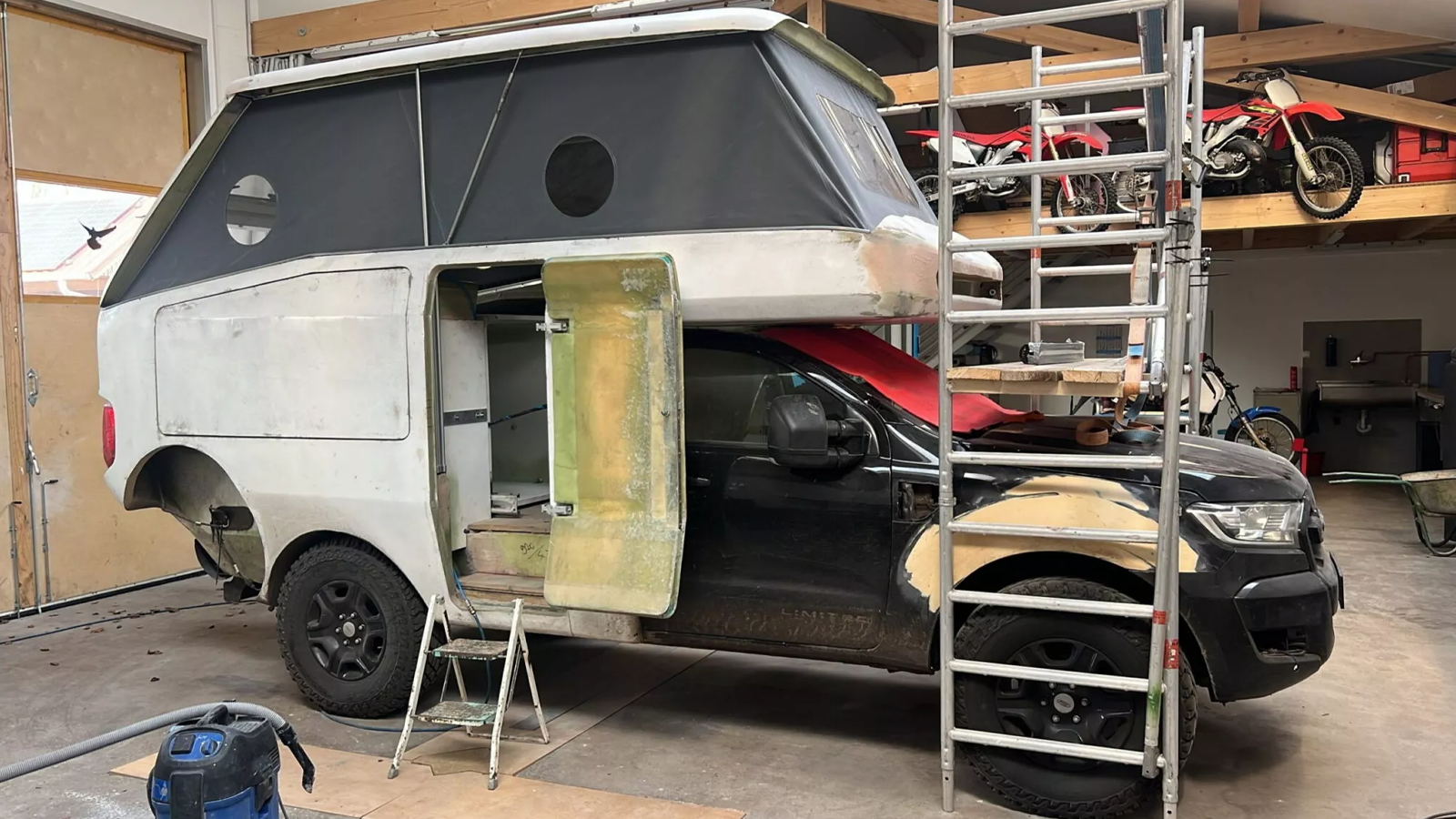
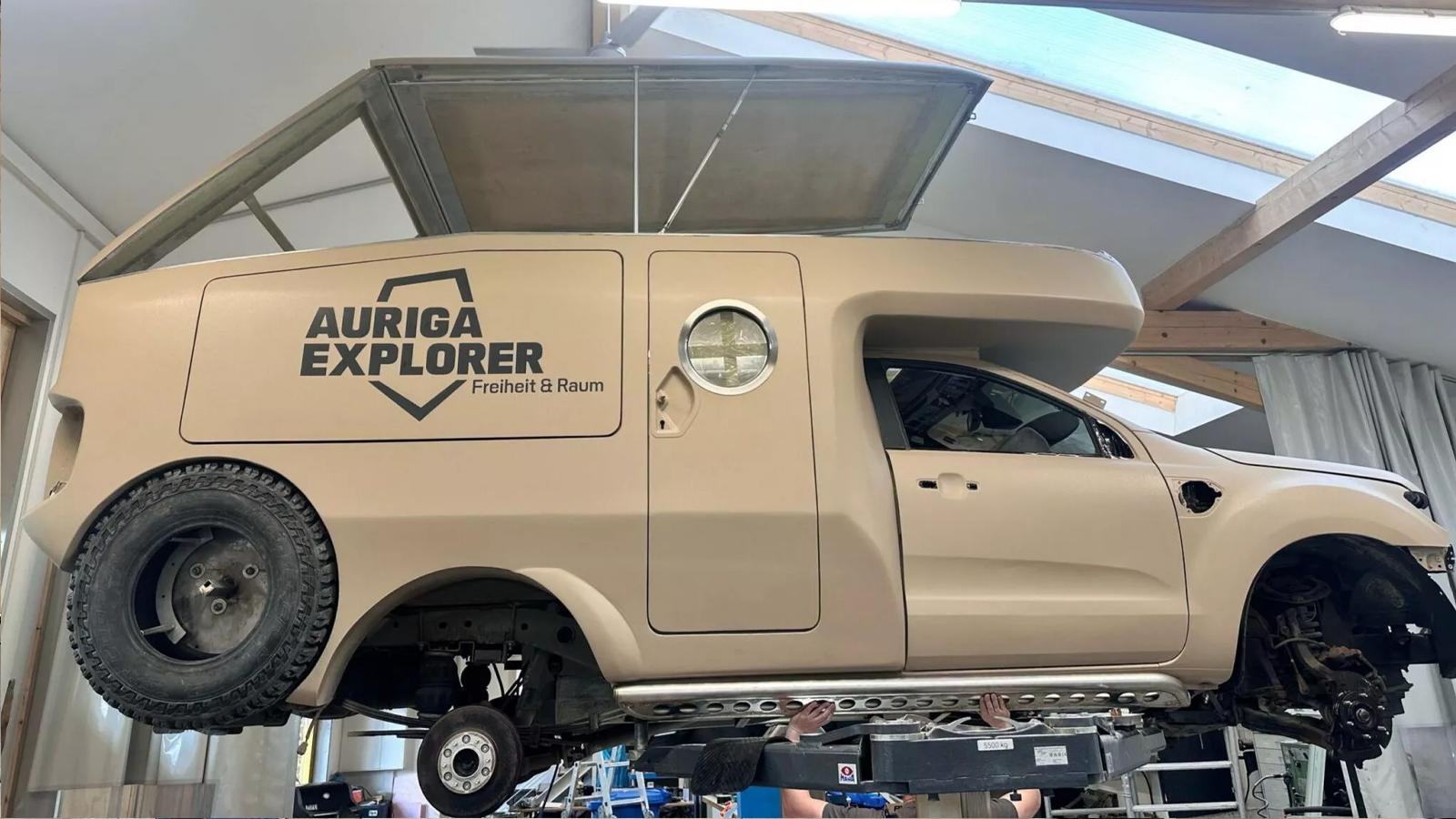
The Auriga Explorer Voyager blends compact pickup agility with the livability of a full-size camper, all while fitting inside a shipping container.
Compact Platform, Big Ambitions
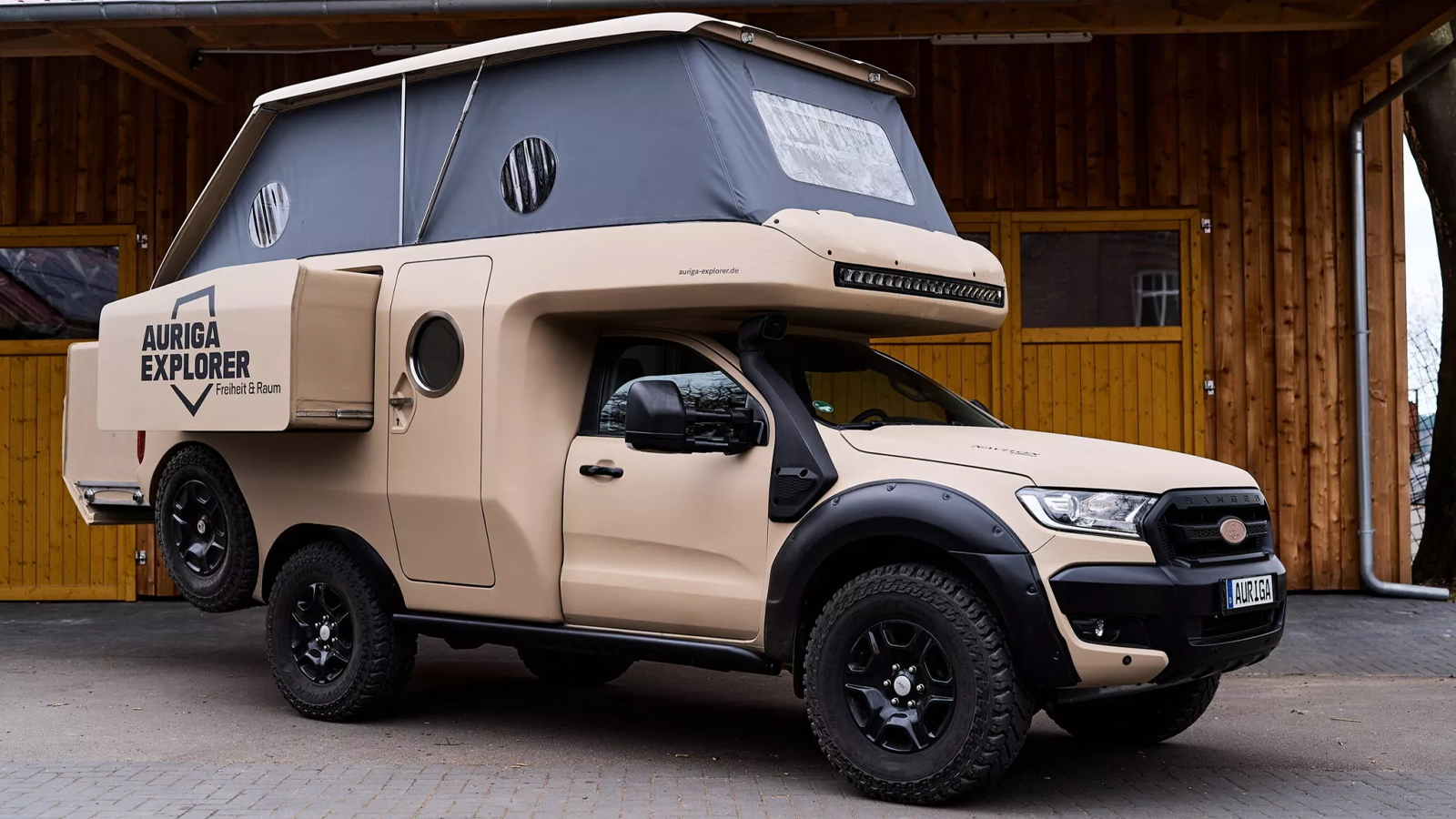
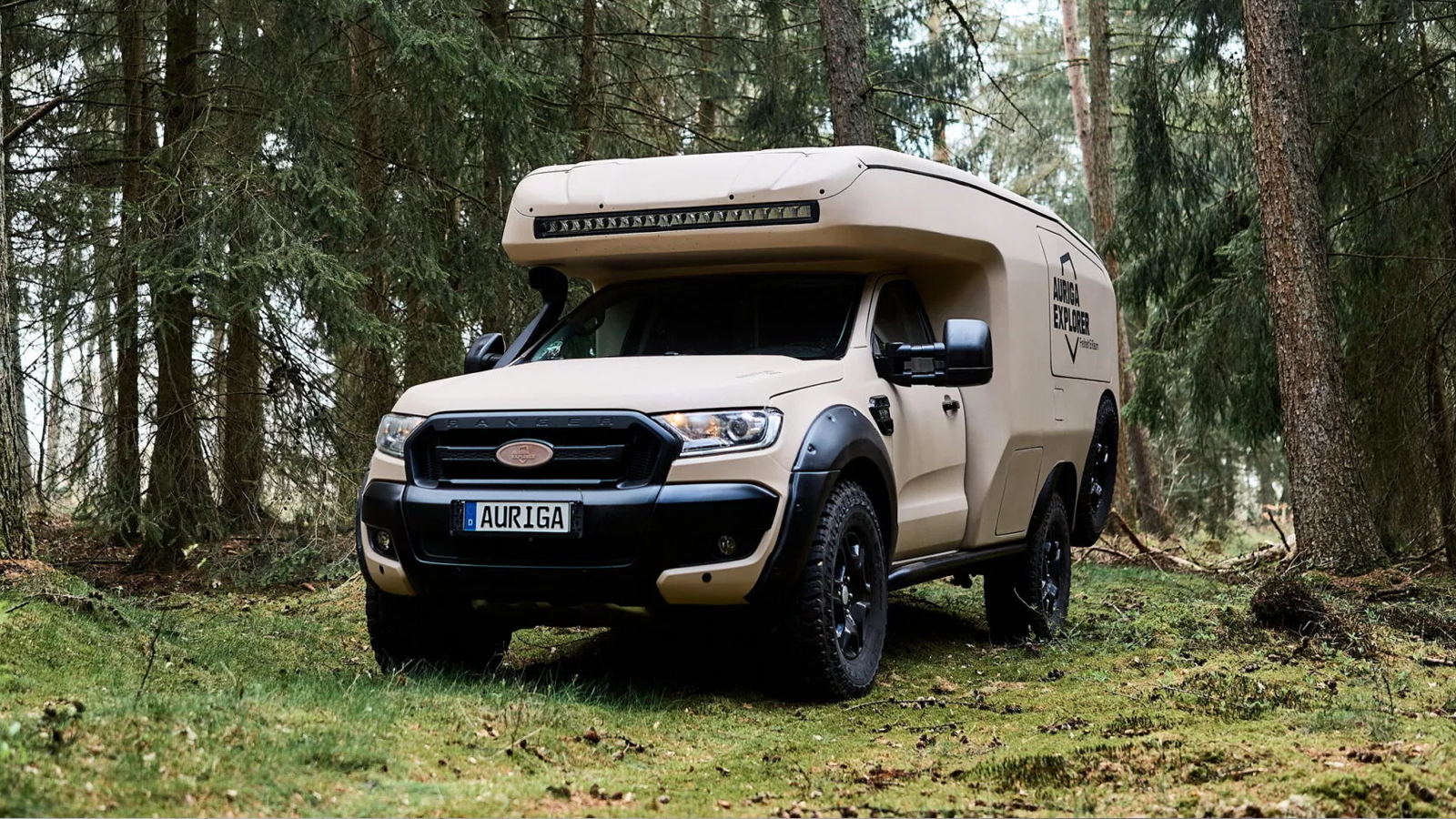
Germany’s Auriga Explorer is one of the newest entrants in the overlanding scene, founded in 2023 with the goal of merging off-road capability and home-like comfort. Its first project, the Voyager, transforms a single-cab Ford Ranger into an expandable micro-lodge designed for long-distance exploration. Production is set to take place in Germany, with dimensions tailored for shipping-container transport, a crucial detail for global buyers. The company also plans compatibility with the Volkswagen Amarok, which shares the Ranger’s platform.
Built for the Trail
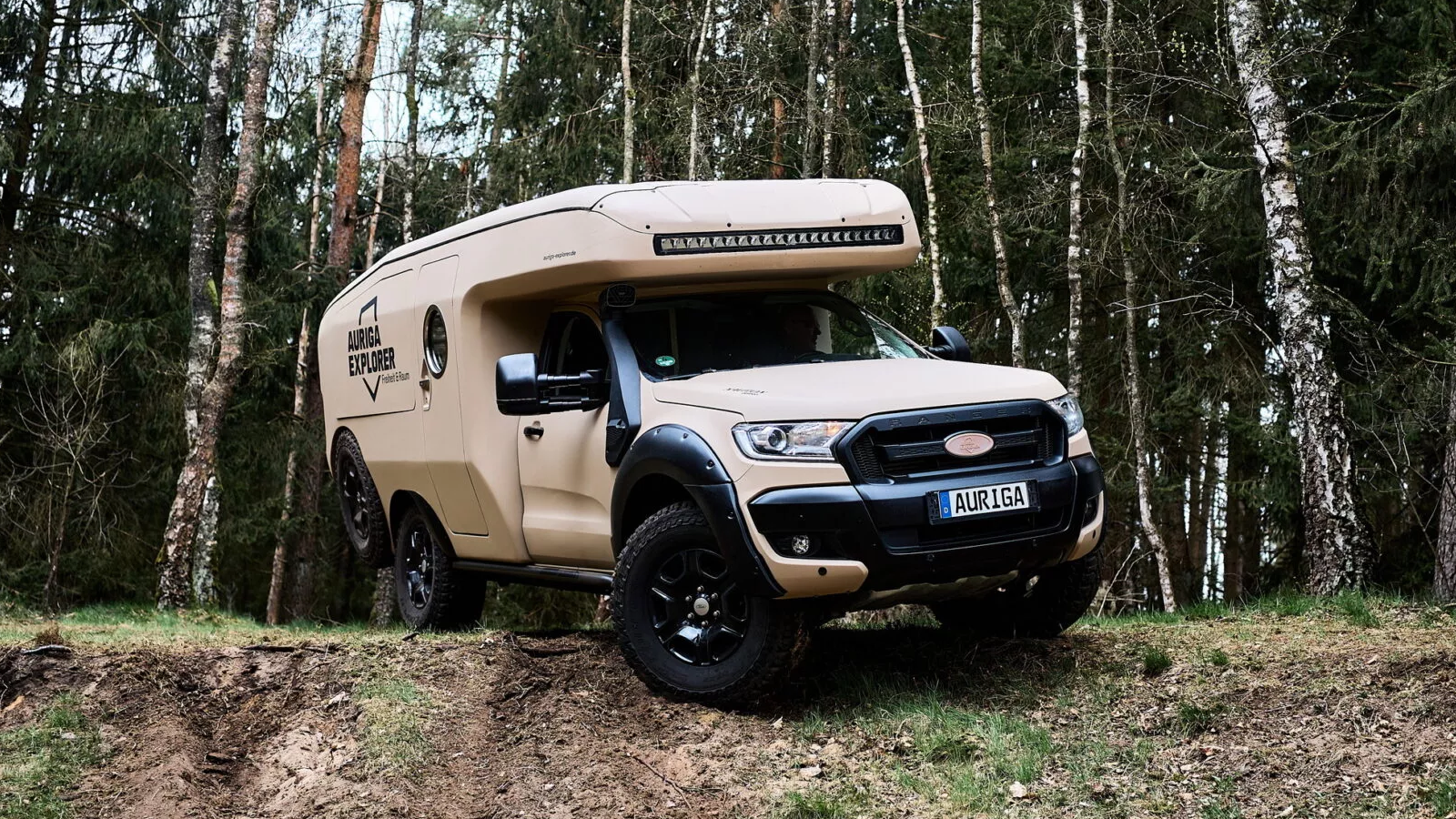
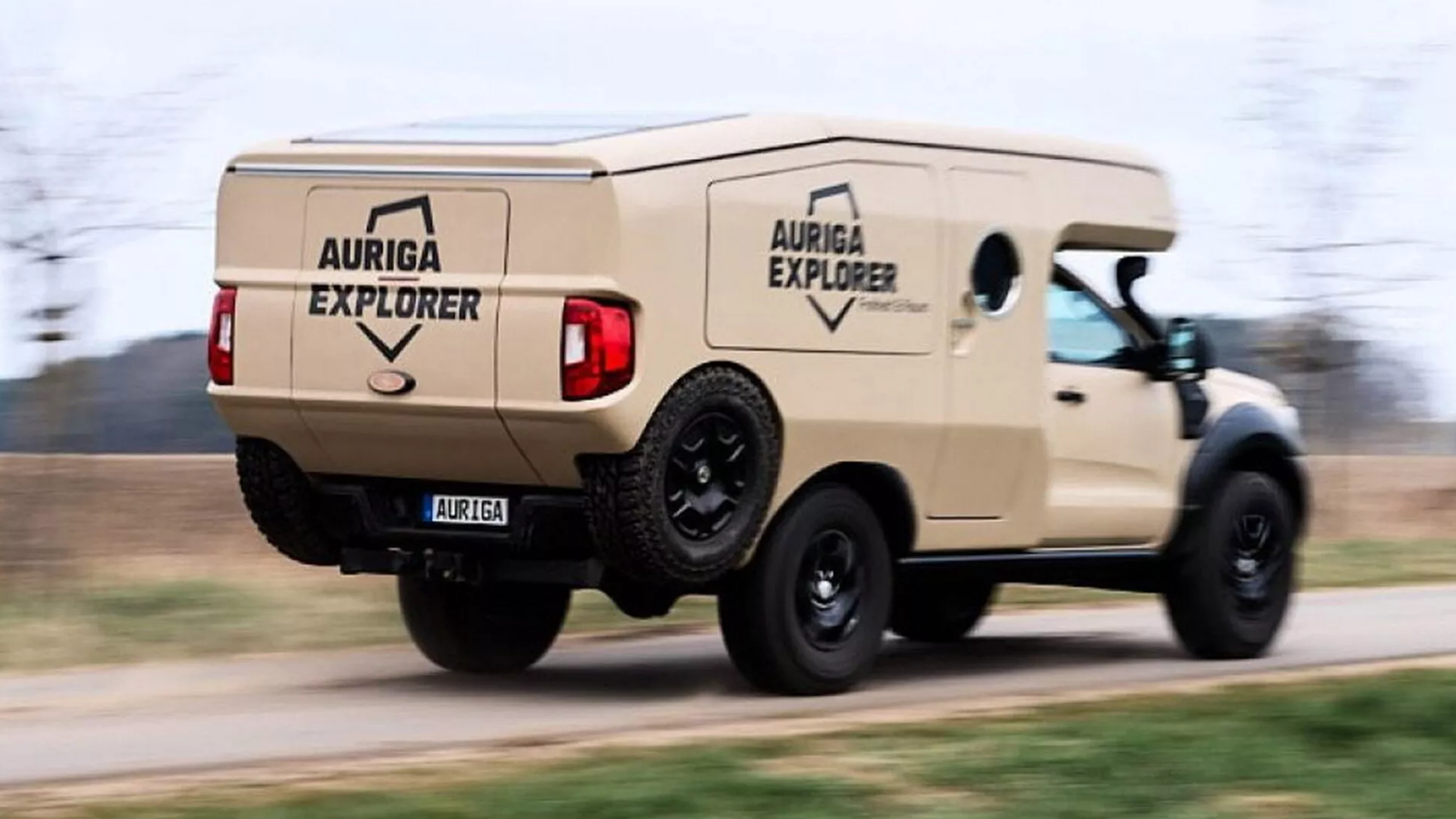
At first glance, the Voyager’s dual spare tires and extended overhang give it a six-wheeled look. Combined with raised suspension, wide fenders, and grippy off-road tires, the rig clearly targets serious adventurers. Beneath the surface, the truck’s rear end has been replaced with a lightweight GRP (glass fiber reinforced plastic) shell that incorporates the original taillights and mounts directly to the Ranger chassis. Despite the modifications, the total weight stays below 7,716 pounds (3.5 tons), keeping it within common licensing limits in Europe.
Expandable Design, Minimal Footprint
The Voyager measures 5.85 meters (230.3 inches) long, 2.10 meters (82.7 inches) wide, and 2.25 meters (88.6 inches) tall when closed, more compact than most camper vans. Once parked, an electro-pneumatic system deploys three slide-outs (left, right, and rear) and a pop-up roof, expanding the interior to roughly 8 square meters (86.1 sq. ft) of livable space and 2.05 meters (6.7 feet) of standing height. The clever engineering allows it to transition from a trail-ready compact truck to a comfortable four-person cabin in minutes.
Interior Comfort and Practical Layout
The interior layout prioritizes space efficiency without compromising comfort. The main bed sits above the cab and splits into two independent 6.6-foot sections, allowing one occupant to get up early without disturbing the other. The dinette accommodates six during the day and converts into a 5.9-by-4.9-foot secondary bed at night.
The entryway doubles as a compact bathroom with fold-out walls, a shower cubicle, and a water recirculation system to minimize waste. There’s even a pull-out dry-separation toilet, a rare inclusion in this size of camper.
Function-Focused Kitchen and Storage
Auriga’s approach to storage is as practical as the layout itself. Side slide-outs function as wardrobes for clothing and gear, while the rear extension acts as a garage for outdoor equipment, accessible through exterior hatches. The kitchen includes a diesel-powered range with a four-burner stove and oven, plus a compressor refrigerator. Additional amenities like underfloor heating, solar panels, and a skylight enhance the Voyager’s off-grid capabilities.
Designed for Comfort and Capability
According to Frank Haltermann, Auriga Explorer’s managing director and design engineer, the Voyager aims to “combine the best of two worlds, the freedom of a compact four-wheel drive pickup truck and the comfort of a luxurious expedition vehicle.” It’s a philosophy reflected in both its construction and usability. Every design choice, from the GRP shell to the slide-out mechanisms, emphasizes efficiency and self-sufficiency, key traits for long-term travel in remote areas.
Ready for Production
Auriga Explorer has already completed the concept, design, and testing stages, with full-scale production expected to begin before the end of 2025. Pricing hasn’t been revealed, but the company’s focus on container-friendly dimensions suggests a clear goal: to make a serious overlander that’s not only innovative but also globally accessible.