Along with delivering goods, semi-trailer trucks also indelibly drove into the American psyche.
Industry Equation
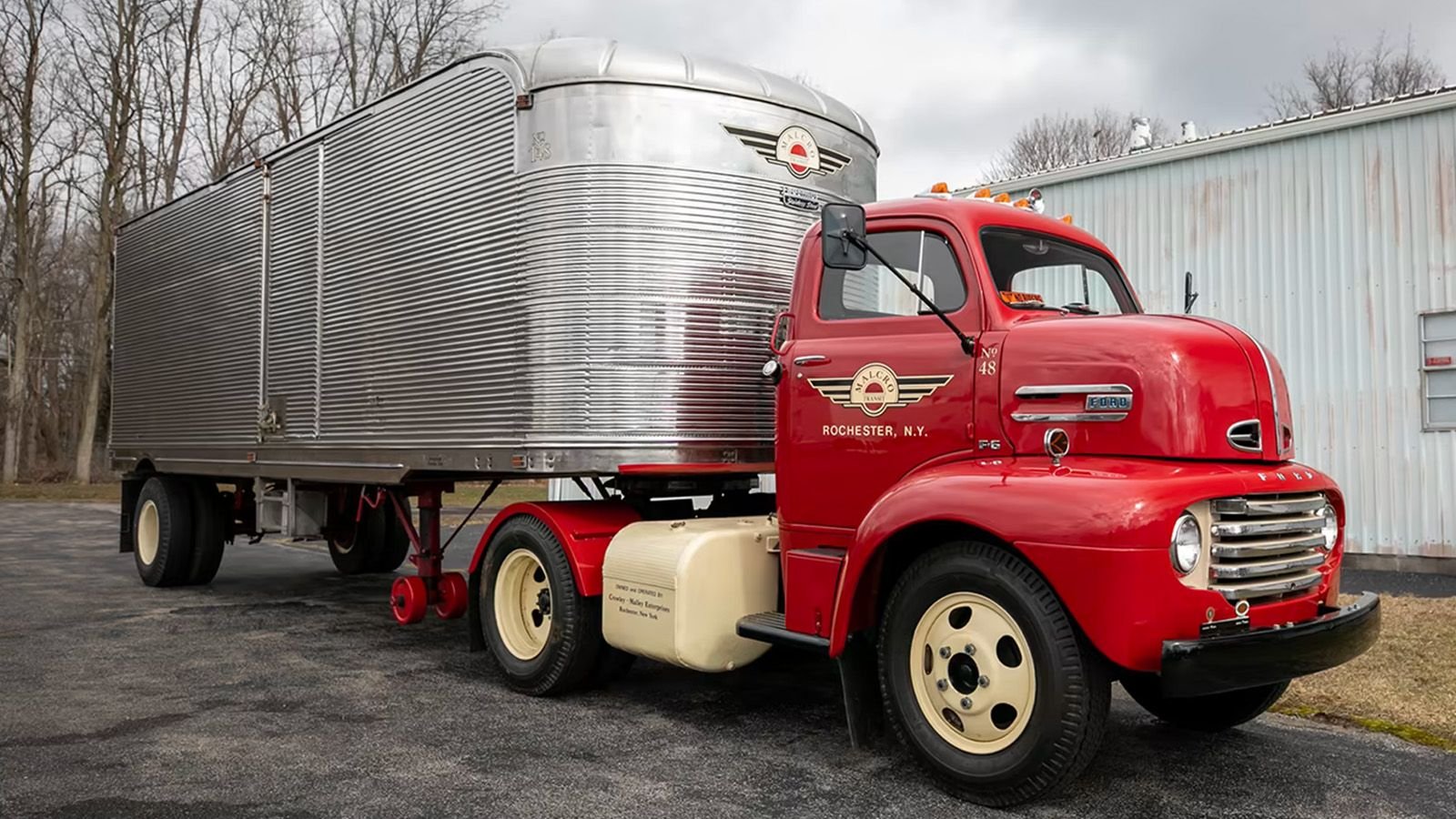
American post-war prosperity created a demand for goods like never before. The trucking industry was booming when Ford released its new line of stylish Bonus Built trucks in 1948. Among the heavy haulers was the cab-over-engine model or COE, but it was only part of the equation. The other half dates back to 1914 and a problem-solving 'eureka' moment.
Photos: Mecum Auctions
Steel Titan
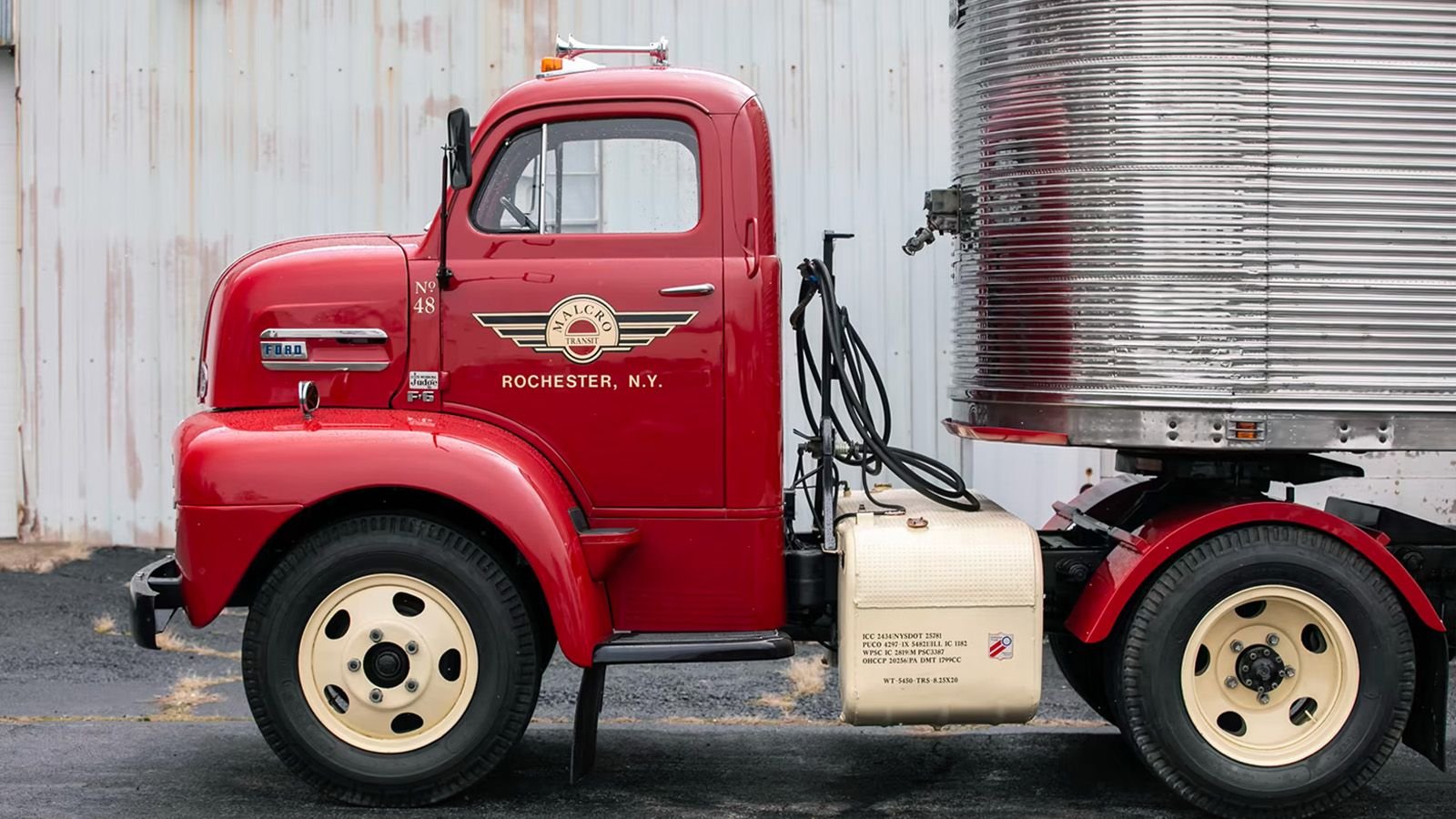
The 1948 F-6 COE pictured here topped the heavy-duty range. Its shorter cab allowed for a longer trailer, with Ford boasting that the COE was “compact as a watch and built to pack more payloads.” Coupled with the truncated cab is a stainless steel freight van built by then-trucking titan, the Fruehauf Trailer Company—now owned by Wabash National.
Towed Stipulation
Company founder August Fruehauf is credited with inventing the 'semi-trailer' and ushering in modern trucking. A Michigan-based blacksmith and carriage builder by trade, Fruehauf was commissioned to build a boat trailer by lumber yard owner, Frederic M. Sibley in 1914. The stipulation was that it could be towed behind a Model T pickup.
Standard Success
In a moment of brilliance, Fruehauf removed the truck bed and the front axle of a wagon. He then coupled the modified wagon over the rear axle of the Ford. The configuration was a success and Fruehauf went on to file numerous patents, opening his trailer business in 1918. His visionary concept is standard industry practice to this day.
Automatic Development
Fruehauf's enclosed semi-trailer revolutionized the burgeoning trucking industry and the company's customer base soon expanded. A sign of the times, their catchphrase was “A horse can pull more than it can carry, so can a truck.” In 1926, Fruehauf's innovations led to the development of the automatic fifth-wheel coupling, which enabled drivers to hook up and drop off a trailer without assistance.
Premiere Prize
Quicker turnaround times meant lower transportation costs and in return, raised the standard of living. In the mid-1990s, this F-6 COE and Fruehauf trailer was restored, earning it the National First Prize from the Antique Automobile Club of America in 1990. It is now headed for Mecum’s 36th Original Spring Classic auction in Indianapolis as part of the Big Truck Premiere.
Hood Form
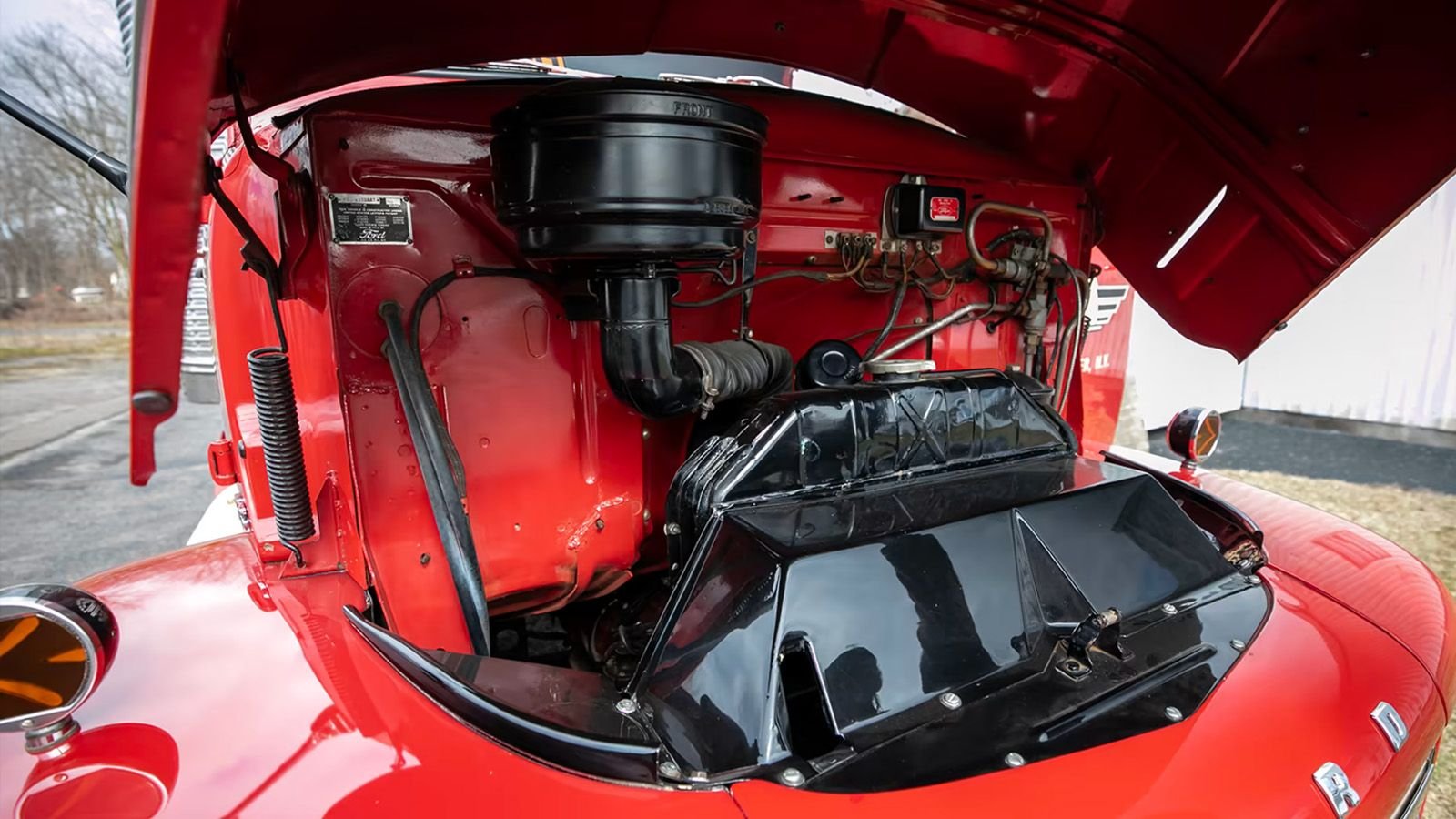
The 1948 F-6 COE is powered by a 239 cubic-inch Flathead V-8 engine with a dual downdraft carburetor. True to form, most of the engine is accessible from the cab, while under the hood sits the radiator and the oil-bath air cleaner. The motor's 100 horsepower is directed through a four-speed manual transmission and two-speed Quadrax rear axle.
Psyche Impact
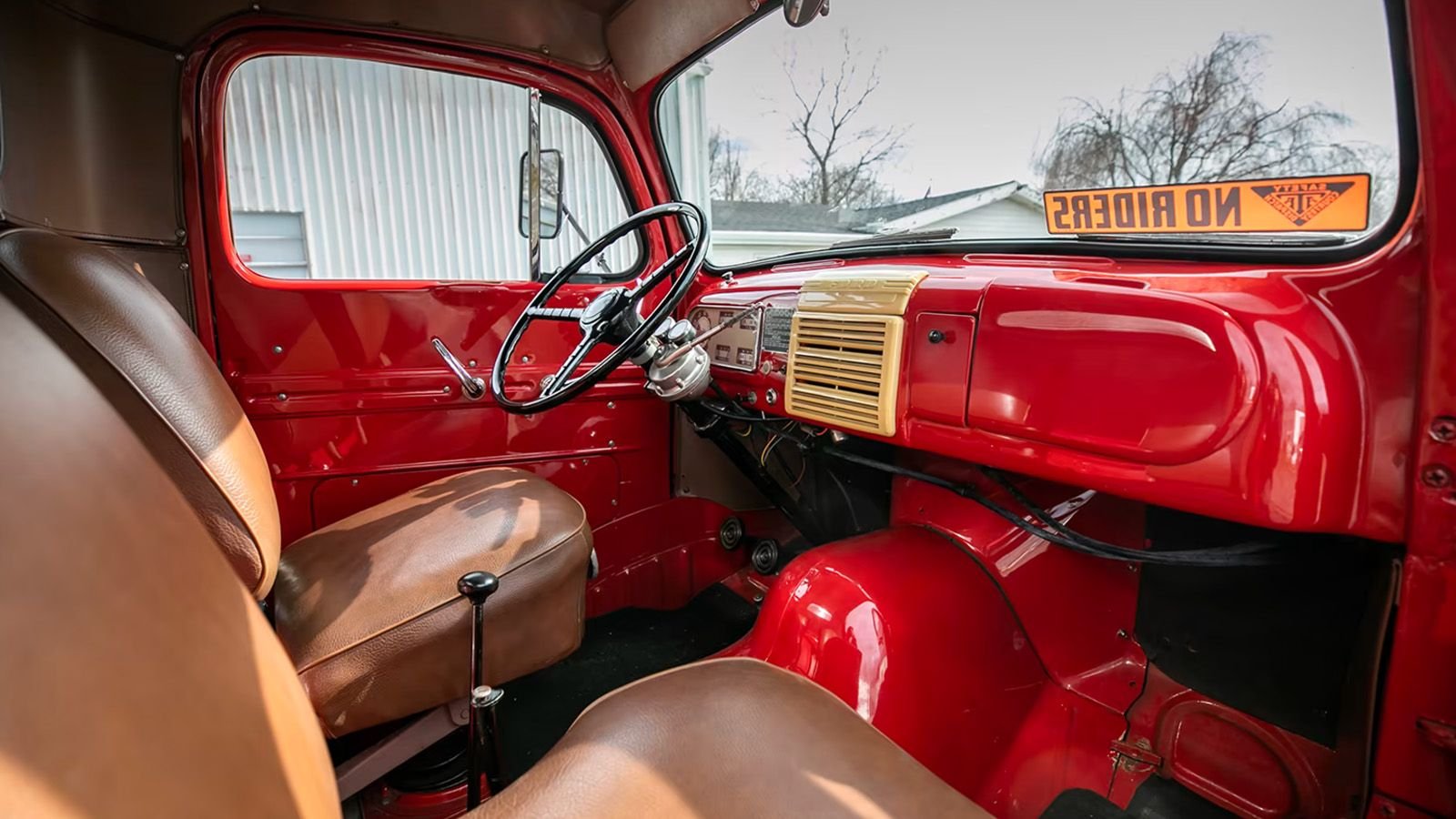
Ford’s 'Million Dollar Cab' provided living room comfort with its 'Spiralounge' seats, which featured variable-rate springs and hydraulic damping. Along with delivering goods, Fruehauf trailers also indelibly drove into the American psyche, appearing in iconic films like Smokey and the Bandit and part of the menacing rig in Steven Spielberg's Duel. Fruehauf's moment of industry-changing brilliance continues to have an impact today.
>>Join the conversation about this heavy hauler right here in the forum.
For help with your maintenance and repair projects, please visit our how-to section of Ford-trucks.com.