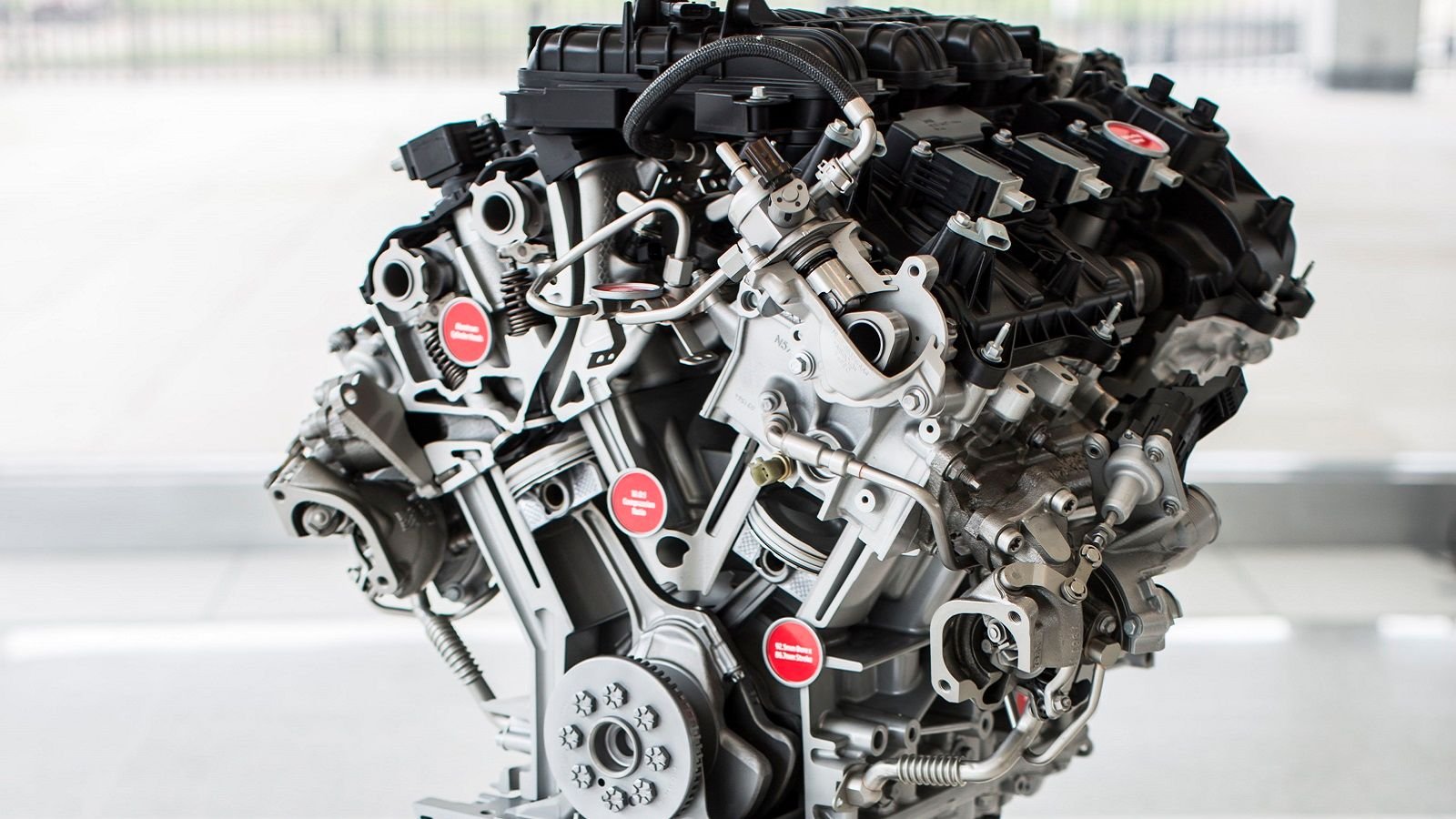
The 2nd generation Ecoboost V6 represents a big power and torque upgrade over the first generation powerplant. Here are the technologies that made that possible.
1. Dual Injection
The biggest change on the new, 2nd generation 3.5 liter Ecoboost V6 comes with adding a low pressure port fuel injection in addition to the existing high pressure direct injection. The addition of port injection allows the engine to shut down direct injection at low speed, which reduces emissions and friction loss. Cold start emissions are reduced as well when both systems are used. These benefits represent such an upgrade that all F-150 engines, EcoBoost or not, will employ the dual injection technology in 2018.
>>Join the conversation about Amazing 2nd Generation Ecoboost Innovations right here in the Ford Trucks Forum!
2. Electronically Controlled Turbo Wastegates
The wastegate has been around almost as long as turbo charging itself, and have been used in automobiles since 1962. They provide and simple and effective manner in which to control turbocharger boost pressure, so you can employ a turbo with more boost at lower RPM. The 2nd generation Ecoboost takes things a bit further with Ford's first ever electronically controlled wastegates, which allow a more accurate control of air flow and boost pressure. Electronic wastegates also enable fine tuning of the air/fuel ratio. All of which leads to better response, improved efficiency, and lower emissions.
>>Join the conversation about Amazing 2nd Generation Ecoboost Innovations right here in the Ford Trucks Forum!
3. Lightweight Engine Components
It's no secret that less weight makes vehicles better in a lot of ways. The advantage is even greater in terms of moving engine parts, and Ford went all out to shave weight from the new Ecoboost. The new V6 uses things like hollow camshafts and turbo turbine wheels made of Mar-M-247 super-alloy material. Those changes add up to a total weight loss of 4 pounds. The new engine should rev faster, and have less internal friction, thanks to the lighter moving parts, which means more power.
>>Join the conversation about Amazing 2nd Generation Ecoboost Innovations right here in the Ford Trucks Forum!
4. Subtle Changes That Increase Boost
In addition to the turbine wheels that are made of a super lightweight material to increase responsiveness, the Ecoboost's new turbocharger employs some interesting but subtle changes. Those turbo wheels are the same diameter as the 1st gen motor, yet boost is up 2.5 psi. So how did they do it? By simply using more sharply angled vanes.
>>Join the conversation about Amazing 2nd Generation Ecoboost Innovations right here in the Ford Trucks Forum!
5. Roller Finger Follower Valvetrains
Roller finger followers enable cylinder deactivation while the engine is operating at low load, such as steady state cruising on the freeway. Used in unison with standard stop/start technology, fuel efficiency is greatly improved in real world conditions. Fuel economy is also aided by the system, which reduces friction, as well as noise and vibrations over a conventional system.
>>Join the conversation about Amazing 2nd Generation Ecoboost Innovations right here in the Ford Trucks Forum!
For advice and guidance on your truck maintenance, check out the how to section of Ford-Trucks.com