
10 Historic Ford Truck Milestones


Ford Trucks are Not Quite as Old as the Hills
This country was literally built with the help of Ford trucks, at least the parts built since the introduction of the Model T in 1907. Back then there was not much difference between a car, a truck and a tractor, and often a farmer used one Ford for all 3 purposes. Over the years things got more specialized, and trucks stayed rugged while cars got plusher. The pace of truck evolution was much slower than that of cars, and even after WWII they were very agricultural vehicles. Since the turn of the 21st century though, things have gotten very luxurious and technologically advanced in the Ford F-series. A top of the line King Ranch F-150 is most likely plusher than the homestead of a wealth rancher who would have driven to town in a Model T.
1. The Ford Model T Truck
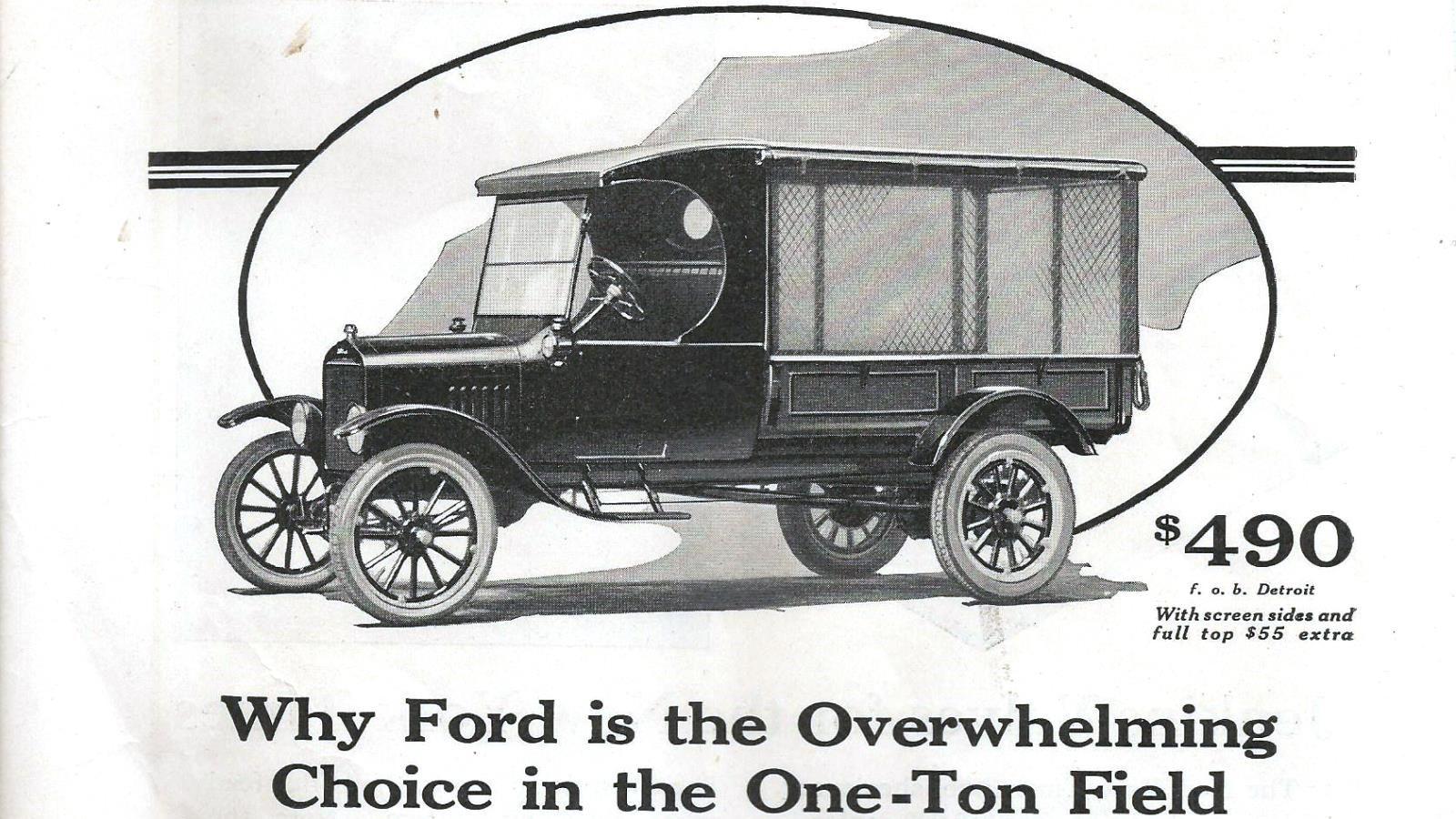
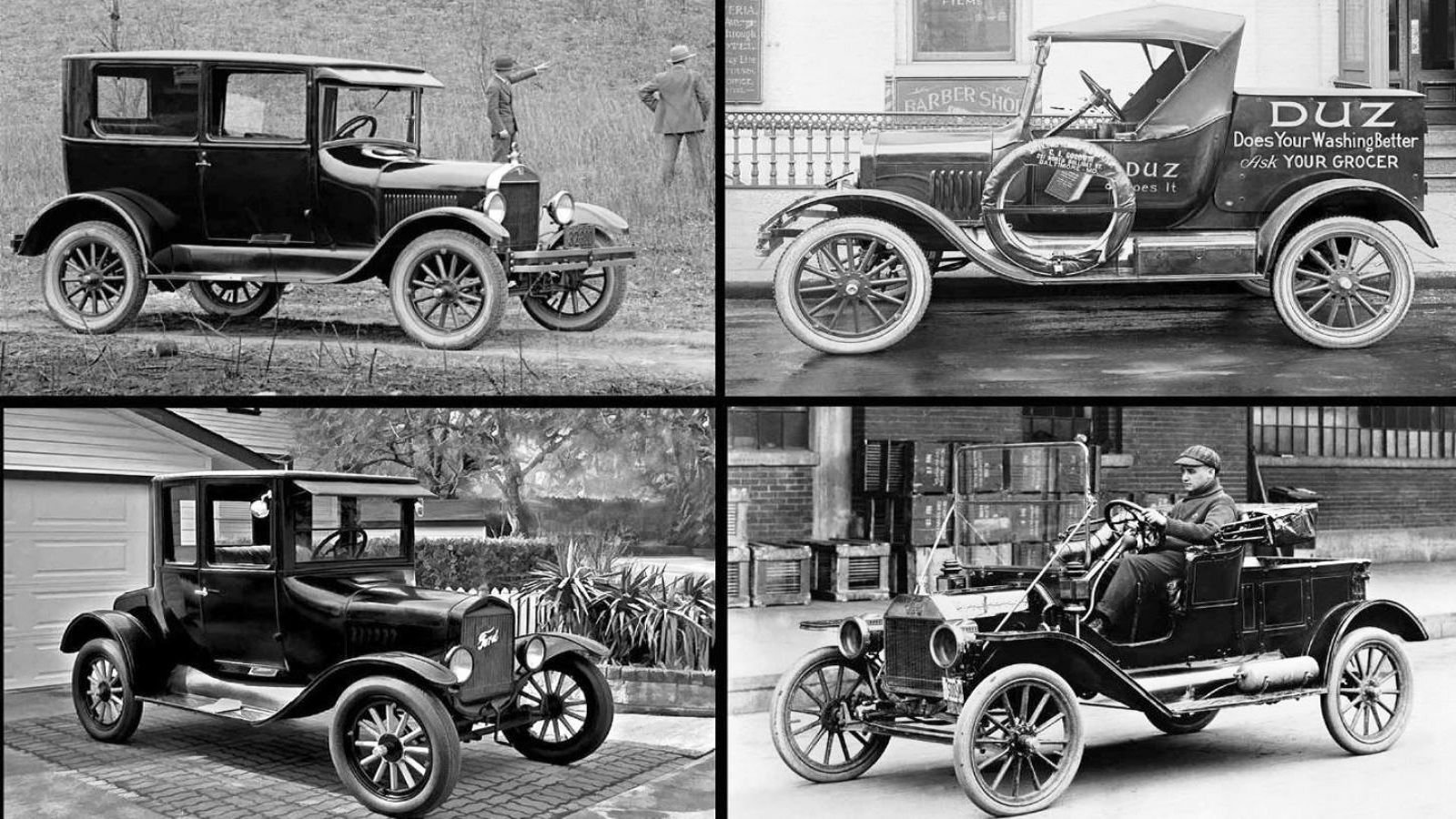
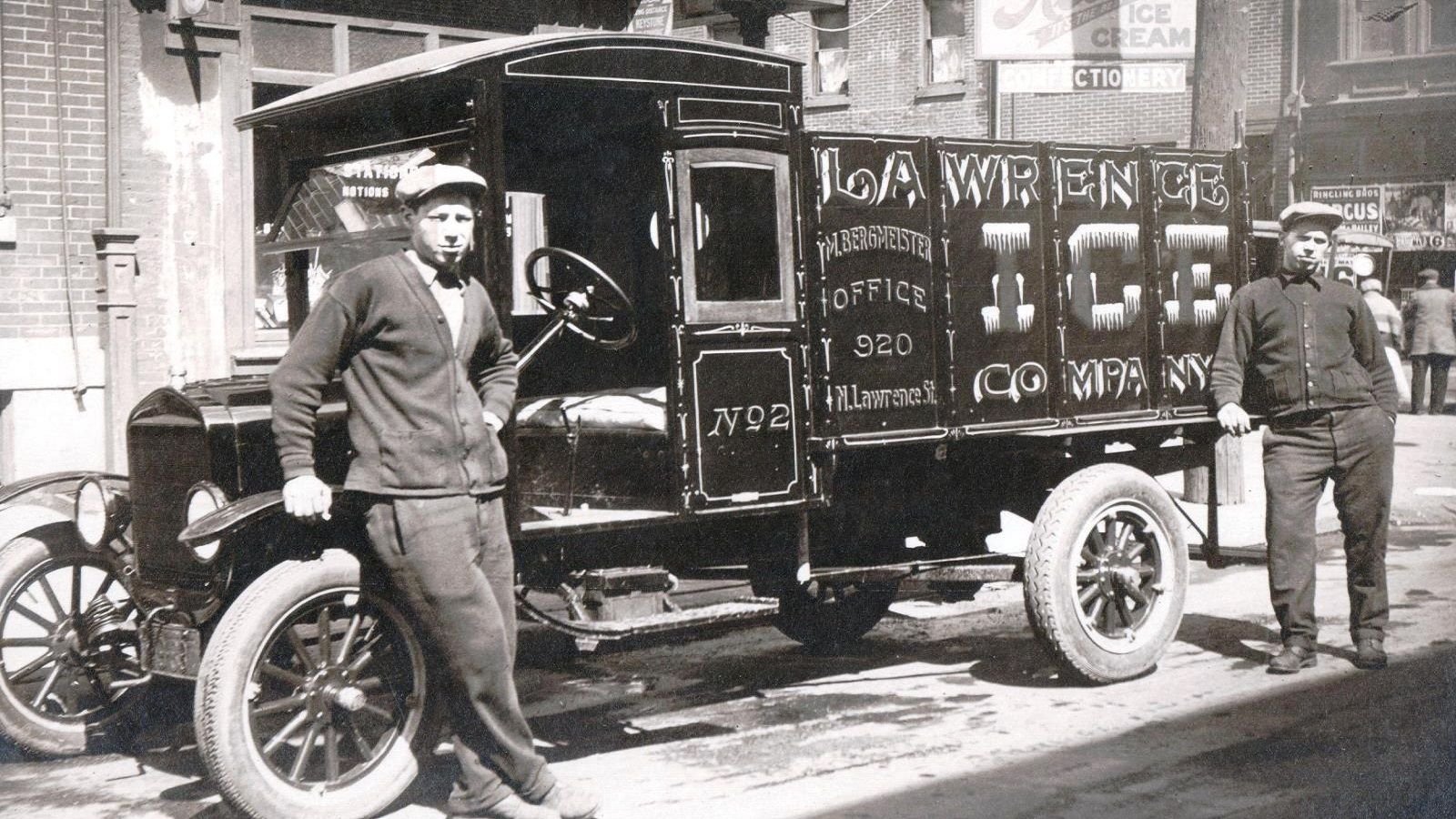
Ford did not immediately sell the Ford Model T for commercial applications as a truck, but it was so tough and inexpensive that many independent companies outfitted Ford chassis for delivery and hauling. With just a 100" wheelbase, these was not a huge amount of space for a bed or cargo box on a Tin Lizzie, as you can see in the picture, but that didn't stop them. The Ford running gear was so much more reliable than any other low priced cars that building an entirely new, longer frame and body still made good economic sense. By the time the Model T was getting out of date (it was made from 1908 to 1927 with little change), Ford themselves was offering their own light duty pickup truck, with convertible roadster top, which is the great-great-grandfather of every F-150 on the road today. Remembering that the Model T had 20hp and weighed just 1,200lbs, payload was a bit less than modern 1/2 ton trucks though.
2. The Ford Model TT Truck
In 1917, Henry Ford saw that other companies were making money by modifying his cars into trucks, so he created the larger, heavier duty Model TT. Based on the same running gear, chassis, and body parts as the car, the TT was built on a 125" wheelbase with beefed up frame and axles, and had a nearly 1 ton payload rating. Slow and durable, the Model TT was built at factories all over the world until 1927, when nearly 1.5 million of them had been sold.
3. The Ford Model A and AA
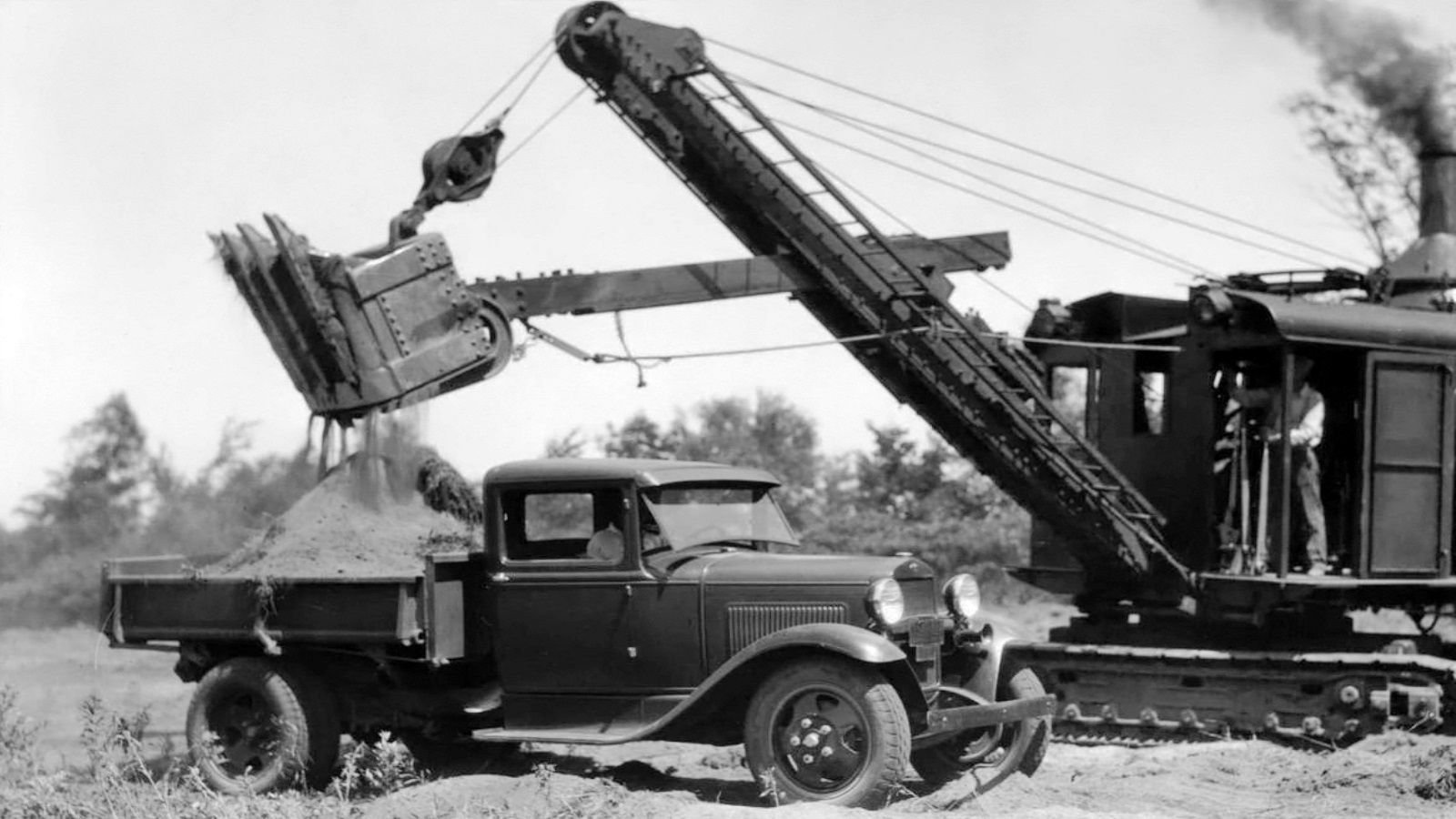
When the time came to replace the Model T, Ford changed everything and started over again in 1929 with the Model A and Model AA truck. With a 4-speed transmission, much more powerful motor, and much less agricultural interior, these Fords were much closer to the modern vehicles we still drive today. Ford wasted no time on the Model A truck, offering it as soon as the car debuted on a 103.5" wheelbase. The Model AA was offered in 131.5" and 157" sizes from the factory, and many more from the aftermarket. Dual rear wheels, duel rear axles and 5th wheel hitches allowed the AA to do serious duty as a tractor for tractor trailer rigs as well. In 1932, the Model B and BB were introduced and the flathead V8 became available. Ford trucks continued to be built with variations of the current passenger car parts until after WWII.
4. The 1948 Ford Series F
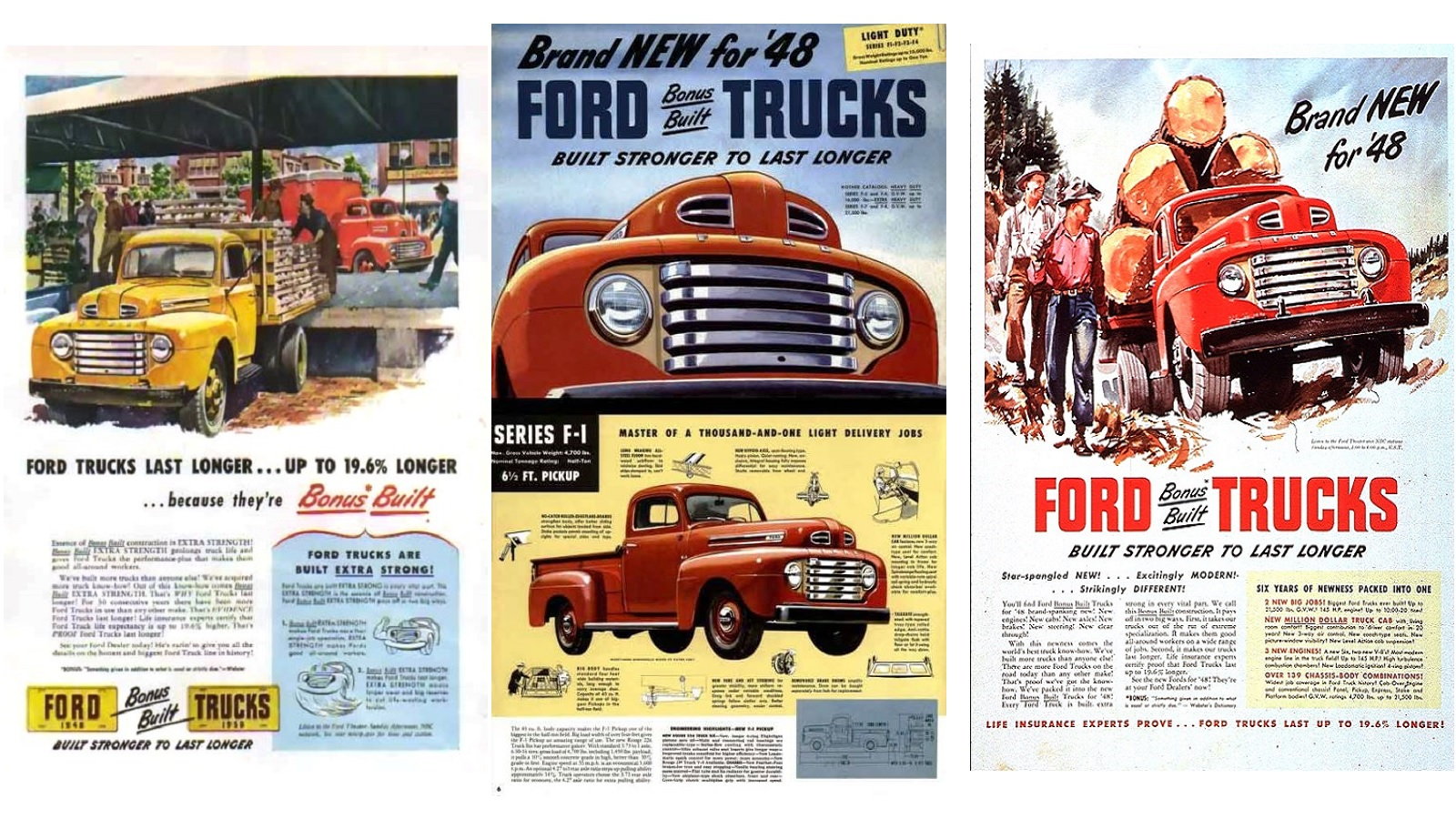
The year 1948 is where it all began for the Ford Series F, as it is called in the advertisements. These trucks were "bonus built" and featured dedicated frames, chassis, and cabs sharing no parts with previous trucks or the passenger cars. In fact, the 1948 Ford passenger cars were still based on the pre-war designs, while the truck was all new. The F-1 was your standard 1/2 ton pickup, the F-2 was a 3/4 ton, the F-3 was a heavy duty 3/4 ton, and the F-4 was a full 1 ton truck, very similar to the way things were done with the 10th generation trucks when there were two F-250 models.
5. The 1953 Ford F-100, F-250, F-350
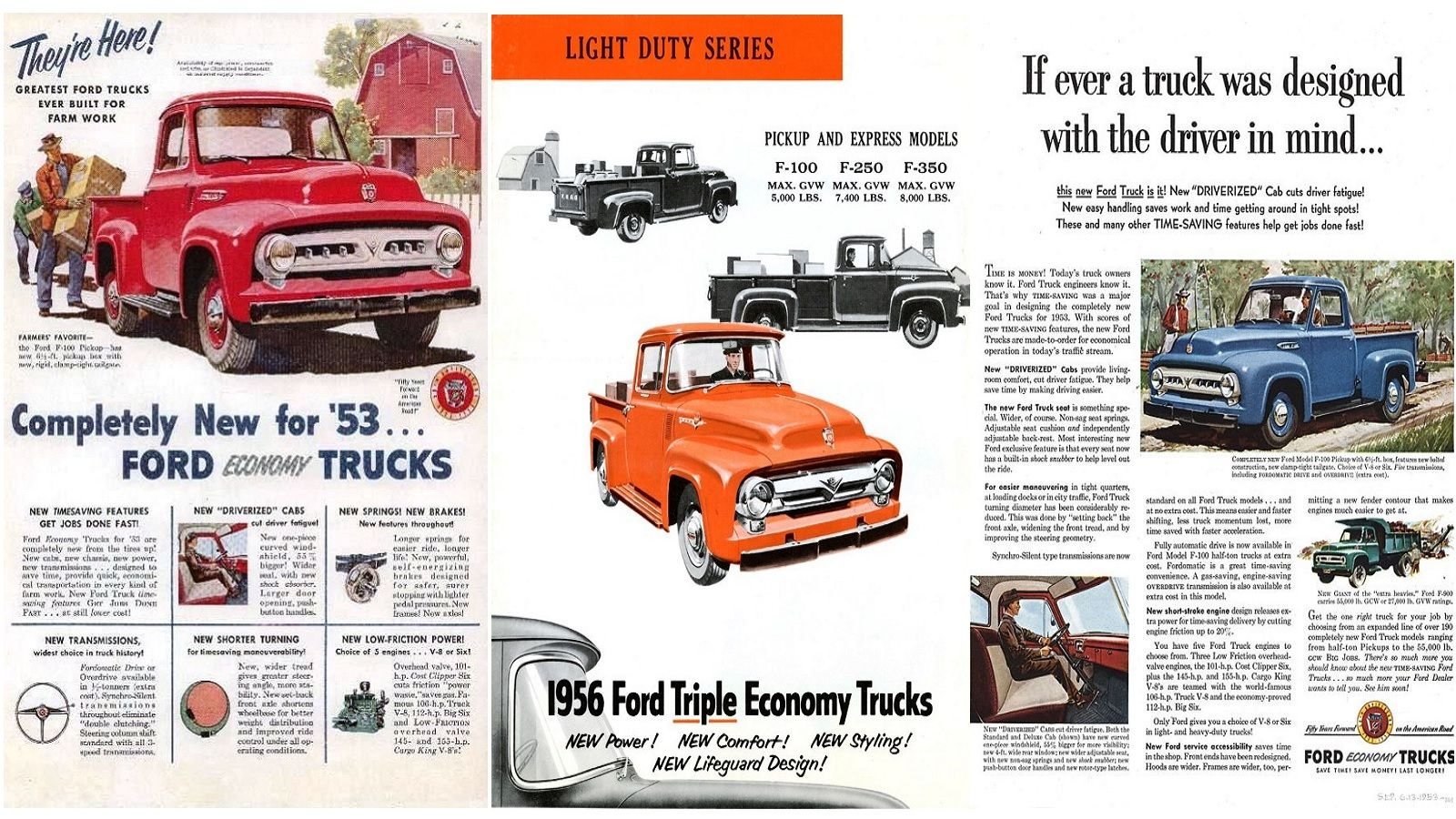
The 1953 was another all new Ford truck, and had several historic firsts. This generation was the first to introduce the current nomenclature, with the Ford F-100, F-250, F-350 and more for the different weight classes, partially inspired by the new F-100 Sabre jet fighter. Another hard to believe first is that these were the first Ford trucks to offer the option of an automatic transmission. You also had the option of adding passenger features were now take for granted, like seat belts.
6. The 1957 Ford F-100 StyleSide
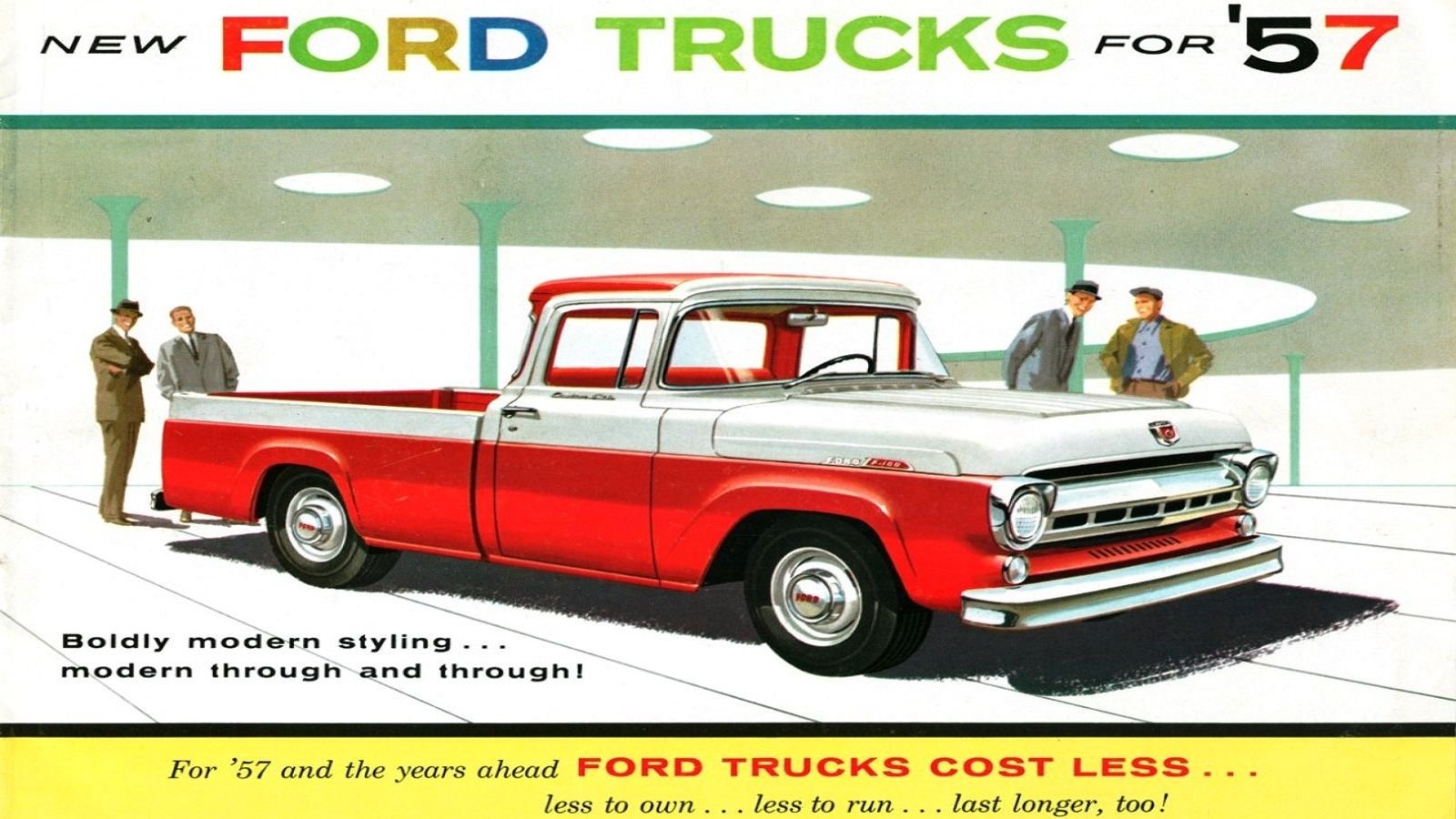
Before 1957, all Ford trucks had beds with separate rear fenders hung off of them, then came the StyleSide. The new trucks for 1957 evolved from the earlier generation, but featured wider, squarer styling with the front fenders integrated into the body. Out back was a smooth, modern, slab sided box with internal wheel wells and more room, though the FlareSide bed was still an option. Another first for this generation was the option of factory four wheel drive, replacing the previously offered aftermarket conversion.
7. The 1961 Ford F-100 Unibody
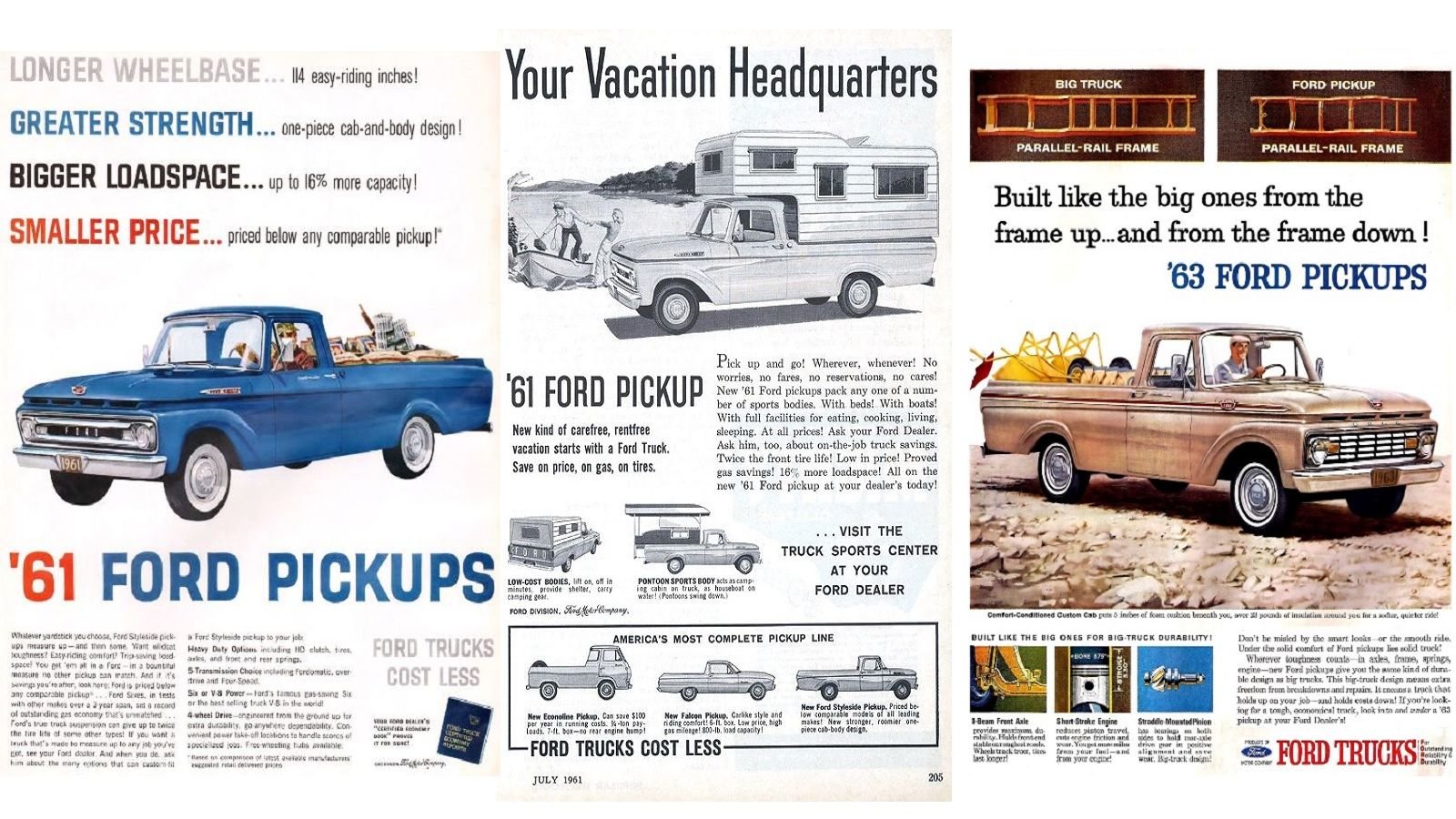
Just look at the sleek, stylish truck with a smooth body side all the way from the front bumper all the way back to the tailgate. Too bad the public wasn't ready for a pickup truck with an integrated cab and bed. After just 2 1/2 years, Ford was forced to move back to the traditional style bed and cab. Years later, Honda would face the same sort of prejudice against their integrated truck, the Ridgeline.
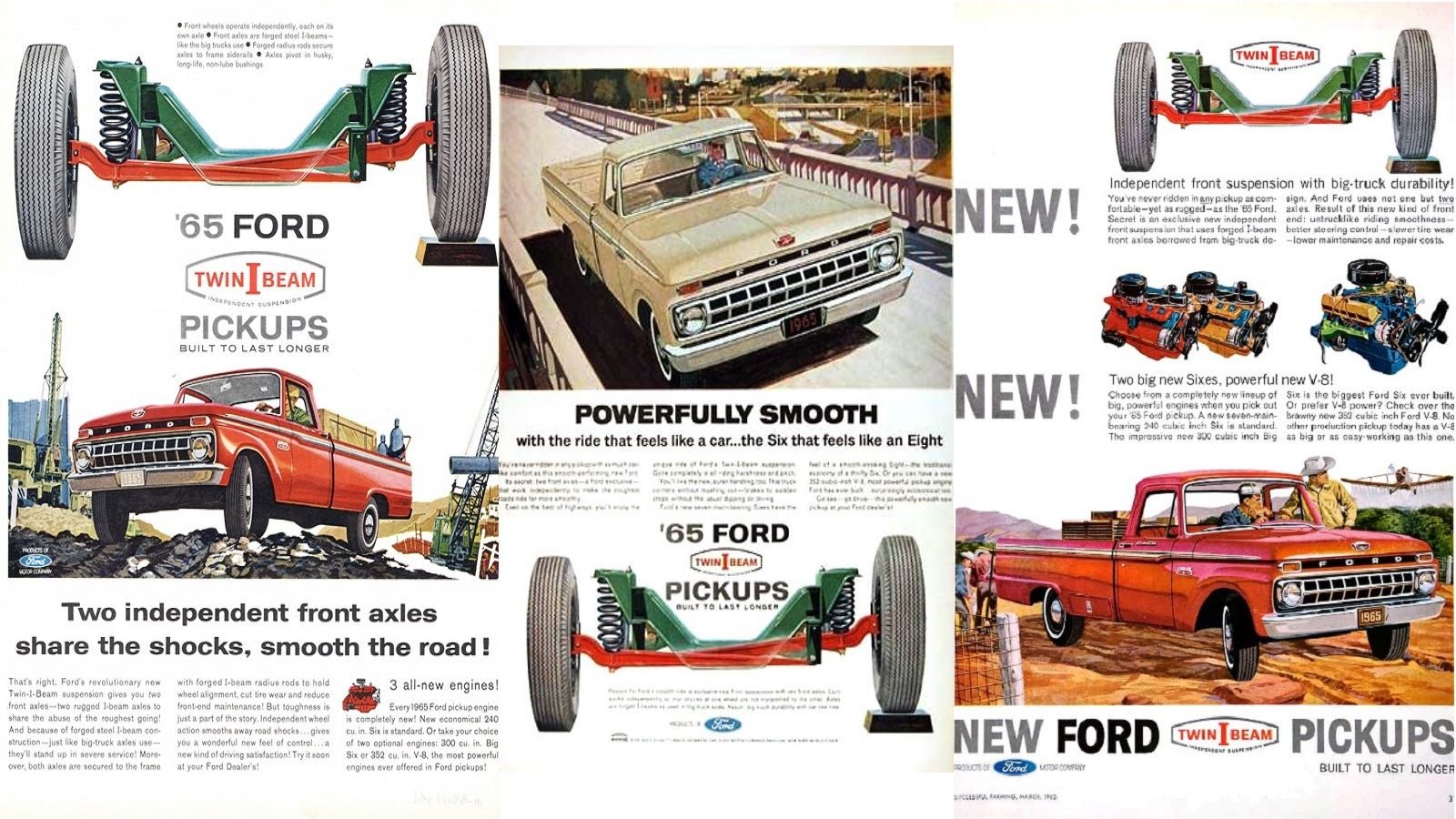
8. The 1965 Ford F-100 Twin I-Beam
The big news for 1965 was the new Twin I-beam front suspension design, replacing the solid front axle with two separate axles that pivoted in the frame rail opposite each wheel. This innovative design gave the truck ride and handling characteristics similar to independent suspension, but in a more durable package. Ford did such a good job on the engineering of the Twin I-beam, it continued to be used under the F-series for several more generations, until the debut of the 10th generation F-150 in 1997. 1965 also marked the introduction of an available crew cab Ford truck.
9. The 1975 Ford F-150 and SuperCab
The modern pickup truck era at Ford began with the 1975 model year. This was the first year Ford offered the SuperCab, with more passenger room, and it was also the first year the truck carried the F-150 designation. It would only be another 5 years before the F-100 vanished from the lineup completely and we got the familiar F-150, F-250, F-350 family. With the addition of the SuperCab, Ford now also offered all the modern cab configurations, with CrewCabs offered in the heavier duty trucks.
10. The 1996 Ford F-150
The boxy Ford F-150 had a good run, with the last 1996 truck sharing a lot of parts under the skin with the truck that premiered for the 1980 model year, which itself was an evolved form of earlier trucks. By the time the last one rolled off the line, it looks like a throwback to the days when nobody daily drove pickups unless they had to. The larger F-250 and F-350 continued to use this same body style just a little longer, until the new SuperDuty trucks were made for the 1999 model year.
For more information on maintenance and repairs, check out our do-it-yourself technical articles at Ford-Trucks.com/how-tos/.
Join the conversation about the historical milestones here in Ford-Trucks.