
10 Ford Trucks Basking in Fall Leaves
Autumn is perhaps the most poetic of seasons and what better way the celebrate "the year's last, loveliest smile" than with a procession of Ford trucks sparkling against the changing colors of Fall.
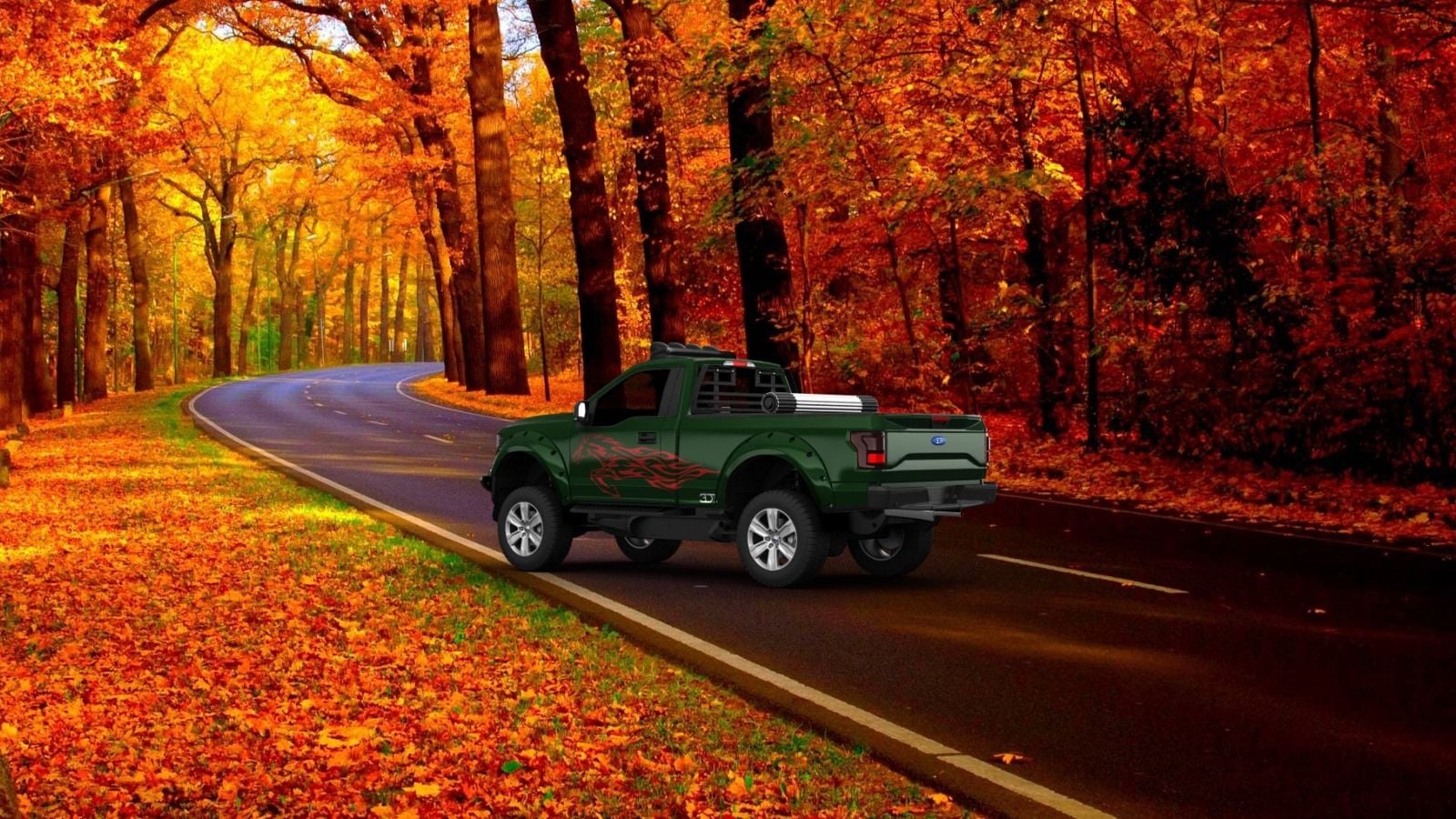




2015 Ford F-150
Autumn leaves began falling long before the Ford Motor Company started to manufacture trucks. The history of the Ford truck dates back to 1925 when Ford produced the first pickup truck, also known as the Ford Model T Runabout with Pickup Body (see the last slide). Since that time a countless number of leaves have changed color and fallen to earth, and a great many Ford trucks have paraded through their annual confetti-like celebrations. Ford and Fall is a combination that may not be as old as time, but timeless nonetheless.
The 2015 Ford F-150 above represents the present day (and 13th generation) iteration of the F series pickup truck. It's come a long way since 1925 and in the 90 plus years it's been around we've seen dozens upon dozens of series, models, styles, and modifications. The Ford F-Series has been the best-selling vehicle in the United States since 1981 and the best-selling pickup since 1977. In 2015 alone, it sold almost one million units in North America.
>>Join the conversation about Ford trucks basking in the Fall leaves right here in Ford-trucks.com.
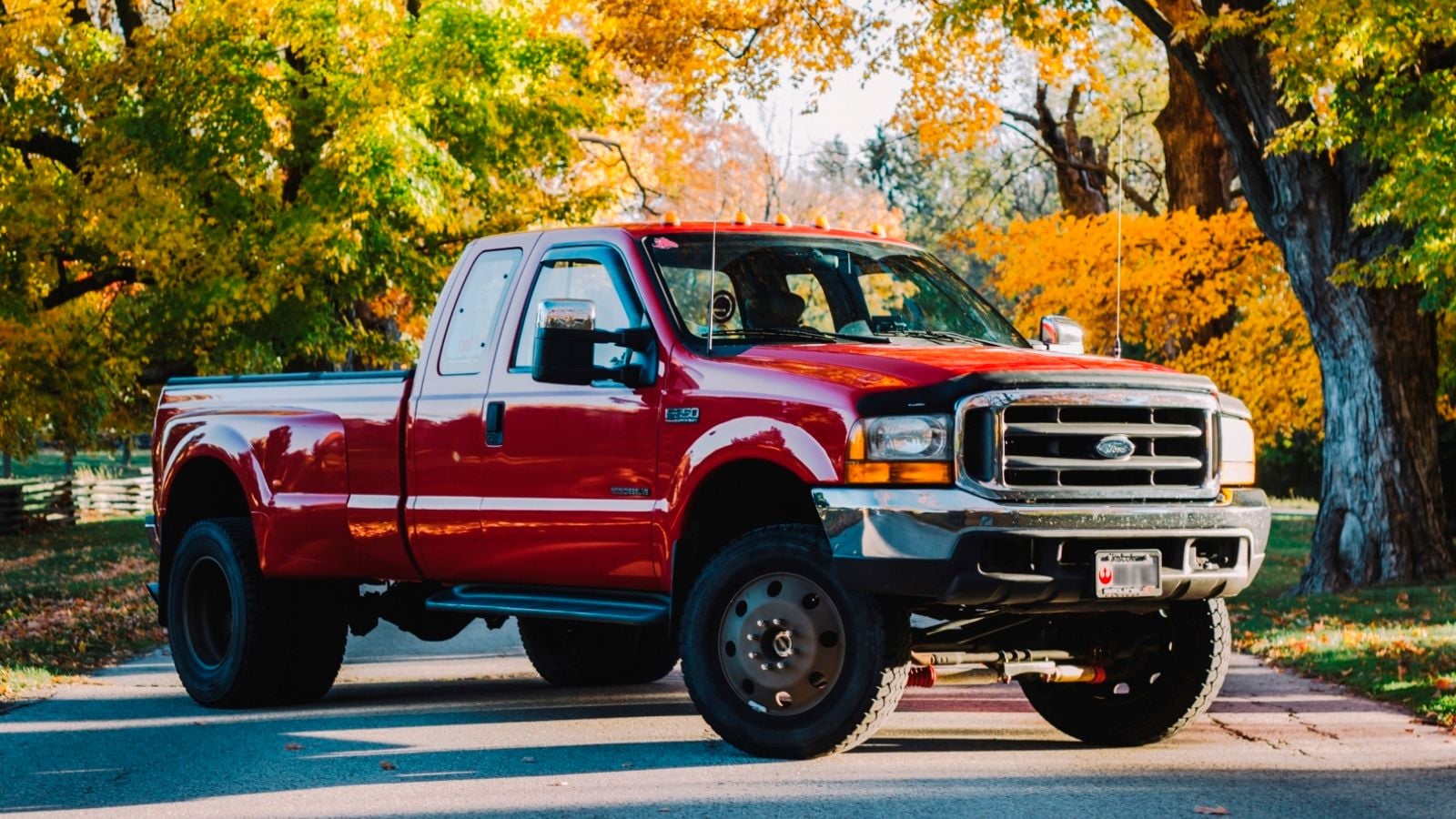
2003 Modified F-350 Dually 7.3
This 2003 F-350 carries a 7.3L turbo diesel engine. It is 4WD and AWD and has been modified to include 2008 rear bumper and tailgate, mirrors, bed liner, and Weathertech mudflaps. This is one car that can play in the leaves and still clean up nicely for dinner.
>>Join the conversation about Ford trucks basking in the Fall leaves right here in Ford-trucks.com.
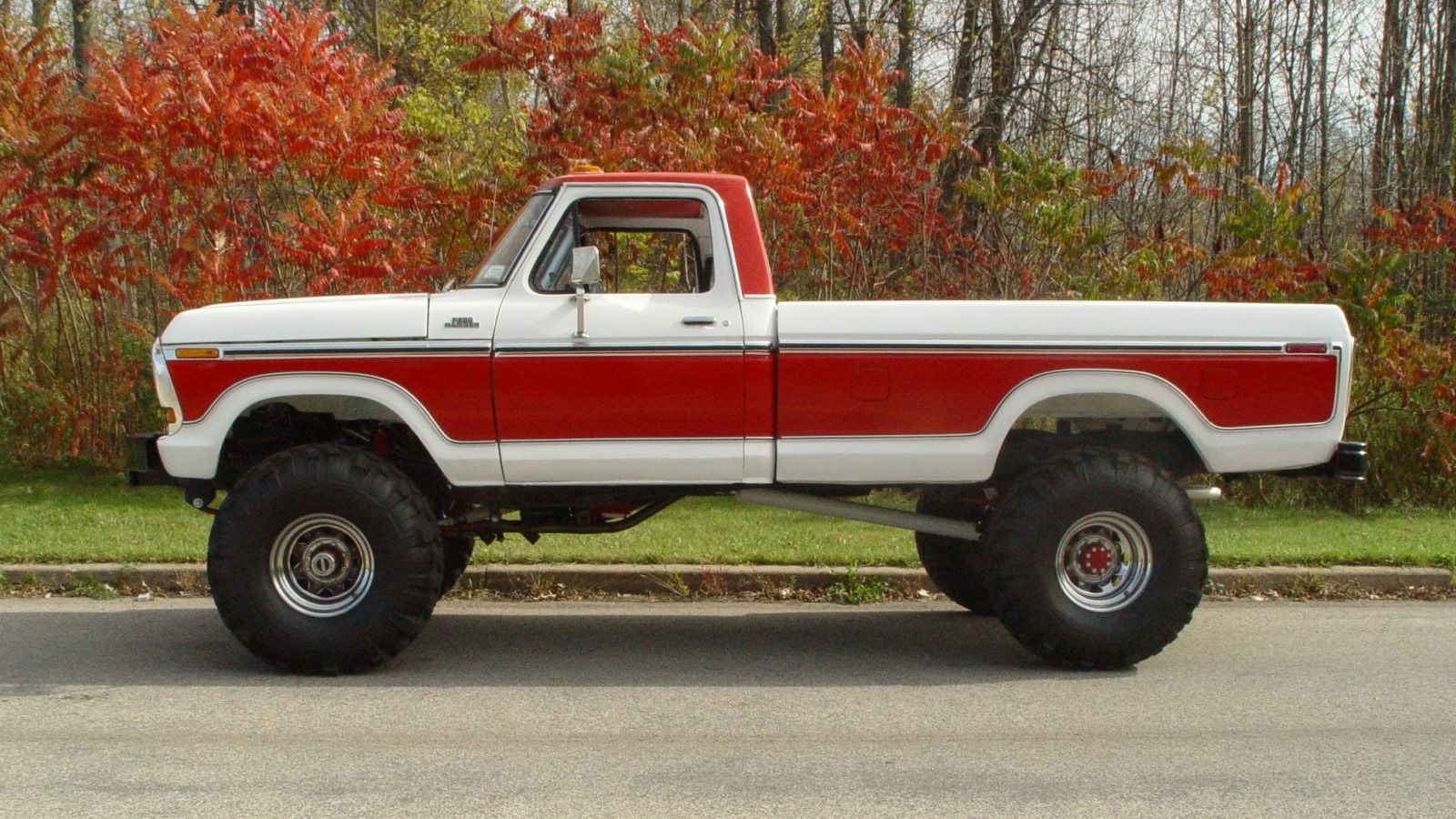
1978 Ford F-150 4X4
The sixth generation of the Ford F-Series pickup trucks and medium-duty commercial trucks were produced from 1972 to 1979. This was the last generation of trucks to use the F-Series chassis introduced in 1965. This generation also marked the introduction of the F-150 (above), which today is the most popular model.
These vehicles incorporated extensive amounts of galvanized sheet metal to the body panels making them more durable and able to fight corrosion. For 1978, the split grille was overhauled in favor of a single-piece grille insert design. Much larger than before, the grille no longer incorporated the headlights, turn signals or the " F O R D" letters. The headlights were located in the housings that sit beside the grille, and the park/turn signal lamps were located below them. Additionally, a new chrome-plated letter set reading "F O R D" could now be seen on the hood immediately above the grille.
>>Join the conversation about Ford trucks basking in the Fall leaves right here in Ford-trucks.com.
1972 Ford Ranger F250
Ford introduced its fifth generation F-Series pickup truck in 1967 and it lasted until 1972 when the pickup above hit the streets. Body lines became more squared and flat side panels were accented with a narrow indentation, which was highlighted by a stainless molding on Ranger models. Ford F-Series trucks underwent just a few changes in 1972. All engines received emission control systems. 4WD trucks had a new 3,300 lb. rated front axle. Ford offered a cold weather package that included an engine block heater, a larger battery, a more powerful alternator and a limited-slip rear axle.
>>Join the conversation about Ford trucks basking in the Fall leaves right here in Ford-trucks.com.
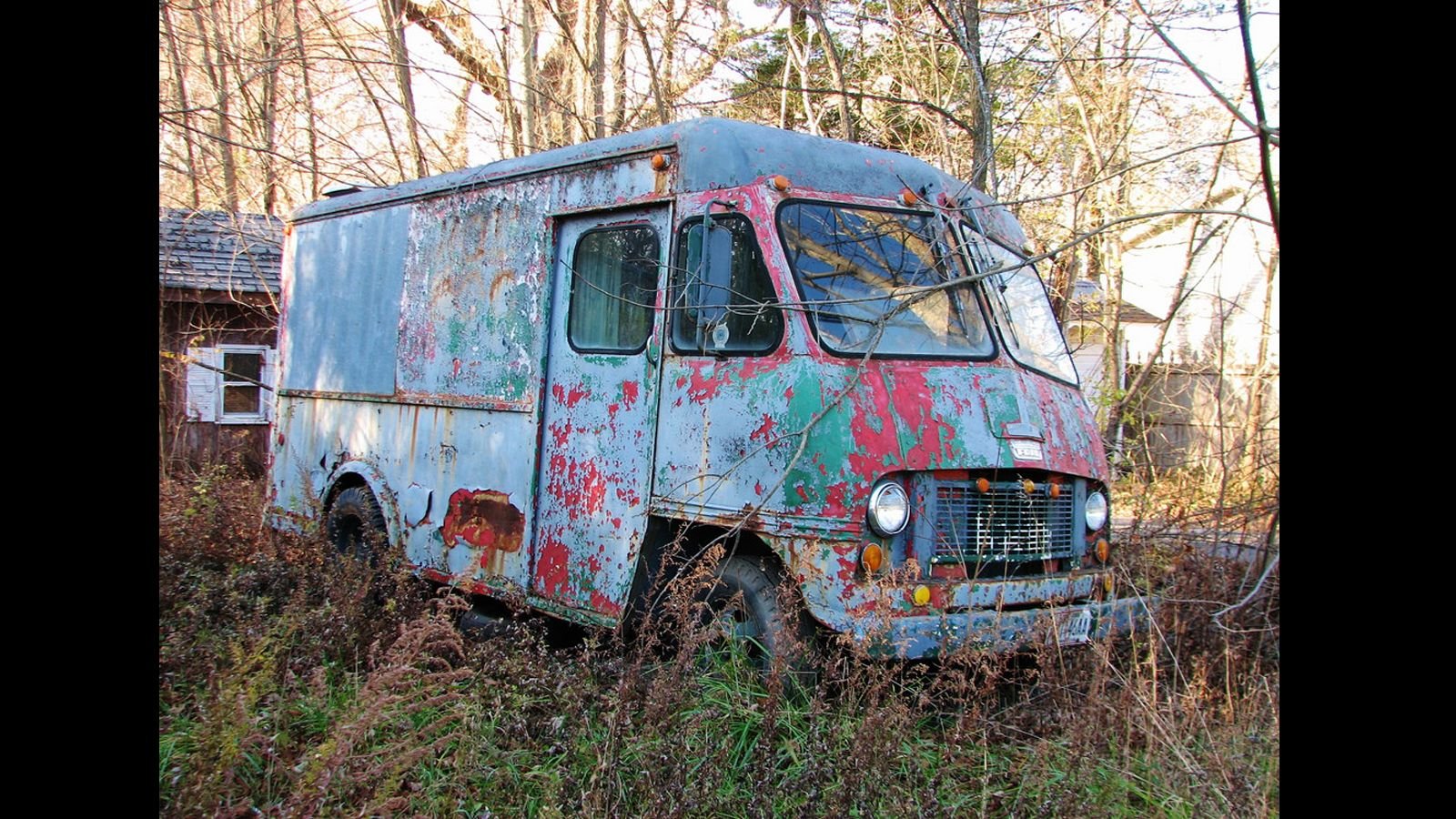
1967 Ford Routevan
This 1967 multi-stop Ford truck or step van was also known as the Ford Route Van or Boyertown minivan. They were light and medium duty trucks used for local residential and business deliveries. The driver could sit down or stand up while driving and had easy access to the goods stored behind him. These trucks were commonly used to deliver bakery items, but they were also used as bookmobiles, ice cream trucks, and linen supply vehicles. Even UPS, Federal Express, and Police S.W.A.T. teams used these vans to conduct business. A lot of our country's history can be traced through these vehicles, but like the leaves fall, so do trucks, and today they have been replaced by newer models such as the Ford Econoline (and Ford Transit), Ram Promaster, and Mercedes Benz Sprinter.
>>Join the conversation about Ford trucks basking in the Fall leaves right here in Ford-trucks.com.
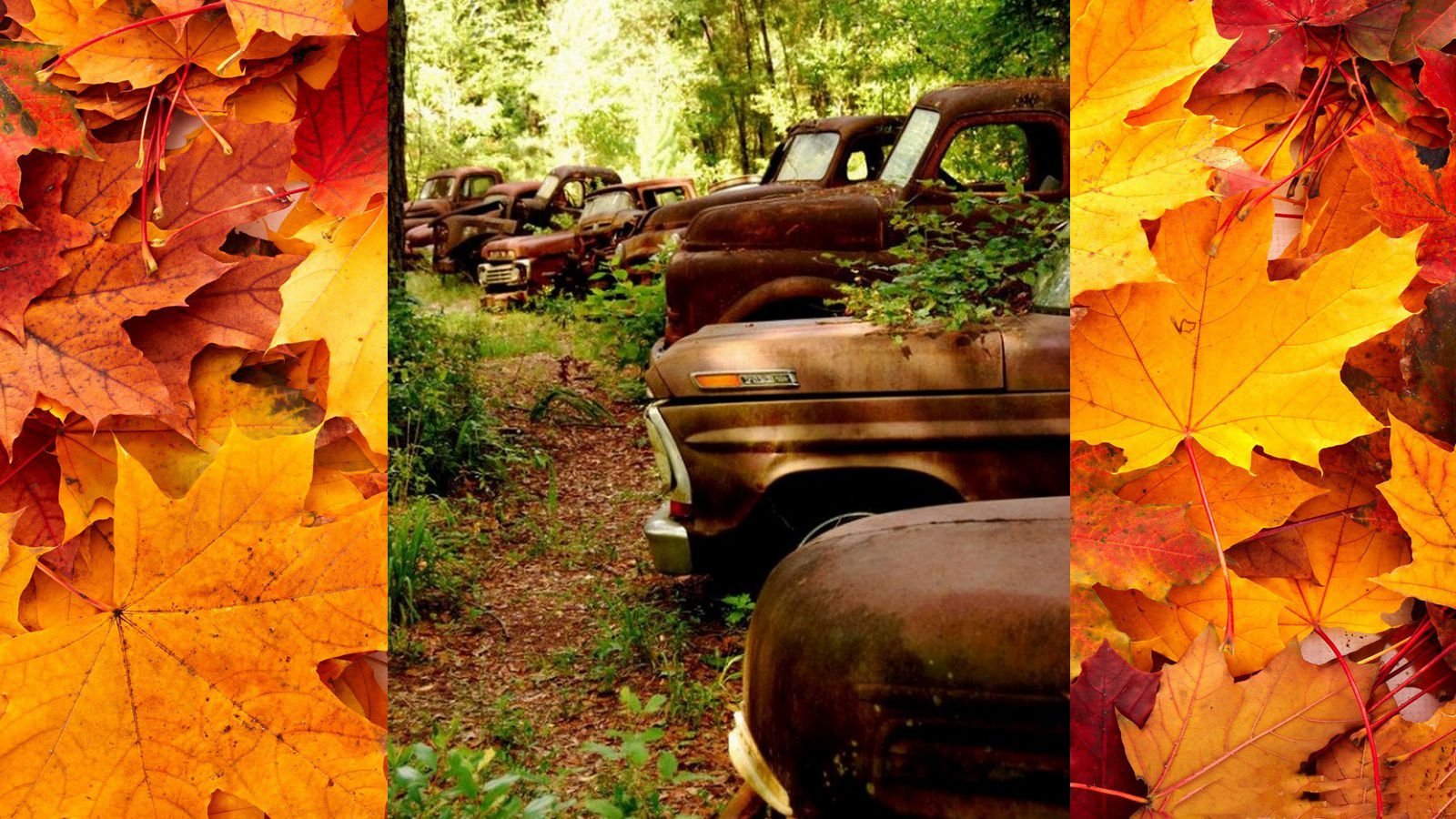
1970 Ford F100 et al
This rusted out 1970 Ford F100 in the foreground was a good old truck with 1/2 ton capacity. It was a basic workhorse with no power steering, no power brakes, and three speed on the tree. The single cab featured bench seats and seat belts. The engine was a 360 cubic inch V8, 5.9-liter that provided 215 hp.
Further back we can spot the 3rd generation 1959 Ford F100. Its most prominent feature is the tilt-cab design that was first introduced in 1957 to allow better access to the engine.
>>Join the conversation about Ford trucks basking in the Fall leaves right here in Ford-trucks.com.
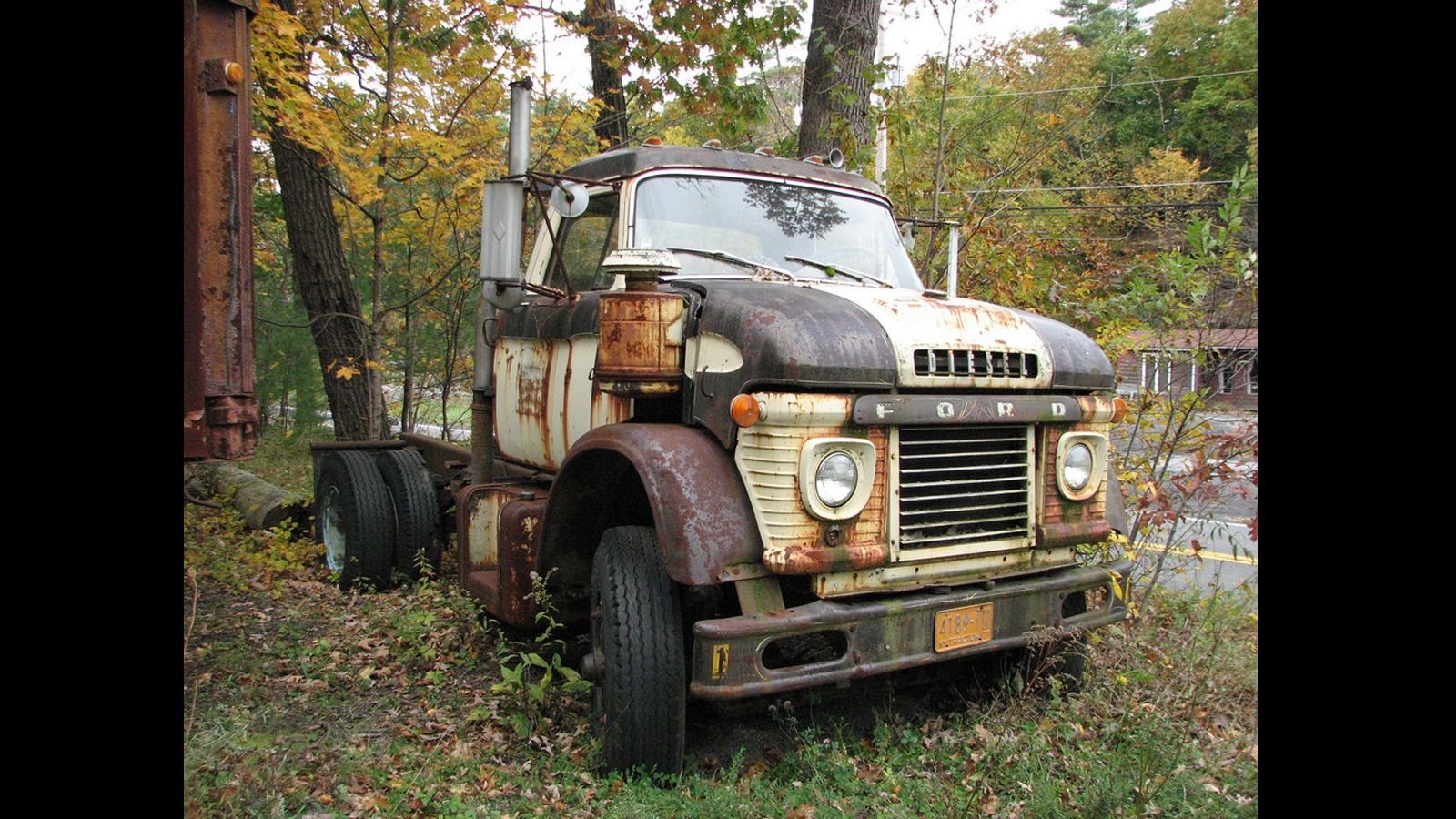
1963 Ford Super Duty N Series
Ford opened the 1963 model year with the release of another new series of trucks. This line of medium- and heavy-duty models were referred to as the N-Series. Cabs were the same as those used for the F-Series, but the nose was significantly shorter. This arrangement placed the N-Series between Ford's conventional trucks and the C-Series Tilt Cabs and made them popular for both city deliveries and over-the-road semi-tractor-trailer service where trailer-length limits were in force.
>>Join the conversation about Ford trucks basking in the Fall leaves right here in Ford-trucks.com.
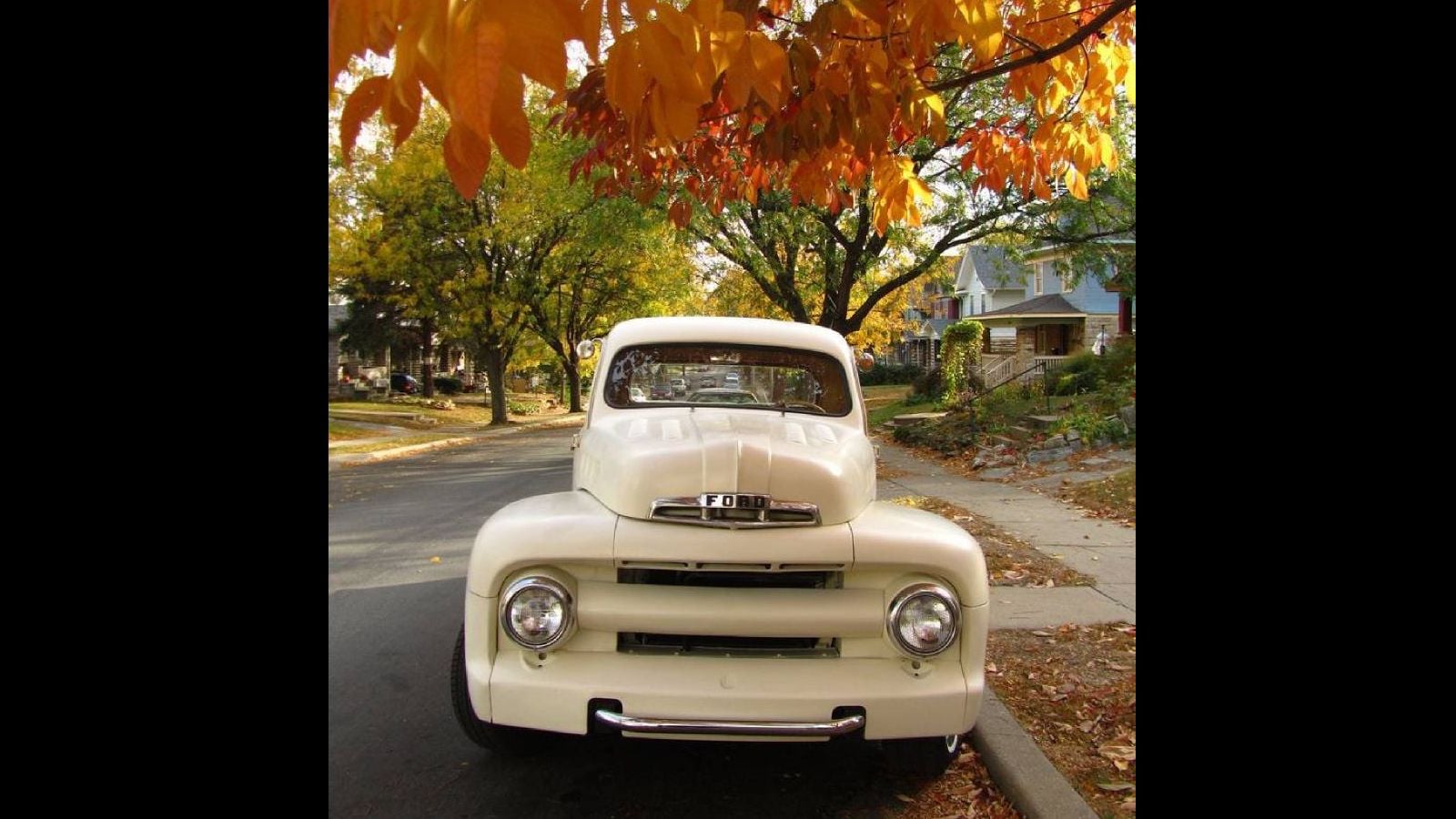
1951 Ford F1
This first generation F Series truck was first introduced in 1948 as a replacement for pre-War designed Ford trucks. It featured a 6-1/2 foot bed, a wider cab, one-piece windshield and the "See-Clear" window washer that was operated by a foot plunger. By the time 1951 rolled around, the headlights were connected by a wide aerodynamic cross piece with three similarly aerodynamic supports (conspicuously missing in the photo above). The rear window was wider in these later trucks and the dashboard was redesigned. This "Five-Star Cab" featured a hardwood floor bed, a larger rear window and door panels.
>>Join the conversation about Ford trucks basking in the Fall leaves right here in Ford-trucks.com.
1950 Ford F3
Despite its shiny disposition, this 1950 F3 heavy duty 3/4 ton farm truck was built to haul, not to turn heads. But turn heads it does, especially as it passes through picturesque scenes of autumn leaves turning color. Ford’s 1948 advertising used the slogan “Built Stronger to Last Longer," and this pickup has done just that! Under the hood is a flathead V8 with a 239 cubic inch engine that produced 100 horsepower when new. The primary difference between this beauty and the 1949 version was the standard three-speed shift, which was relocated from the floor to the steering column.
>>Join the conversation about Ford trucks basking in the Fall leaves right here in Ford-trucks.com.
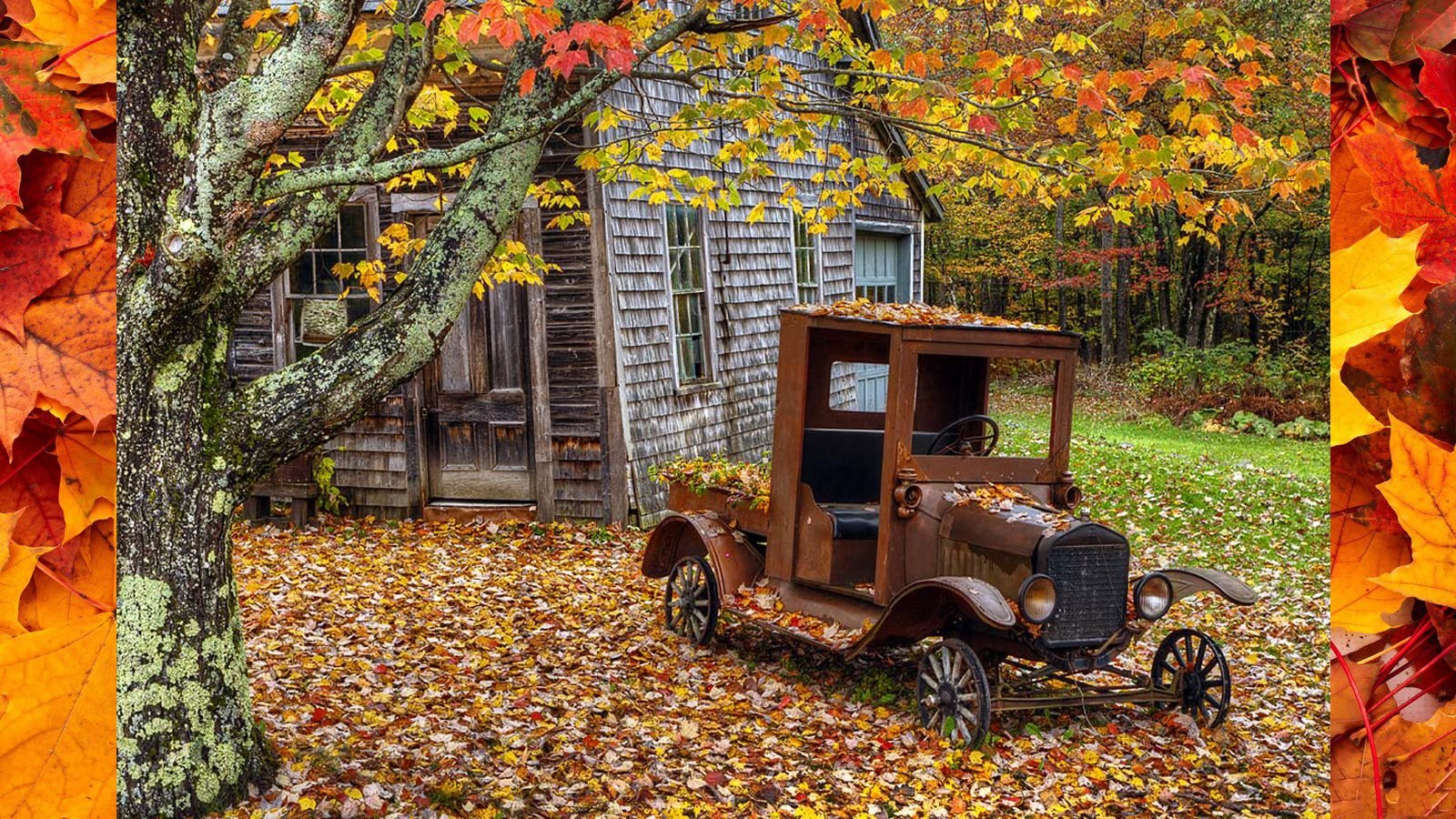
1925 Ford Model T Pickup
The date was April 25, 1925, and on that date, the Ford Motor Company introduced their first factory produced pickup truck. This new model was officially called the Ford Model T Runabout with Pickup Body and it came in one color, one model, without much equipment. The Model T's all steel bed was 56 inches long, 40 inches wide, and 13 inches high. The sides of the bed had pockets for stakes and the tailgate was adjustable. If you needed a longer heavier duty pickup truck you could opt for a Model TT (1 ton rated) Ford truck with an 8-foot long Express Body. The transmission was controlled with three-foot pedals and a lever mounted to the road side of the driver's seat: the left pedal engaged the gear, the middle pedal engaged reverse gear, and the right pedal operated the transmission brake while the throttle was a lever on the steering wheel. And the cost? A stunning $281.00.
I'm so glad I live in a world where there are Octobers. And Ford trucks.
>>Join the conversation about Ford trucks basking in the Fall leaves right here in Ford-trucks.com.
For help with your maintenance and repair projects, please visit our how-to section right here in the forum.