


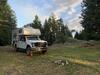



TC shifting - how to prepare for that inevitability

Thread Starter
|
5th Wheeling


Joined: Nov 2025
Posts: 26
Likes: 7
TC shifting - how to prepare for that inevitability
Good day folks
New to truck camping. Just got the new truck and will be getting a used hard-sided long box truck camper (~3k lbs) from private party in the near term.
This means I won't be getting the usual guidance a TC dealer would provide. One of my big concerns is what will I do if the TC shifts around on me in the back - while out away from home base. I don't plan on any off-roading at all - just state parks and stuff like that - so will be mostly highway miles.
I'm going to have the best tiedowns/turnbuckles all from Torklift and frame mounted.
1) HOW COMMON is it that the load will shift/move around enough that it actually NEEDS to be corrected? e.g. is this going to be happening every 50 miles down the road or maybe not any during a long trip/outing? subjective I know - but please give some insight those who are TC experts (and of course I will be trying to avoid potholes or rough roads as much as possible)
2) And how exactly do I fix it in these situations? Other than pulling off the road somewhere, lifting the TC off the truck w/ the jacks and completely remove and put the truck back in place (doesn't sound like a good plan for moving it small amounts) or just lift up the TC + re-lower the it perhaps more on 1 side than the other - depending on which direction it needs to move - and hoping that will straighten her out? e.g. if it shifts 1" too far (evenly back to front) to the passenger side, that would mean you lower more on the side you want it to MOVE in the direction of (here the driver's side)? And if back CORNER is 1" too far to the passenger side, then ?
New to truck camping. Just got the new truck and will be getting a used hard-sided long box truck camper (~3k lbs) from private party in the near term.
This means I won't be getting the usual guidance a TC dealer would provide. One of my big concerns is what will I do if the TC shifts around on me in the back - while out away from home base. I don't plan on any off-roading at all - just state parks and stuff like that - so will be mostly highway miles.
I'm going to have the best tiedowns/turnbuckles all from Torklift and frame mounted.
1) HOW COMMON is it that the load will shift/move around enough that it actually NEEDS to be corrected? e.g. is this going to be happening every 50 miles down the road or maybe not any during a long trip/outing? subjective I know - but please give some insight those who are TC experts (and of course I will be trying to avoid potholes or rough roads as much as possible)
2) And how exactly do I fix it in these situations? Other than pulling off the road somewhere, lifting the TC off the truck w/ the jacks and completely remove and put the truck back in place (doesn't sound like a good plan for moving it small amounts) or just lift up the TC + re-lower the it perhaps more on 1 side than the other - depending on which direction it needs to move - and hoping that will straighten her out? e.g. if it shifts 1" too far (evenly back to front) to the passenger side, that would mean you lower more on the side you want it to MOVE in the direction of (here the driver's side)? And if back CORNER is 1" too far to the passenger side, then ?

Mountain Pass


Joined: Dec 2021
Posts: 190
Likes: 131
From: North Central Washington
HERE is a pic of how I dealt with shifting side to side.
This entire thread has a lot of good info on your question.
This entire thread has a lot of good info on your question.

4wd Low
Joined: Nov 2024
Posts: 11
Likes: 7
From: Quebec
It happened to me on interstate with poor surface (regular bumps / waves). The speed and lateral wind component, regular bumps cause the fore & aft pitch. With my - first - 1000 lbs light camper, I used a small bottle jack sideways - with planks to protect surfaces in contact - to realign the camper. With a heavier camper, I would definitely lighten it up using the 4 legs first, then realign the pickup. Having said that, to carry my Bigfoot camper I fabricated a base that prevents any side movement in the pickup bed.
Last edited by God_Zilla; May 7, 2026 at 11:43 AM.

Cross-Country
Joined: Aug 2023
Posts: 79
Likes: 74
I currently have a belt sander roll glued to my wooden riser for some traction. I haven't used any bracing in my 3 years hard side TC experience, but it wouldn't hurt. The wedge designs look to be effective and would also aid in loading. It has infrequently shifted slightly (~1") sideways at times due to a combination of wind gusts, lousy roads and expansion joints. I have not experienced any fore/aft shifting. I lift it up and re-center the truck if it bothers me enough or the front tie downs get too close to my lift jacks on one side for comfort. I do not feel that it has ever moved enough to be a safety concern. I peek at it and check Fastgun tension at each fuel stop. For some perspective, I repositioned it twice on a 4000 mile trip this winter.
Last edited by koolhandluke1; May 8, 2026 at 04:16 AM. Reason: punctuation

Tuned

Joined: Oct 2020
Posts: 411
Likes: 284
From: Northern Sierra Nevada
Depending on what camper you are contemplating, I would worry 1st about how much lift you are going to need. Yes, almost every truck camper made needs to clear the taller than the competition Ford cab. And there's another "depends" moment there (no, not the kind you wear) about the top of the cab config. If nothing is on the cab roof (no lights, no shark fin antenna nor block style satellite radio antenna) and you have a structurally sound support base, and there is very little to no "bobbing" of the front camper overhang over undulating roads, just a couple inches of clearance will work. Mine is Northstar Laredo with two rear placed block style XM radio antennae, and 2 inches still works. If any of the above rooftop structures are there, you must add an appropriate amount of lift for the camper box. But with the amount of variations facing you, trial and error may be in effect.
Tell us what camper you are going to obtain and maybe someone on here who has one can give you a few tips about that specific install.
Immerse yourself into the several camper lifting/raising for a Ford threads on here, but steer clear of the compression resisting blue foam boards.
Next step is to ascertain whether you'll need to offset the new-to-you camper away from the bulkhead so as to not jam the inner parts of the truck tail lights when sliding the camper onto the bed. Rubber blocks may be in your future.
Now, about a mechanism to keep the camper centered. I use scrap 5 quarter (5/4, a full 1 inch thick) x 6 inch cedar planks and 3/4 x 6 inch cedar boards added as shims between the wheel wells and the lower sides of the camper, put into position a few inches before the box is completely loaded; just enough clearance that you can get your head in there and see that they're not jammed at an angle. Length doesn't matter a lot. Just so they stay put, so longer is better. While it's still slightly( a half inch from running aground) up on the jacks,and the side boards in position, rock the box back and forth to see if there is any play. You need just a little but not more than a half inch to an inch of back and forth motion. The planks can also be installed from the rear end of the camper if your camper has no built in step bumper.
jefe de nada
Tell us what camper you are going to obtain and maybe someone on here who has one can give you a few tips about that specific install.
Immerse yourself into the several camper lifting/raising for a Ford threads on here, but steer clear of the compression resisting blue foam boards.
Next step is to ascertain whether you'll need to offset the new-to-you camper away from the bulkhead so as to not jam the inner parts of the truck tail lights when sliding the camper onto the bed. Rubber blocks may be in your future.
Now, about a mechanism to keep the camper centered. I use scrap 5 quarter (5/4, a full 1 inch thick) x 6 inch cedar planks and 3/4 x 6 inch cedar boards added as shims between the wheel wells and the lower sides of the camper, put into position a few inches before the box is completely loaded; just enough clearance that you can get your head in there and see that they're not jammed at an angle. Length doesn't matter a lot. Just so they stay put, so longer is better. While it's still slightly( a half inch from running aground) up on the jacks,and the side boards in position, rock the box back and forth to see if there is any play. You need just a little but not more than a half inch to an inch of back and forth motion. The planks can also be installed from the rear end of the camper if your camper has no built in step bumper.
jefe de nada
Last edited by jefe4x4; May 8, 2026 at 02:43 PM.
Trending Topics
Thread Starter
|
5th Wheeling
Joined: Nov 2025
Posts: 26
Likes: 7
Thank you - when you mentioned steering clear of "blue foam boards" - are the pink ones OK (25psi compression strength)?
FTE Stories
Ford Trucks for Ford Truck Enthusiasts

10 Best Ford Truck Engines We Miss the Most!
Joe Kucinski
2026 Shelby F-150 Off-Road: Better Than a Raptor R?
Brett Foote
2027 Super Duty Carhartt Package First Look: 12 Things You NEED to Know!
Michael S. Palmer
10 Most Surprising 2026 Ford Truck Features!
Joe Kucinski
Top 10 Ford Trucks Coming to Mecum Indy 2026
Brett Foote
5 Best / 5 Worst Ford Truck Wheels of All Time
Joe Kucinski
Ford Super Duty: 5 Things Owners LOVE, 5 Things They LOATHE!
Joe Kucinski
Every 2026 Ford Truck Engine RANKED from WORST to FIRST!
Michael S. Palmer
The Best F-150 Deal of Every Trim Level (XL through Raptor)
Joe Kucinski
Tuned
Joined: Oct 2020
Posts: 411
Likes: 284
From: Northern Sierra Nevada
No, any foam board sheets will eventually round off along the edges; side to side, and front and rear.
I thought it a good idea until i spent $200 on a couple 4x8x4 inches and quickly cut them to size.
I thought it a good idea because the foam board is used as winter insulation under concrete sidewalks.
These can be seen in a former thread. They were no panacea.
The side to side and fore to aft rocking got worse over 6 months of off road oddesies.
Some have used a piece of plywood over the top with some success, but in the end there is too much and constant "loosening up" of the fit.
If you do no off roading and stick to pavement and interstates, you may beat the system for quite a while.
The base is just not stable enough.
See my post on 5 quarter cedar planks for risers.
Even better, I got to reuse the 4 inch blue foam board as floor insulation by cutting them to fit up in the space under the Laredo's 4 inch under framing.
So, in a way it was a win/win but it tooik a while to get there.
jefe de nada
I thought it a good idea until i spent $200 on a couple 4x8x4 inches and quickly cut them to size.
I thought it a good idea because the foam board is used as winter insulation under concrete sidewalks.
These can be seen in a former thread. They were no panacea.
The side to side and fore to aft rocking got worse over 6 months of off road oddesies.
Some have used a piece of plywood over the top with some success, but in the end there is too much and constant "loosening up" of the fit.
If you do no off roading and stick to pavement and interstates, you may beat the system for quite a while.
The base is just not stable enough.
See my post on 5 quarter cedar planks for risers.
Even better, I got to reuse the 4 inch blue foam board as floor insulation by cutting them to fit up in the space under the Laredo's 4 inch under framing.
So, in a way it was a win/win but it tooik a while to get there.
jefe de nada
4wd Low
Joined: Nov 2024
Posts: 11
Likes: 7
From: Quebec

Riser: 6" X 5/4" cedar planks mounted on blocks to proper height. Prevents rocking fore & aft.

high density foam filling the middle

1/8" rubber carpet to prevent sliding
Last edited by God_Zilla; May 11, 2026 at 07:54 PM.
Thread Starter
|
5th Wheeling
Joined: Nov 2025
Posts: 26
Likes: 7
jefe4x4 - thanks for taking the time to share your info - good to know. as a side note - i tried exhaustively to find any 40/60 or 100psi foam boards in the Houston area, or that would ship to me (anything other than a pallot of them) and came up short. I think I found 1 place online that would ship the 40psi boards but it was $200-300$ in just shipping. Seems those are used up north mainly, closer to where they get manufactured. And no one carries them in the south.
4wd Low
Joined: Nov 2024
Posts: 11
Likes: 7
From: Quebec
Hi jefe4x4, I appreciate your ususal informative comments. I'm not sure if your question was adressed to me.
Anyway, my camper is a Bigfoot - fiberglass - flat bottom. Most of the weight is carried by the perimeter. The whole perimeter sits flush up to the ouside of the cedar planks. the floor center sits on the hi-dens styrofoam. Last summer, there was only styrofoam, but at the end of the season I noticed the front underside of the boards had caved between the cargo bed channels, about an 1/8" deep. Hence the fabrication of a solid riser, not too heavy, about 120 lbs including carpet. See three photos previously posted. The sleeping area of the camper is 44" high; the Super Duty cabin is 46" high. Blocks were necessary. I also screwed 4 vertical blocks covered by carpet at each corner, to guide loading and prevent sideways movement.
Thanks
Marc
Anyway, my camper is a Bigfoot - fiberglass - flat bottom. Most of the weight is carried by the perimeter. The whole perimeter sits flush up to the ouside of the cedar planks. the floor center sits on the hi-dens styrofoam. Last summer, there was only styrofoam, but at the end of the season I noticed the front underside of the boards had caved between the cargo bed channels, about an 1/8" deep. Hence the fabrication of a solid riser, not too heavy, about 120 lbs including carpet. See three photos previously posted. The sleeping area of the camper is 44" high; the Super Duty cabin is 46" high. Blocks were necessary. I also screwed 4 vertical blocks covered by carpet at each corner, to guide loading and prevent sideways movement.
Thanks
Marc
Last edited by God_Zilla; May 12, 2026 at 06:42 AM.

Cross-Country
Joined: Nov 2018
Posts: 50
Likes: 12
This is more of a psychological problem/fear than an actual issue. I rally my truck camper at much higher speeds, bumpier roads, and sketchier conditions than anyone. Yes, it can shift a bit, but if the tie downs are secure, who cares? So my rearview mirror might not line up perfectly with the rear door window... I'll correct it next time I unload/reload. 2 inches of shift in any direction has zero impact on anything (unless your tie downs are way too loose).