





Lots of porpoising when pulling TT

Thread Starter
|
Tuned


Joined: Jan 2001
Posts: 309
Likes: 69
Lots of porpoising when pulling TT
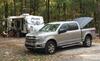
I get lots of porpoising when pulling our camper. Camper is around 6500# and tongue weight is about 600#. I've ran it with and without a WDH and it still bounces quite a bit. Any ideas? Is the long bed contributing? We didn't get the FX4 package so I wonder if the more basic shock is to blame? No air bags either...point the finger at that? Maybe all of it? Let me know what you think?
Oh, for clarity about the shock question comment, we only have 13,000 on the truck so they aren't worn out at all.
My WDH is a bar/chain set up and uses a receiver adapter to fit the 3" hitch. When not using the WDH, it's a 3" receiver with no drop and doesn't extend as far out so the camper's distance is 4" closer to the truck. I had hoped that would eliminate some of the porpoising (100# less weight back there with the WDH and parts removed) but nope still does it.
It's not an unsafe ride by any means, but I want something that is more peaceful and can soak up bridges and train tracks a little better without wallowing 2-3 times before settling back down. I just don't want to upgrade my WDH, replace all 4 shocks, or install airbags without knowing it'll be the solution.
Oh, for clarity about the shock question comment, we only have 13,000 on the truck so they aren't worn out at all.
My WDH is a bar/chain set up and uses a receiver adapter to fit the 3" hitch. When not using the WDH, it's a 3" receiver with no drop and doesn't extend as far out so the camper's distance is 4" closer to the truck. I had hoped that would eliminate some of the porpoising (100# less weight back there with the WDH and parts removed) but nope still does it.
It's not an unsafe ride by any means, but I want something that is more peaceful and can soak up bridges and train tracks a little better without wallowing 2-3 times before settling back down. I just don't want to upgrade my WDH, replace all 4 shocks, or install airbags without knowing it'll be the solution.
Last edited by quadna711; Apr 19, 2026 at 07:55 PM.

More Turbo


Joined: Dec 2018
Posts: 669
Likes: 179
I get lots of porpoising when pulling our camper. Camper is around 6500# and tongue weight is about 600#. I've ran it with and without a WDH and it still bounces quite a bit. Any ideas? Is the long bed contributing? We didn't get the FX4 package so I wonder if the more basic shock is to blame? No air bags either...point the finger at that? Maybe all of it? Let me know what you think?
Oh, for clarity about the shock question comment, we only have 13,000 on the truck so they aren't worn out at all.
My WDH is a bar/chain set up and uses a receiver adapter to fit the 3" hitch. When not using the WDH, it's a 3" receiver with no drop and doesn't extend as far out so the camper's distance is 4" closer to the truck. I had hoped that would eliminate some of the porpoising (100# less weight back there with the WDH and parts removed) but nope still does it.
It's not an unsafe ride by any means, but I want something that is more peaceful and can soak up bridges and train tracks a little better without wallowing 2-3 times before settling back down. I just don't want to upgrade my WDH, replace all 4 shocks, or install airbags without knowing it'll be the solution.
Oh, for clarity about the shock question comment, we only have 13,000 on the truck so they aren't worn out at all.
My WDH is a bar/chain set up and uses a receiver adapter to fit the 3" hitch. When not using the WDH, it's a 3" receiver with no drop and doesn't extend as far out so the camper's distance is 4" closer to the truck. I had hoped that would eliminate some of the porpoising (100# less weight back there with the WDH and parts removed) but nope still does it.
It's not an unsafe ride by any means, but I want something that is more peaceful and can soak up bridges and train tracks a little better without wallowing 2-3 times before settling back down. I just don't want to upgrade my WDH, replace all 4 shocks, or install airbags without knowing it'll be the solution.
Id try and get the tongue weight up close to 900 lbs and see how it feels.

Logistics Pro


Joined: Jan 2010
Posts: 4,052
Likes: 1,607
So the issue here is most likely the trailer...and there may not be much you can do about it.
For example, we have a travel trailer that is a similar weight, maybe a little bit heavier. It has porpoised behind every truck we've hooked it up to, to some extent. It was worse behind the Power Wagon as it had a soft suspension, it did it behind my last Ram 2500, it did it behind my FIL's old F250 Godzilla, and without the WDH it does it behind my current truck (haven't pulled it with the WDH yet because we haven't gone camping, so I can't say if that helps or not).
In contrast, my flatbed when loaded to a similar weight doesn't do it nearly as bad.
The difference is how it's loaded, in my opinion. See with my flatbed I can control where the load is at, to get tongue weight and everything dialed in. With the travel trailer, the vast majority of the weight is just where it is, and you can't do anything about it. You can play around with where you have your gear, food, and clothing loaded, but most everything else is already locked down.
Some things that I have noticed that help, however, is to always run with a full water tank (a partial load can make it worse because the water can 'move' more) to add some tongue weight, and run with very little to nothing in any waste tanks (I try to leave no more than 5 gallons in there, which I will usually stop and dispose of on my way home, keeps the tank cleaner).
Also, try adjusting your WDH to take less weight off the hitch - easiest way is to just have one less link hanging on the chains, otherwise you have to mess with hitch head angle and whatnot and those involve tools. Adjusting how many links you have hanging is quick and tells the story.
Shocks may help, but unlikely. Airbags are bandaids, they'll stiffen up the rear suspension of your truck but they don't address the root cause, and COULD make things worse by making the ride even rougher.
There are some WDH systems that claim to help, but I don't know enough about them to say whether they're worth the upgrade.
For example, we have a travel trailer that is a similar weight, maybe a little bit heavier. It has porpoised behind every truck we've hooked it up to, to some extent. It was worse behind the Power Wagon as it had a soft suspension, it did it behind my last Ram 2500, it did it behind my FIL's old F250 Godzilla, and without the WDH it does it behind my current truck (haven't pulled it with the WDH yet because we haven't gone camping, so I can't say if that helps or not).
In contrast, my flatbed when loaded to a similar weight doesn't do it nearly as bad.
The difference is how it's loaded, in my opinion. See with my flatbed I can control where the load is at, to get tongue weight and everything dialed in. With the travel trailer, the vast majority of the weight is just where it is, and you can't do anything about it. You can play around with where you have your gear, food, and clothing loaded, but most everything else is already locked down.
Some things that I have noticed that help, however, is to always run with a full water tank (a partial load can make it worse because the water can 'move' more) to add some tongue weight, and run with very little to nothing in any waste tanks (I try to leave no more than 5 gallons in there, which I will usually stop and dispose of on my way home, keeps the tank cleaner).
Also, try adjusting your WDH to take less weight off the hitch - easiest way is to just have one less link hanging on the chains, otherwise you have to mess with hitch head angle and whatnot and those involve tools. Adjusting how many links you have hanging is quick and tells the story.
Shocks may help, but unlikely. Airbags are bandaids, they'll stiffen up the rear suspension of your truck but they don't address the root cause, and COULD make things worse by making the ride even rougher.
There are some WDH systems that claim to help, but I don't know enough about them to say whether they're worth the upgrade.
Thread Starter
|
Tuned
Joined: Jan 2001
Posts: 309
Likes: 69
Trending Topics
Thread Starter
|
Tuned
Joined: Jan 2001
Posts: 309
Likes: 69
Might be tough to do but I can do some temporary things to see if that makes a difference. The challenge is the freshwater, one of the grays, and the black tank are all behind the axles. I have one gray tank in front of the axles and the propane. I did have the batteries up on the tongue, but they are now moved back to under the bed (just in front of the axles) and are lighter with the LFP upgrade. Maybe I can get a tongue box and then load it up a little?
FTE Stories
Ford Trucks for Ford Truck Enthusiasts

10 Best Ford Truck Engines We Miss the Most!
Joe Kucinski
2026 Shelby F-150 Off-Road: Better Than a Raptor R?
Brett Foote
2027 Super Duty Carhartt Package First Look: 12 Things You NEED to Know!
Michael S. Palmer
10 Most Surprising 2026 Ford Truck Features!
Joe Kucinski
Top 10 Ford Trucks Coming to Mecum Indy 2026
Brett Foote
5 Best / 5 Worst Ford Truck Wheels of All Time
Joe Kucinski
Ford Super Duty: 5 Things Owners LOVE, 5 Things They LOATHE!
Joe Kucinski
Every 2026 Ford Truck Engine RANKED from WORST to FIRST!
Michael S. Palmer
The Best F-150 Deal of Every Trim Level (XL through Raptor)
Joe Kucinski
Thread Starter
|
Tuned
Joined: Jan 2001
Posts: 309
Likes: 69
Hard to reposition cargo with the floor plan on the camper I'm dealing with. I'll have to mess around with temporarily adding weight to the tongue.
Thread Starter
|
Tuned
Joined: Jan 2001
Posts: 309
Likes: 69
Some things that I have noticed that help, however, is to always run with a full water tank (a partial load can make it worse because the water can 'move' more) to add some tongue weight, and run with very little to nothing in any waste tanks (I try to leave no more than 5 gallons in there, which I will usually stop and dispose of on my way home, keeps the tank cleaner).
Also, try adjusting your WDH to take less weight off the hitch - easiest way is to just have one less link hanging on the chains, otherwise you have to mess with hitch head angle and whatnot and those involve tools. Adjusting how many links you have hanging is quick and tells the story.
Also, try adjusting your WDH to take less weight off the hitch - easiest way is to just have one less link hanging on the chains, otherwise you have to mess with hitch head angle and whatnot and those involve tools. Adjusting how many links you have hanging is quick and tells the story.
I do have my chains cranked pretty tight - I have 3 links hanging. Takes quite a bit of force to pull the handle up and lift up the bars. I'm not too excited about upgrading to a more adjustable system either until I know it can solve all the problems.
Thread Starter
|
Tuned
Joined: Jan 2001
Posts: 309
Likes: 69
So I guess the consensus is to increase the tongue weight. The odd part is that if the weight is to low, you'd think I would get a little wag here and there. But it tracks rock solid down the highway regardless of wind or even if I swerve - it just tracks great. In my mind I figured it was the result of not enough dampening in the OEM shocks or maybe the WDH bars weren't matched properly (even though they are sized for my camper).
I'll see what I can do about tongue weight and then give an update after our next camping trip in a few weeks. Thanks.
I'll see what I can do about tongue weight and then give an update after our next camping trip in a few weeks. Thanks.
Fleet Mechanic
Joined: Jan 2020
Posts: 1,363
Likes: 410
I'm curious of the camper? Never heard of fresh water and holding tanks behind the rear tires. I typically travel without much water or waste as well. Your 21 F250 should pull like a solid rock, is it pretty level when loaded and ready to go?

More Turbo


Joined: Aug 2025
Posts: 647
Likes: 364
Unless my connection is jacked up, you didnt mention what truck.
Move as much cargo to your front box. Same for front under bed storage. Reduce cargo aft of the axle. Easiest area is kitchen stuff. Paper plates are light, and clean up easy with fire. Not enough nose weight causes the trailer to lift gour truck when bouncing over bumps. No amount of suspension work will help, because the suspension moves freely between up and down travel. A dead zone, spring wise.
You can also move cargo to the bed of your truck. Its cheating, but helps.
Some pics would help. Every TT ive seen has a huge pass through box up front. I put my chains, jacks, tools, grill, etc. there.
Its not your shocks. But Fox 2.0s are a nice shock. Add them at any time. OEM shocks are junk on most brands.
Last edited by Midwest87; Apr 20, 2026 at 07:32 PM.
More Turbo
Joined: Dec 2018
Posts: 669
Likes: 179
Might be tough to do but I can do some temporary things to see if that makes a difference. The challenge is the freshwater, one of the grays, and the black tank are all behind the axles. I have one gray tank in front of the axles and the propane. I did have the batteries up on the tongue, but they are now moved back to under the bed (just in front of the axles) and are lighter with the LFP upgrade. Maybe I can get a tongue box and then load it up a little?

Hotshot

Joined: Oct 2015
Posts: 19,676
Likes: 12,797
From: Wyoming

Borrow someone's 40# propane tanks so you can try more weight on the tongue. The tongue weight does seem a bit low but a bunch of weight behind the axles isn't helping.
Shocks can have an effect. I've tweaked the setting on my Rancho 9000XL front shocks and a higher setting tends to reduce porpoising. And it makes for a harsher ride up front. I had to replace my OEM factory shocks before I had 5,000 miles on them. One of the rear shocks was clearly blown. There was a large stream of fluid running down it.
A bit more force on the WDH is a free, no-cost test to run.
Shocks can have an effect. I've tweaked the setting on my Rancho 9000XL front shocks and a higher setting tends to reduce porpoising. And it makes for a harsher ride up front. I had to replace my OEM factory shocks before I had 5,000 miles on them. One of the rear shocks was clearly blown. There was a large stream of fluid running down it.
A bit more force on the WDH is a free, no-cost test to run.