When you click on links to various merchants on this site and make a purchase, this can result in this site earning a commission. Affiliate programs and affiliations include, but are not limited to, the eBay Partner Network.
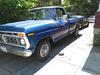
Hey all, first post here. I recently purchased a 1978 F-350 with the 351m or 400m (not sure yet). I live in Williamson County and they'd like this thing to pass emissions. Does anyone have experience with this? I know it's using too much fuel, but had to get the test done just to legally drive it, and failed miserably in the HC category. I can't find much engine specific info on this topic, but if I've missed something feel free to redirect me.
Oh that's a nice truck. I had a 1980 from new with that same engine. Initially it was exempt here in Cali, then they changed the rules on me. It's got to be close to bog stock to pass. Advanced timing and increased compression will cause the HC to fail. Is it a stock cam?
Can you get it tested just to find out how far off it is? That will help.
I have had some experience. In 1993 I bought a '79 CJ7 with an AMC 360 in it. I was stationed in New York and needed it to pass their stringent emissions standards. I had no idea how to do it, but had a good friend that did know, and we got it done. Knowing more now, I could probably easily get your engine to pass Tennessee standards, but my fix isn't cheap. First, the engine internals have to be good. If the rings are worn, valves are leaking, etc., it ain't gonna work. But assuming you have a good engine, put a new catalytic converter on it. Install a factory type muffler. Install a Air/Fuel Ratio gauge. Cut the belt on the smog pump. Install a Edelbrock Performer intake manifold. Install an Edelbrock AVS2 650 cfm carburetor, preferably a 1905 which has manual choke. Yeah, you'll see a lot of comments on carburetor choices, but this is the one I'm best at tuning. I prefer manual choke always, but for testing purposes it's just a little insurance to make sure an electric choke doesn't screw up and cause it to run rich during testing. Install new spark plugs. New rotor and cap. New plug wires. New air filter. New PCV valve and hose.
Now you need to be able to tune it, or have someone that knows how. This is a very simplified explanation. Using 91 or 93 octane non-ethanol fuel, set your total timing as high as you can get it without detonating Under a Load. It's probably gonna be 34-38 degrees advanced. Using the A/FR gauge and a vacuum gauge, tune your carburetor to the leanest you can get it without detonating. After you pass testing, it'd be a good idea to richen up the carburetor tune a bit, and retard the timing a couple degrees. Once you're satisfied with timing and carburetor tuning, pull the plugs and clean or replace them before you go for testing. Make sure your air filter is clean. Before pulling into the bay for inspection, do some moderately aggressive driving to heat up the catalytic converter.
If you have to get this thing tested every year, you should make a record of everything you did to tune it for testing & retune it for driving.
Can you get it tested just to find out how far off it is? That will help.
I have had some experience. In 1993 I bought a '79 CJ7 with an AMC 360 in it. I was stationed in New York and needed it to pass their stringent emissions standards. I had no idea how to do it, but had a good friend that did know, and we got it done. Knowing more now, I could probably easily get your engine to pass Tennessee standards, but my fix isn't cheap. First, the engine internals have to be good. If the rings are worn, valves are leaking, etc., it ain't gonna work. But assuming you have a good engine, put a new catalytic converter on it. Install a factory type muffler. Install a Air/Fuel Ratio gauge. Cut the belt on the smog pump. Install a Edelbrock Performer intake manifold. Install an Edelbrock AVS2 650 cfm carburetor, preferably a 1905 which has manual choke. Yeah, you'll see a lot of comments on carburetor choices, but this is the one I'm best at tuning. I prefer manual choke always, but for testing purposes it's just a little insurance to make sure an electric choke doesn't screw up and cause it to run rich during testing. Install new spark plugs. New rotor and cap. New plug wires. New air filter. New PCV valve and hose.
Now you need to be able to tune it, or have someone that knows how. This is a very simplified explanation. Using 91 or 93 octane non-ethanol fuel, set your total timing as high as you can get it without detonating Under a Load. It's probably gonna be 34-38 degrees advanced. Using the A/FR gauge and a vacuum gauge, tune your carburetor to the leanest you can get it without detonating. After you pass testing, it'd be a good idea to richen up the carburetor tune a bit, and retard the timing a couple degrees. Once you're satisfied with timing and carburetor tuning, pull the plugs and clean or replace them before you go for testing. Make sure your air filter is clean. Before pulling into the bay for inspection, do some moderately aggressive driving to heat up the catalytic converter.
If you have to get this thing tested every year, you should make a record of everything you did to tune it for testing & retune it for driving.
650 CFM is way to much carb for a stock 400. These engines came from the factory with 2150 Motorcraft carbs that were 350CFM. The 78 F350 was a Non-Catalyst Heavy duty motor. They were low compression engines with retarded cam timing and EGR. I don't know about Tenn, but a Performer 400 intake won't pas visual here in Cali. One more thing without EGR it will fail NOX.
650 CFM is way to much carb for a stock 400. These engines came from the factory with 2150 Motorcraft carbs that were 350CFM. The 78 F350 was a Non-Catalyst Heavy duty motor. They were low compression engines with retarded cam timing and EGR. I don't know about Tenn, but a Performer 400 intake won't pas visual here in Cali. One more thing without EGR it will fail NOX.
Please. I've been running 650 & 700 cfm carburetors on 400's, 351M's, 350 & 383 sbc's, and AMC 304's for several years now. You probably don't know this, but the air flow rating on a carburetor is for wide open throttle with all four throttle blades open. So for normal driving, a 650 cfm four barrel carburetor is only drawing max 325 cfm. Less than the 2150.
Oh that's a nice truck. I had a 1980 from new with that same engine. Initially it was exempt here in Cali, then they changed the rules on me. It's got to be close to bog stock to pass. Advanced timing and increased compression will cause the HC to fail. Is it a stock cam?
Originally Posted by ranger140892
Can you get it tested just to find out how far off it is? That will help.
But assuming you have a good engine, put a new catalytic converter on it.
If you have to get this thing tested every year, you should make a record of everything you did to tune it for testing & retune it for driving.
So for an update with more info, TN testing is a tamper inspection on the tail pipe/ muffler/ cats, and an exhaust test. I failed in the CO category with 9% and 4% is the limit. I failed in the HC category with 2800 ppm and 400 is the limit. The F350's did not have stock catalytic converters on them in '78, and I really don't want to add them. The carb was recently replaced by the previous owner and it's a 4 barrel Edlebrock,
I don't know for sure that it's stock, but it's not far from it if the internals have been modified. I do have to pass this every year, so I'll definitely be keeping track of what I do.
I would back up a bit. Basically you will need to perform a thorough Tune-Up. It's a lot more than just replacing ignition parts, though it will likely need that. A Ford shop manual will be your friend here.
Getting everything back on the beam with the factory specs in the shop manual is how this will work. Voltages, temperatures (thermostat for example) fuel pressure, idle mixture adjustments, jetting ... ignition timing etc etc. This stuff has to be measured and verified. Aftermarket parts look the same as factory approved parts, but there really are differences, and those differences are sometimes really difficult to find when troubleshooting.
The first thing you probably want to do is a cylinder compression test, by the book.
Warm up the engine some, remove all the spark plugs, prop open the throttle, use a fresh charged good battery and record the highest psi reading for each cylinder. If you read the shop manuals, Chiltons, MoToRs, etc, all of them start with the compression test.
The reason is because if the cylinder bores or piston rings are worn badly, or exhaust valves are burnt, then it is a waste of time and money to do a tune up. Find out what it is you have to work with. You're "probably" OK, but ... then again maybe not....
It will never pass smog if the engine needs an overhaul. See where I'm goin' with that?
Please. I've been running 650 & 700 cfm carburetors on 400's, 351M's, 350 & 383 sbc's, and AMC 304's for several years now. You probably don't know this, but the air flow rating on a carburetor is for wide open throttle with all four throttle blades open. So for normal driving, a 650 cfm four barrel carburetor is only drawing max 325 cfm. Less than the 2150.
Now you insult me. What did I say? 650 CFM is way more airflow than a stock 400 motor can use. It would be a waste of money for an engine you are trying to get to pass emissions. Been there done that over the last 40 yrs. My current truck is running a 78 351m that passes emissions easily here in Cali. 2150 motorcraft, working EGR, 10 deg timing, and smog pump. My truck even has the factory cat. The F350 didn't have a factory cat. If you change cam timing and compression it will never pass emissions. Been there done that.
So for an update with more info, TN testing is a tamper inspection on the tail pipe/ muffler/ cats, and an exhaust test. I failed in the CO category with 9% and 4% is the limit. I failed in the HC category with 2800 ppm and 400 is the limit. The F350's did not have stock catalytic converters on them in '78, and I really don't want to add them. The carb was recently replaced by the previous owner and it's a 4 barrel Edlebrock,
I don't know for sure that it's stock, but it's not far from it if the internals have been modified. I do have to pass this every year, so I'll definitely be keeping track of what I do.
Also, will I even have a smog pump on the F350?
That carb is too much, jets and all. If you want to use that carb after you pass smog get the Edlebrock Performer 400EGR. It has a removable 2bbl adapter so can reinstall your big holley. Get a Motorcraft 2150 knock off on eBay for less than 100 bucks new.
Now you insult me. What did I say? 650 CFM is way more airflow than a stock 400 motor can use. It would be a waste of money for an engine you are trying to get to pass emissions. Been there done that over the last 40 yrs. My current truck is running a 78 351m that passes emissions easily here in Cali. 2150 motorcraft, working EGR, 10 deg timing, and smog pump. My truck even has the factory cat. The F350 didn't have a factory cat. If you change cam timing and compression it will never pass emissions. Been there done that.
Bluovl, nobody here has insulted you. I put out information on my experience, as requested by the OP, and you put out information. That's what we're here for.
You mentioned EGR earlier. I do remember that we had it hooked up during testing, then blocked it off with a homemade plate and a couple of gaskets after I got the decal. I wish we could have tested it both ways, to see how much difference it made. The friend that helped me has passed, and I don't remember every little thing we did after testing. I do remember removing the catalytic converter, ran dual exhaust, blocked EGR, added a four hole 1" spacer, and had to jet up the Edelbrock 650 quite a bit to get A/FR down to acceptable level. His shop was fairly well equipped for the time, and had an exhaust pipe probe for A/FR reading. The whole thing was such a pain, that I sent the title to my dad and he registered it in my home state, so I wouldn't have to worry about NY's tough testing every year.
Hey all, first post here. I recently purchased a 1978 F-350 with the 351m or 400m (not sure yet). I live in Williamson County and they'd like this thing to pass emissions. Does anyone have experience with this? I know it's using too much fuel, but had to get the test done just to legally drive it, and failed miserably in the HC category. I can't find much engine specific info on this topic, but if I've missed something feel free to redirect me.
Regardless can you post the test. We need to know where you are failing is it at idle or at high engine RPM''s these limits are not that hard to meet with an engine that is in any sort of reasonable condition.
If it is at idle, the idle air just needs adjusting. If it is at higher RPM the carb is over fueling on the main circuit. Regardless you are running rich and that explains the high HC (hydrocarbons) and CO Carbon Monixde.
So let us know where you failed.
Also, change your oil before the test. If gas get into the oil and the engine burns some oil, that will drive up your HCs - or is it CO? My state stopped testing just as I was starting to really learn about that stuff...
Things that will drive up the HC would be an over rich carb. Could be jetting, wrong float height, other internal issues. In CA you'd have to go back to the 2bbl, you might be able to make the 4bbl work in TN if they don't see it as tampering. Ditto the manifold if you have a 4bbl manifold. If you have a 2bbl manifold with an adapter I would pull all that and go back to the OEM 2bbl setup.
PCV--if the valve is worn or stuck, you could be getting oil. Oil will drive the HC up, and probably CO. But because you don't have cats I'm not sure what CO standard they are working with. Focus on HC for now.
Clean oil--even if the PCV is working right, if you have fuel contaminated oil due to short trips or overfueling, you will get those fuel fumes sucked back into the engine which will raise HC.
Oil burner--If you are leaving a blue cloud due to rings, you stand little chance of cleaning up HC. Worn valve seals usually make the more visible smoke on start up and under deceleration, when vacuum is the highest. Usually the test doesn't run on deceleration afaik and from what I've seen when getting cars smogged here.
And yes, see post 11 about posting the initial results.
Bluovl, nobody here has insulted you. I put out information on my experience, as requested by the OP, and you put out information. That's what we're here for.
You mentioned EGR earlier. I do remember that we had it hooked up during testing, then blocked it off with a homemade plate and a couple of gaskets after I got the decal. I wish we could have tested it both ways, to see how much difference it made. The friend that helped me has passed, and I don't remember every little thing we did after testing. I do remember removing the catalytic converter, ran dual exhaust, blocked EGR, added a four hole 1" spacer, and had to jet up the Edelbrock 650 quite a bit to get A/FR down to acceptable level. His shop was fairly well equipped for the time, and had an exhaust pipe probe for A/FR reading. The whole thing was such a pain, that I sent the title to my dad and he registered it in my home state, so I wouldn't have to worry about NY's tough testing every year.
It's all good, just jousting in a fun way. It's so bad here in Cali, particularly with the Fords. I would love to install EFI on my Bronco. I know it would pass tail pipe emissions, but they make you pass visual also.