



351M timing question
Thread Starter
|
Tuned


Joined: Aug 2014
Posts: 292
Likes: 6
From: Florida
351M timing question
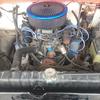
I have a 79 351M. My buddy is coming over Thursday with his timing light. I've tried searching the site for the info but failed. Does anybody know what the timing should be set at? I have NOT done the straight up fix with the timing chain yet, does that affect what we set it at? Thanks in advance for any help.
-Matt
-Matt

Postmaster
Joined: Mar 2011
Posts: 2,698
Likes: 7
From: Taxachusetts
If there's a tag on yer valve cover that's still readable, it'll say what the timing should be set at. If memory serves (ya, right!) it'll be around 8* BTDC.
Actually, I would set it around 10* - 12* BTDC.
Actually, I would set it around 10* - 12* BTDC.

Senior User
Joined: Feb 2016
Posts: 247
Likes: 2
You may also want to check the total advance timing and what RPMs that it tops out at. Total advance is set timing + mechanical timing with the vacuum advance plugged and not in use. I set my ignition for less total timing than 36*. (my 400M). And since I tow mostly the advance peeks at 3200 RPM.
I then later set my vacuum advance to stay at o* advance until 5Hg so it will NOT engage in additional advance when hoovering at 3200 or greater RPM.
Timing Tips for Ford Distributors is one good source of information.
I then later set my vacuum advance to stay at o* advance until 5Hg so it will NOT engage in additional advance when hoovering at 3200 or greater RPM.
Timing Tips for Ford Distributors is one good source of information.
Senior User
Joined: Feb 2016
Posts: 247
Likes: 2
Filthy Beast, your memory is still doing you well. Please see attached pic. That’s my 77 400ci. I wander how many different set timing labels there are on the 400/351.
I tried to set my timing at 12* and it put the total at 40*, because the mechanical advance of my new dura-spark was set on the 14L. This condition put my engine in harms way at 2800 RPMs.
I ended up changing my mechanical limit.
I tried to set my timing at 12* and it put the total at 40*, because the mechanical advance of my new dura-spark was set on the 14L. This condition put my engine in harms way at 2800 RPMs.
I ended up changing my mechanical limit.

Moderator & parts slinger


Joined: Feb 2007
Posts: 50,150
Likes: 5,785
From: S/W Missouri, Polk county

All the above and use a welding pencil or come chalk to fill in the timing grooves/marks on the harmonic balancer.
Wire brush it (the area with the marks) clean 1st, then chalk it (the complete area where the marks are) and then wipe off the high part leaving the grooves chalk filled.
Also you can use a Ford blue paint pen to highlight the edge of the timing bar.
Make sure you are careful with the placement of the timing light wires and the light itself. You know the fan will be turning and you can get tunnel vision when chasing the "time".
Pics are web examples of the marks and NOT a 351M, just and example for ya. Plug the mech... OOPS I meant vacuum advance with a wooden golf T.
Wire brush it (the area with the marks) clean 1st, then chalk it (the complete area where the marks are) and then wipe off the high part leaving the grooves chalk filled.
Also you can use a Ford blue paint pen to highlight the edge of the timing bar.
Make sure you are careful with the placement of the timing light wires and the light itself. You know the fan will be turning and you can get tunnel vision when chasing the "time".
Pics are web examples of the marks and NOT a 351M, just and example for ya. Plug the mech... OOPS I meant vacuum advance with a wooden golf T.
Last edited by 77&79F250; Jan 25, 2018 at 08:11 PM. Reason: Brain dead moment

Post Fiend
Joined: Jun 2003
Posts: 8,209
Likes: 12
From: Black Hills of SD
You may also want to check the total advance timing and what RPMs that it tops out at. Total advance is set timing + mechanical timing with the vacuum advance plugged and not in use. I set my ignition for less total timing than 36*. (my 400M). And since I tow mostly the advance peeks at 3200 RPM.
I then later set my vacuum advance to stay at o* advance until 5Hg so it will NOT engage in additional advance when hoovering at 3200 or greater RPM.
Timing Tips for Ford Distributors is one good source of information.
I then later set my vacuum advance to stay at o* advance until 5Hg so it will NOT engage in additional advance when hoovering at 3200 or greater RPM.
Timing Tips for Ford Distributors is one good source of information.
Trending Topics

Senior User
Joined: Nov 2003
Posts: 416
Likes: 0
From: Southern Oregon
Exactly. I always set timing with a vacuum pump to test the advance and a good dial back light so I can see where I'm all in at. It also shows the condition and operation of the vacuum and mechanical advance. Factory spec is just a suggestion on these old trucks since gas is now formulated a lot different than it was then. If you don't have a good dialback light to check all in, do it the hill billy way and just keep advancing until you get a slight ping under wfo and back it up a couple degrees at a time until no ping. You now have all the timing the fuel you are running will tolerate.
FTE Stories
Ford Trucks for Ford Truck Enthusiasts

AEV FXL Super Duty - the Super Duty Raptor Ford Doesn't Make
Brett Foote
Lobo Vs Lobo: Proof the F-150 Lobo Should Be Even Lower!
Michael S. Palmer
Ford's 2001 Explorer Sportsman Concept Looks For a New Home
Verdad Gallardo
10 Best Ford Truck Engines We Miss the Most!
Joe Kucinski
2026 Shelby F-150 Off-Road: Better Than a Raptor R?
Brett Foote
2027 Super Duty Carhartt Package First Look: 12 Things You NEED to Know!
Michael S. Palmer
10 Most Surprising 2026 Ford Truck Features!
Joe Kucinski
Top 10 Ford Trucks Coming to Mecum Indy 2026
Brett Foote
5 Best / 5 Worst Ford Truck Wheels of All Time
Joe Kucinski
Post Fiend
Joined: Jun 2003
Posts: 8,209
Likes: 12
From: Black Hills of SD
The real early ones just had a **** on the back with timing increments. Mine is a digital Snap-on and it has an advance and retard button with an LED readout, So you can set the base timing on the light readout with the advance/retard buttons, say 10 degress and just adjust the distributor so the light is reading on the zero line on the balancer. When you are running the engine up to check vacuum advance ( Like with a hand held vacuum pump on the dist) always keep the zero mark lined up as you advance or retard with the buttons and the LED now reads the amount of advance. Same thing with Check the "all in", just keep bumping the button to see it lined up on the zero mark and the readout gives the the amount of advance. Mine also has a tach so I can read rpms. So basically you will always shoot for the zero mark on the balancer with the advance and retard buttons and read the timing on the LED readout. Make sense?
Senior User
Joined: Nov 2003
Posts: 416
Likes: 0
From: Southern Oregon
The real early ones just had a **** on the back with timing increments. Mine is a digital Snap-on and it has an advance and retard button with an LED readout, So you can set the base timing on the light readout with the advance/retard buttons, say 10 degress and just adjust the distributor so the light is reading on the zero line on the balancer. When you are running the engine up to check vacuum advance ( Like with a hand held vacuum pump on the dist) always keep the zero mark lined up as you advance or retard with the buttons and the LED now reads the amount of advance. Same thing with Check the "all in", just keep bumping the button to see it lined up on the zero mark and the readout gives the the amount of advance. Mine also has a tach so I can read rpms. So basically you will always shoot for the zero mark on the balancer with the advance and retard buttons and read the timing on the LED readout. Make sense?
Post Fiend
Joined: Jun 2003
Posts: 8,209
Likes: 12
From: Black Hills of SD
Pretty simple, same principle, keep the light lined up on zero on the balancer by turning the **** and read the amount of advance on the **** dial scale. You will kind of need a separate tach to be accurate but can do it by ear. By testing with the vacuum hose on or off the distributor and doing simple math, you can determine how much of the advance is mechanical and how much is vacuum
Thread Starter
|
Tuned
Joined: Aug 2014
Posts: 292
Likes: 6
From: Florida
All the above and use a welding pencil or come chalk to fill in the timing grooves/marks on the harmonic balancer.
Wire brush it (the area with the marks) clean 1st, then chalk it (the complete area where the marks are) and then wipe off the high part leaving the grooves chalk filled.
Also you can use a Ford blue paint pen to highlight the edge of the timing bar.
Make sure you are careful with the placement of the timing light wires and the light itself. You know the fan will be turning and you can get tunnel vision when chasing the "time".
Pics are web examples of the marks and NOT a 351M, just and example for ya. Plug the mech advance with a wooden golf T.
Wire brush it (the area with the marks) clean 1st, then chalk it (the complete area where the marks are) and then wipe off the high part leaving the grooves chalk filled.
Also you can use a Ford blue paint pen to highlight the edge of the timing bar.
Make sure you are careful with the placement of the timing light wires and the light itself. You know the fan will be turning and you can get tunnel vision when chasing the "time".
Pics are web examples of the marks and NOT a 351M, just and example for ya. Plug the mech advance with a wooden golf T.
where exactly am I putting the golf tee? Thanks everybody for the advice. Just goes to prove why I love this page and community.

Lead Driver


Joined: Jul 2017
Posts: 9,580
Likes: 1,162
From: San Jose, CA
The golf tees are usually used to plug the vacuum line to the distributor advance can that you typically disconnect when timing an engine.
And in case you were not aware, the inductive clamp goes around the #1 cylinder's spark plug wire. Which, in the case of most Fords (assume it still holds true?) is the first cylinder on your left as you're facing the engine.
In other words, "front, right" cylinder.
Then the other two leads are obvious, with Red clamp to the battery positive and Black clamp to the battery negative. Figure you knew those things, but wanted to put them out there anyway.
A timing light is also a good way to diagnose a mis-fire in a cylinder. You simply move the inductive clamp from one plug wire to the next and watch the light. A steady bright light indicates a good even spark is at least flowing through the wire. Won't always indicate a problem at the plug, but it's a good start.
A weak and inconsistent flashing light indicates something wrong with that part of the ignition.
Have fun with your new tool!
Paul
And in case you were not aware, the inductive clamp goes around the #1 cylinder's spark plug wire. Which, in the case of most Fords (assume it still holds true?) is the first cylinder on your left as you're facing the engine.
In other words, "front, right" cylinder.
Then the other two leads are obvious, with Red clamp to the battery positive and Black clamp to the battery negative. Figure you knew those things, but wanted to put them out there anyway.
A timing light is also a good way to diagnose a mis-fire in a cylinder. You simply move the inductive clamp from one plug wire to the next and watch the light. A steady bright light indicates a good even spark is at least flowing through the wire. Won't always indicate a problem at the plug, but it's a good start.
A weak and inconsistent flashing light indicates something wrong with that part of the ignition.
Have fun with your new tool!
Paul