


4.9L MPG

Thread Starter
|
Lead Driver
Joined: Jul 2009
Posts: 6,477
Likes: 19
From: Sheffield, AL
4.9L MPG
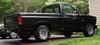
1986 F150 with 4.9L [160,150 miles], SROD transmission, 3.08 rear gears and 215/75 X 15 tires.
Duraspark conversion with Carter YF donated by a 1970 F350; stock exhaust with both original catalytic converters, but no EGR. The distributor has been recurved.
I drive about 13 miles one way to work with many stop signs and traffic lights for the 1st 5 miles and then farmland @ 45 mph for remaining 8 miles. On the weekend, I drive short trips in town, running errands, etc. I drive very conservatively, rarely exceeding 2200 RPMs and normally in the 1500-1700 RPM range [no lugging].
7/31/12 16.24 hot w/AC
8/8/12 17.16 hot w/AC
8/17/12 17.39 hot w/AC
8/24/12 17.58 hot w/AC
9/1/12 15.91 hot w/AC
9/10/12 17.70 hot w/AC
9/17/12 17.73 hot w/AC
10/2/12 17.33 warm
10/9/12 16.10 cool
10/16/12 16.97 cool
10/20/12 18.56 cool + hwy
For the last tank, the wife and I took a little drive to a town ~ 45 miles away. Most of the drive is highway @ 55-65 mph. I averaged the two tanks preceeding this one [due to the change in weather] and came up with 16.53 mpg. I had driven approximately 135 miles on this tank before getting on the highway and I filled up @ 231.4 miles, so I drove about 96 highway miles. I did a little math and figured that the truck was getting about 21.5 mpg in order to pull up the average of 16.53 to 18.56 in 96 miles.
Each Winter, I notice the same drop of approximately 1 to 1.5 mpg. This probably can be contributed to by the choke staying on longer, the engine being less efficient at lower temperatures and maybe the gasoline being blended differently for cold weather.
Duraspark conversion with Carter YF donated by a 1970 F350; stock exhaust with both original catalytic converters, but no EGR. The distributor has been recurved.
I drive about 13 miles one way to work with many stop signs and traffic lights for the 1st 5 miles and then farmland @ 45 mph for remaining 8 miles. On the weekend, I drive short trips in town, running errands, etc. I drive very conservatively, rarely exceeding 2200 RPMs and normally in the 1500-1700 RPM range [no lugging].
7/31/12 16.24 hot w/AC
8/8/12 17.16 hot w/AC
8/17/12 17.39 hot w/AC
8/24/12 17.58 hot w/AC
9/1/12 15.91 hot w/AC
9/10/12 17.70 hot w/AC
9/17/12 17.73 hot w/AC
10/2/12 17.33 warm
10/9/12 16.10 cool
10/16/12 16.97 cool
10/20/12 18.56 cool + hwy
For the last tank, the wife and I took a little drive to a town ~ 45 miles away. Most of the drive is highway @ 55-65 mph. I averaged the two tanks preceeding this one [due to the change in weather] and came up with 16.53 mpg. I had driven approximately 135 miles on this tank before getting on the highway and I filled up @ 231.4 miles, so I drove about 96 highway miles. I did a little math and figured that the truck was getting about 21.5 mpg in order to pull up the average of 16.53 to 18.56 in 96 miles.
Each Winter, I notice the same drop of approximately 1 to 1.5 mpg. This probably can be contributed to by the choke staying on longer, the engine being less efficient at lower temperatures and maybe the gasoline being blended differently for cold weather.
Cargo Master
Joined: Apr 2010
Posts: 2,936
Likes: 9
From: Acworth, GA
We just took our truck to the North Georgia Mountains for the first week in October. Some highway, some town, mostly hilly country roads. We averaged 17mpg for the whole week. My truck is mostly stock.

Post Fiend
Joined: Jul 2004
Posts: 8,786
Likes: 28
From: Northern California
Most factory odometers are off a little bit as well.
Mine is off .05 less every mile, which is pretty accurate for a mechanical speedo/odometer.
In 700 miles though that can add up... 700 x .05 is 35 miles.
If you go 700 miles and burn 38 gallons = 18.42
If you go 735 miles and burn 38 gallons = 19.34
etc... I would find out how much your odomenter is off, either slow or fast and factor it into your mileage estimates to be more accurate.
Mine is off .05 less every mile, which is pretty accurate for a mechanical speedo/odometer.
In 700 miles though that can add up... 700 x .05 is 35 miles.
If you go 700 miles and burn 38 gallons = 18.42
If you go 735 miles and burn 38 gallons = 19.34
etc... I would find out how much your odomenter is off, either slow or fast and factor it into your mileage estimates to be more accurate.
Thread Starter
|
Lead Driver
Joined: Jul 2009
Posts: 6,477
Likes: 19
From: Sheffield, AL
Your mileage reflects the engine being worked. All of my listed mileage figures are with an empty bed [most of the time].

FTE Legend


Joined: Jul 2010
Posts: 32,875
Likes: 48
From: Northeast, OK
1986 - That's the most accurate report I've seen on MPG. Keeping track of it that way is really the only way to do it, and I applaud you. That's great MPG as well. Beats the goodie out of the 15 I turned in yesterday, but then Dad's truck might have the edge for towing, hauling, or maybe even off-roading.
As for the odometer, I'm pretty fortunate there. I tested it yesterday over a 20.000 mile stretch of highway and it was off .07 mile, which is an error of .35%. In other words, over my run of 260 miles yesterday it was off .9 miles.
As for the odometer, I'm pretty fortunate there. I tested it yesterday over a 20.000 mile stretch of highway and it was off .07 mile, which is an error of .35%. In other words, over my run of 260 miles yesterday it was off .9 miles.
Thread Starter
|
Lead Driver
Joined: Jul 2009
Posts: 6,477
Likes: 19
From: Sheffield, AL
1986 - That's the most accurate report I've seen on MPG. Keeping track of it that way is really the only way to do it, and I applaud you. That's great MPG as well. Beats the goodie out of the 15 I turned in yesterday, but then Dad's truck might have the edge for towing, hauling, or maybe even off-roading.
As for the odometer, I'm pretty fortunate there. I tested it yesterday over a 20.000 mile stretch of highway and it was off .07 mile, which is an error of .35%. In other words, over my run of 260 miles yesterday it was off .9 miles.
As for the odometer, I'm pretty fortunate there. I tested it yesterday over a 20.000 mile stretch of highway and it was off .07 mile, which is an error of .35%. In other words, over my run of 260 miles yesterday it was off .9 miles.
Now, for a little bit of nonsensical reasoning, brought on by your mentioning having the edge on towing, hauling, off-roading, etc.
I am going to make assumptions regarding the horsepower made by three sized engines and come up with a "fun factor"...
300 = 120 hp divided by ~17 mpg = 7.1 hp per MPG.
351 = 250 hp divided by ~15 mpg = 16.7 hp per MPG.
460 = 300 hp divided by ~10 mpg = 30.0 hp per MPG.
I will present this as being a value for "fun factor".
So, in conclusion, I agree with you that you DO have the edge and it makes me feel that my truck's "superior" mpg number is perhaps due to a smaller and less efficient engine which supplies an output closer to the actual power required to get to and maintain a desired road speed such as 55-65 mph, where as the more powerful [and FUN] engines have more power than is needed???
Trending Topics
Post Fiend
Joined: Jul 2004
Posts: 8,786
Likes: 28
From: Northern California
In 260 miles, mine is off by 13 miles. It would read 247.
Originally Posted by 1986F150six
Now, for a little bit of nonsensical reasoning, brought on by your mentioning having the edge on towing, hauling, off-roading, etc.
I am going to make assumptions regarding the horsepower made by three sized engines and come up with a "fun factor"...
300 = 120 hp divided by ~17 mpg = 7.1 hp per MPG.
351 = 250 hp divided by ~15 mpg = 16.7 hp per MPG.
460 = 300 hp divided by ~10 mpg = 30.0 hp per MPG.
I will present this as being a value for "fun factor".

What would really be interesting is torque figures divided by mpg. That would be more accurate (more or less). I would like to see the 302 figured in for fun as well.

FTE Stories
Ford Trucks for Ford Truck Enthusiasts

AEV FXL Super Duty - the Super Duty Raptor Ford Doesn't Make
Brett Foote
Lobo Vs Lobo: Proof the F-150 Lobo Should Be Even Lower!
Michael S. Palmer
Ford's 2001 Explorer Sportsman Concept Looks For a New Home
Verdad Gallardo
10 Best Ford Truck Engines We Miss the Most!
Joe Kucinski
2026 Shelby F-150 Off-Road: Better Than a Raptor R?
Brett Foote
2027 Super Duty Carhartt Package First Look: 12 Things You NEED to Know!
Michael S. Palmer
10 Most Surprising 2026 Ford Truck Features!
Joe Kucinski
Top 10 Ford Trucks Coming to Mecum Indy 2026
Brett Foote
5 Best / 5 Worst Ford Truck Wheels of All Time
Joe Kucinski
FTE Legend
Joined: Jul 2010
Posts: 32,875
Likes: 48
From: Northeast, OK
Thanks, Gary! I appreciated hearing your thoughts. For those that don't know, Gary has, I believe, a 351 in his "Dad's Truck".
Now, for a little bit of nonsensical reasoning, brought on by your mentioning having the edge on towing, hauling, off-roading, etc.
I am going to make assumptions regarding the horsepower made by three sized engines and come up with a "fun factor"...
300 = 120 hp divided by ~17 mpg = 7.1 hp per MPG.
351 = 250 hp divided by ~15 mpg = 16.7 hp per MPG.
460 = 300 hp divided by ~10 mpg = 30.0 hp per MPG.
I will present this as being a value for "fun factor".
So, in conclusion, I agree with you that you DO have the edge and it makes me feel that my truck's "superior" mpg number is perhaps due to a smaller and less efficient engine which supplies an output closer to the actual power required to get to and maintain a desired road speed such as 55-65 mph, where as the more powerful [and FUN] engines have more power than is needed???
Now, for a little bit of nonsensical reasoning, brought on by your mentioning having the edge on towing, hauling, off-roading, etc.
I am going to make assumptions regarding the horsepower made by three sized engines and come up with a "fun factor"...
300 = 120 hp divided by ~17 mpg = 7.1 hp per MPG.
351 = 250 hp divided by ~15 mpg = 16.7 hp per MPG.
460 = 300 hp divided by ~10 mpg = 30.0 hp per MPG.
I will present this as being a value for "fun factor".
So, in conclusion, I agree with you that you DO have the edge and it makes me feel that my truck's "superior" mpg number is perhaps due to a smaller and less efficient engine which supplies an output closer to the actual power required to get to and maintain a desired road speed such as 55-65 mph, where as the more powerful [and FUN] engines have more power than is needed???
And yes, I not only have a 351 in Dad's truck, I have the dreaded 351M in Dad's truck. And, I like it a bunch! In fact, I actually have two of them - one stock and sitting on the side, and one mod and in the truck. The stocker got 10 MPG and had no personality, no "fun". The one in the truck is fun and decent on mileage, with the most current reading being 15 MPG on a highway run.
Hmmm, you would have to reason that you were getting maximum horsepower when you were getting maximum fuel MPG wouldn't you? Which wouldnt be accurate, but you basicly said as much...
What would really be interesting is torque figures divided by mpg. That would be more accurate (more or less). I would like to see the 302 figured in for fun as well.
What would really be interesting is torque figures divided by mpg. That would be more accurate (more or less). I would like to see the 302 figured in for fun as well.

Fleet Mechanic

Joined: Jul 2011
Posts: 1,916
Likes: 4
So are you saying that once I'm finished with my 300, I can expect close to 15 miles per gallon?


Fleet Mechanic
Joined: Jun 2010
Posts: 1,251
Likes: 8
From: North Carolina

1986 F150 with 4.9L [160,150 miles], SROD transmission, 3.08 rear gears and 215/75 X 15 tires.
Each Winter, I notice the same drop of approximately 1 to 1.5 mpg. This probably can be contributed to by the choke staying on longer, the engine being less efficient at lower temperatures and maybe the gasoline being blended differently for cold weather.
Each Winter, I notice the same drop of approximately 1 to 1.5 mpg. This probably can be contributed to by the choke staying on longer, the engine being less efficient at lower temperatures and maybe the gasoline being blended differently for cold weather.
I think technically you have the TOD transmission (Top Overdrive), the SROD (Single Rail Overdrive) was the name for older transmissions that have external shifting rails on the side. I could be wrong in my interpretation, but my 1986 factory manual calls our tranny the TOD (reverse is to the right and down, not left and up like the earlier "Tremec" SROD).
Thread Starter
|
Lead Driver
Joined: Jul 2009
Posts: 6,477
Likes: 19
From: Sheffield, AL
The difference in summer and winter might also be due to the seasonal "blends" of gasoline changing. But I don't fully understand what changes they make.
I think technically you have the TOD transmission (Top Overdrive), the SROD (Single Rail Overdrive) was the name for older transmissions that have external shifting rails on the side. I could be wrong in my interpretation, but my 1986 factory manual calls our tranny the TOD (reverse is to the right and down, not left and up like the earlier "Tremec" SROD).
I think technically you have the TOD transmission (Top Overdrive), the SROD (Single Rail Overdrive) was the name for older transmissions that have external shifting rails on the side. I could be wrong in my interpretation, but my 1986 factory manual calls our tranny the TOD (reverse is to the right and down, not left and up like the earlier "Tremec" SROD).
Fleet Mechanic
Joined: Jun 2010
Posts: 1,251
Likes: 8
From: North Carolina
No problem, it is a common one. Took me a long time to realize the correct name myself. If you have ever driven one of the earlier "Clark" or "Tremec" SROD's, Reverse is kind of strange to shift into (left, up). Kind of like towards you and up is Reverse on a 3-on-the-tree, maybe weird only until one gets used to it.
Very good gas mileage by the way, as good as can be expected. Mine gets about the same, although I haven't carefully determined that the right way like you have.
Very good gas mileage by the way, as good as can be expected. Mine gets about the same, although I haven't carefully determined that the right way like you have.
FTE Legend
Joined: Jul 2010
Posts: 32,875
Likes: 48
From: Northeast, OK
In the winter the oil companies go to a more volatile blend of gasoline, meaning one that will evaporate more quickly. That's because it is harder for the fuel systems to turn the gas into a vapor in the winter, meaning it is harder to get an engine started as they run on vaporized fuel and not liquid fuel.
Or, another way to look at it is that our emissions of vaporized fuel would be much larger if they didn't go to a harder to vaporize fuel in the summers. Many states have set limits for the volatility of fuel that can marketed at different points in the year.
Or, another way to look at it is that our emissions of vaporized fuel would be much larger if they didn't go to a harder to vaporize fuel in the summers. Many states have set limits for the volatility of fuel that can marketed at different points in the year.

Freshman User
Joined: May 2010
Posts: 49
Likes: 0
From: Globe/Miami, Arizona
first off I know this will get a lot of BS calls. but when I'm tooling around town, I get about 22MPG in my '86 W/4.9. on the highway I get roughly 27 MPG. My poor truck is too high geared. it's an '86, F150, 4X4, T-18, NP208 W/ 3.08 Gears on 235/85R16's I don't know how far my odometer is off, so I have to use my GPS.