




Steering column compatibility

FTE Community Team


Joined: Nov 2001
Posts: 1,853
Likes: 260
From: Oak Harbor, Washington

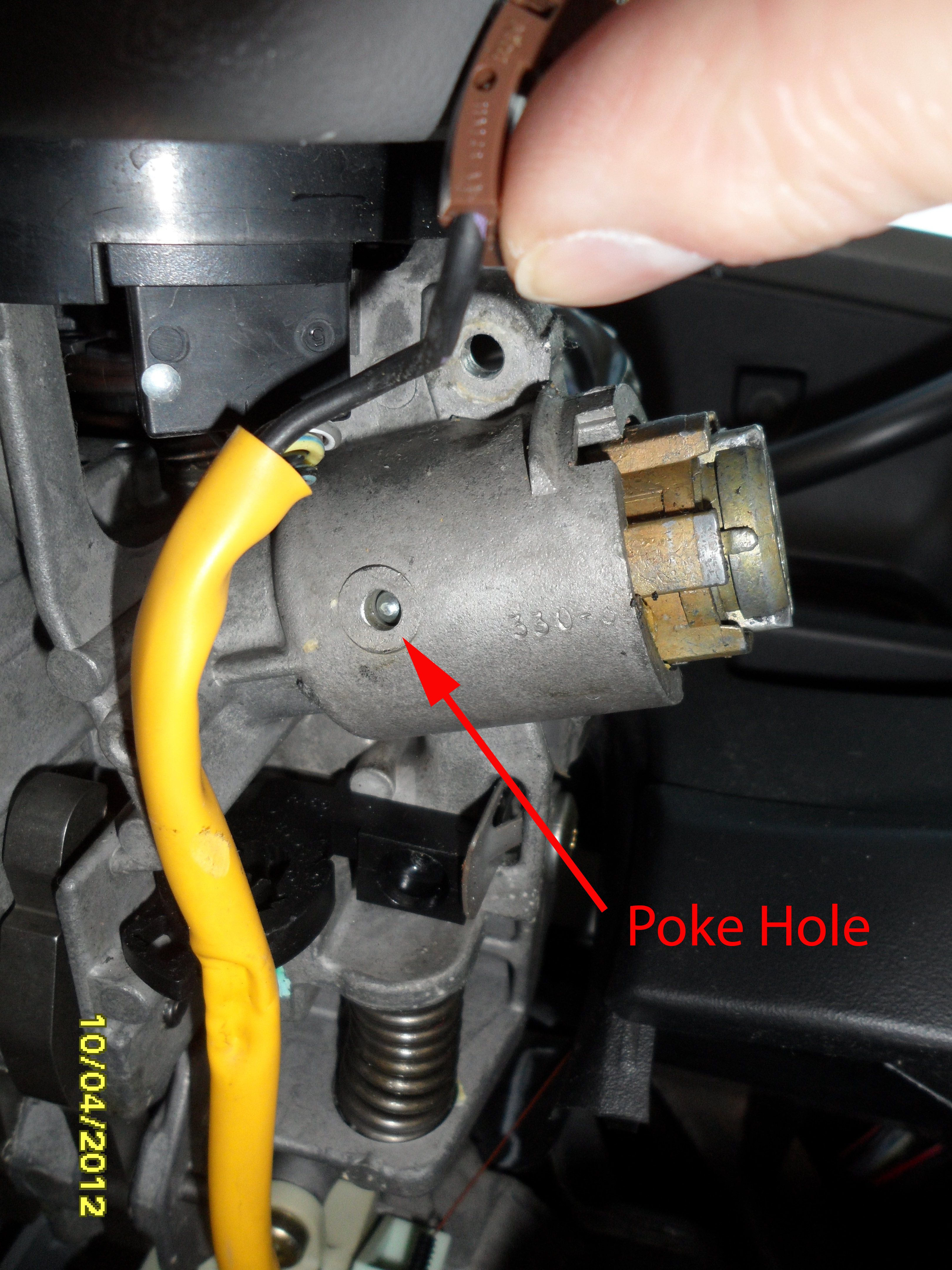
I didn't write that post to be a tutorial; that was just some info I stole quickly from this post about the weird shield on my 1997, which I could steal fast before breakfast and out the door to work. I don't have a good "installed" pic of the key minder contact & wire.
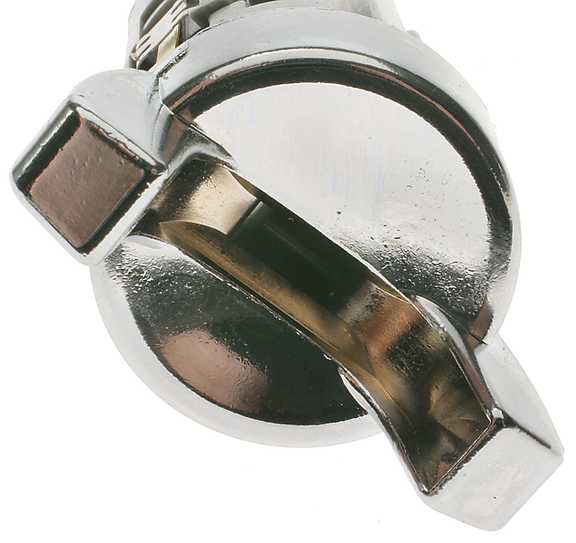
Yours has a rectangular end with no tit on one side, and the black plastic ears in that pic are the very latest style used on Aeros; yours are chromed pot metal instead of plastic. Here's some pics of your early, 10-cut ignition lock cylinder (courtesy NAPA; their part No. ECH KS6053):



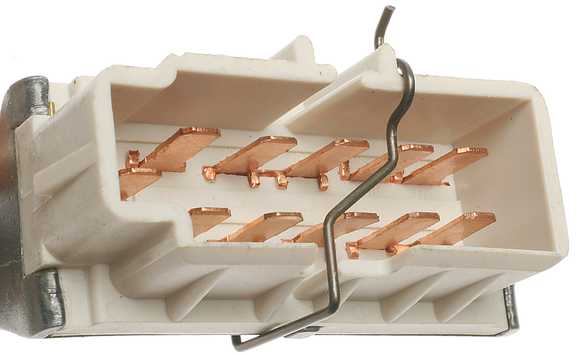
I think I've got a pic of the connector for the switch, probably tangentially. Gawd knows, I've surely had enough Ford ignition switch connectors off -- I used to install ignition interlock devices for DUIs.
Hmmm. Thinking about it, I may not have any pic for the pre-91 column. I'll look around.
It's on the left side of the column, and about halfway down IIRC. You'll have to remove the knee trim panel to access it.
FTE Community Team
Joined: Nov 2001
Posts: 1,853
Likes: 260
From: Oak Harbor, Washington
FTE Community Team
Joined: Nov 2001
Posts: 1,853
Likes: 260
From: Oak Harbor, Washington
I'm sorry, I do not. I have a couple of the
(one at home, one at work) and I just grab the socket from the set, I don't usually look at the number.
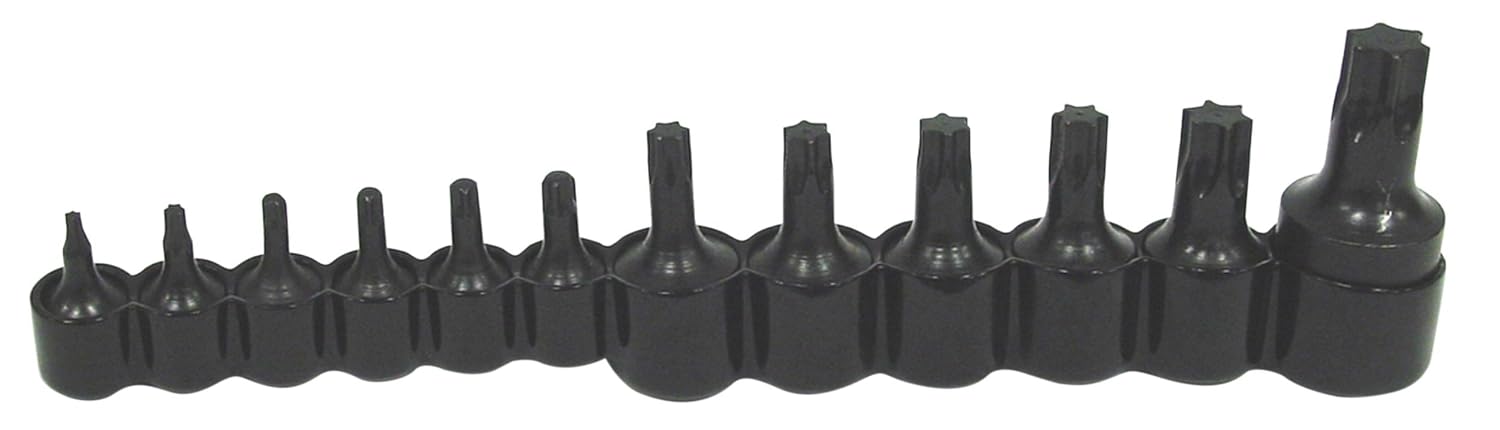
Most Ford stuff falls into T10 (headlights), T15 & T20, then a sprinkling of T30/T35/T40. Having the set is helpful, and it's under $20 for the set. You do break them every so often, but I've had pretty good luck with the Lisle sets.
For the small stuff (T20 and under) I use one of instead. The security version is handy everywhere, but on the Aero specifically, I use them for the MAF. These sets are now generic and the non-security version can be found at hardware stores these days, for under $10. The security version shown below is sometimes harder to find retail.
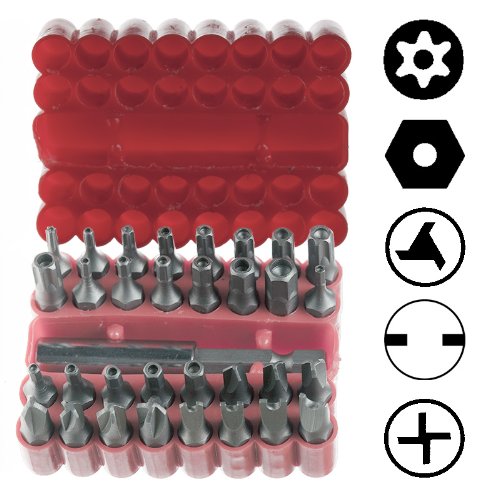
Most Ford stuff falls into T10 (headlights), T15 & T20, then a sprinkling of T30/T35/T40. Having the set is helpful, and it's under $20 for the set. You do break them every so often, but I've had pretty good luck with the Lisle sets.
For the small stuff (T20 and under) I use one of instead. The security version is handy everywhere, but on the Aero specifically, I use them for the MAF. These sets are now generic and the non-security version can be found at hardware stores these days, for under $10. The security version shown below is sometimes harder to find retail.

Lead Driver

Joined: Sep 2003
Posts: 7,015
Likes: 208
From: SoCal

Great information Al; thanks for sharing your professional knowledge.
Harbor Freight has kits of security bits like those you showed, and more, for low prices. I got a second set that contained really small bits, as I needed a t-5 to open up one of my laptops.
Back to keys: When I bought my 1990 Aerostar, I did not get the original keys, just duplicates, and I don't know how many generations (even though the van was only 4 years old at the time). The first time I tried to copy the keys took a couple of attempts with a standard key machine that you see at the local hardware store. Now, the key is loose enough that sometimes I can remove it from the cylinder while in the run position. But recent attempts to copy the key have failed to produce a working key.
When I worked for Ford some 30+ years ago, a guy on the assembly line could look at the teeth on the key and guess at the number of each landing, and used a hand cutter to cut the exact key I needed. Do lock smiths still do things like this, or do they have to take apart a cylinder to look at the tumblers?
My keys did not come with any of those metal tabs that had the key code on them, so they can't be remade that way either.
Harbor Freight has kits of security bits like those you showed, and more, for low prices. I got a second set that contained really small bits, as I needed a t-5 to open up one of my laptops.
Back to keys: When I bought my 1990 Aerostar, I did not get the original keys, just duplicates, and I don't know how many generations (even though the van was only 4 years old at the time). The first time I tried to copy the keys took a couple of attempts with a standard key machine that you see at the local hardware store. Now, the key is loose enough that sometimes I can remove it from the cylinder while in the run position. But recent attempts to copy the key have failed to produce a working key.
When I worked for Ford some 30+ years ago, a guy on the assembly line could look at the teeth on the key and guess at the number of each landing, and used a hand cutter to cut the exact key I needed. Do lock smiths still do things like this, or do they have to take apart a cylinder to look at the tumblers?
My keys did not come with any of those metal tabs that had the key code on them, so they can't be remade that way either.

Laughing Gas

Joined: Nov 2005
Posts: 835
Likes: 0
yes ditto Al, Im almost there...
Ok, got a new switch, I see it all in there now how it mounts, etc.. I think it will be the switch, since the old one sort of fell apart in my hand, and all that is left there is the metal housing for the whole unit (noted by comparing the new to the pieces I had in my hand lol - all that is ONE unit)
So, new problem - the heads of the bolts/screws are right up against that plastic guard... all that opens is the bottom "flap"...
do I have to pull the wheel to take the plastic piece off? - If I could just move it like 3 inches, I could get a socket in there...
I really don't want to have to pull the wheel - my old gal is starting to tease me a bit here, seeing the end of the rainbow, but not easy road to get there...
Any thoughts on access? I really didn't want to drill holes into the plastic... since I'm sure I can't get one of these anymore new on a 25 year old van lol
Thanks to all, (and esp Al)
Ok, got a new switch, I see it all in there now how it mounts, etc.. I think it will be the switch, since the old one sort of fell apart in my hand, and all that is left there is the metal housing for the whole unit (noted by comparing the new to the pieces I had in my hand lol - all that is ONE unit)
So, new problem - the heads of the bolts/screws are right up against that plastic guard... all that opens is the bottom "flap"...
do I have to pull the wheel to take the plastic piece off? - If I could just move it like 3 inches, I could get a socket in there...
I really don't want to have to pull the wheel - my old gal is starting to tease me a bit here, seeing the end of the rainbow, but not easy road to get there...
Any thoughts on access? I really didn't want to drill holes into the plastic... since I'm sure I can't get one of these anymore new on a 25 year old van lol
Thanks to all, (and esp Al)

Posting Guru
Joined: Jul 2004
Posts: 2,416
Likes: 1
From: Mitchell, SD
When I worked for Ford some 30+ years ago, a guy on the assembly line could look at the teeth on the key and guess at the number of each landing, and used a hand cutter to cut the exact key I needed. Do lock smiths still do things like this, or do they have to take apart a cylinder to look at the tumblers?
My keys did not come with any of those metal tabs that had the key code on them, so they can't be remade that way either.
My keys did not come with any of those metal tabs that had the key code on them, so they can't be remade that way either.
I am not sure about lock smiths, be we have a gauge tool at work that you hold up to the key and it will tell you what cut each one has from 1-5. and you take the hand cutter and set each position to that cut. Knowing that the original key is worn down, I would step up each one 1 spot.
Worth a shot to stop by your local Ford parts room and see if they still have that tools and the knowledge.
FTE Stories
Ford Trucks for Ford Truck Enthusiasts

3 Best / 3 Worst Parts of Modern Ford Ownership
Brett Foote
10 Amazing Upgrades That Solve Common Ford Truck Owner Headaches
Pouria Savadkouei
Every 2026 Ford Engine Explained
Brett Foote
10 Ugly Ford Trucks That We Still Kinda Love
Joe Kucinski
10 Things Every Truck Owner NEEDS (2026 Edition)
Michael S. Palmer
Rezvani's Latest Post-Apocalyptic Monster Is a Ford F-150 Raptor Underneath
Verdad Gallardo
Top 10 Most Expensive Ford Trucks Ever Sold on Bring a Trailer
Joe Kucinski
2027 Ford Super Duty Buyer's Guide (Every Model, Engine, & Package)
Brett Foote
Top 10 Ford Truck Tragedies
Joe Kucinski
FTE Community Team
Joined: Nov 2001
Posts: 1,853
Likes: 260
From: Oak Harbor, Washington
As NightHawk said, there are "only" five depths for each cut, and ten positions. Yes, locksmiths do still "read" keys as you mention, though I have to say that a worn 10-cut key like yours is better "read" on an originating machine. What I mean is a machine that is normally used to cut a new key by translating the key code to a string of numbers that the indicate the depth for each position, something like (14534 43442) which would represent the depths of each cut (one to five) for positions one through ten.
Chuck up your old key in that machine, leave the power off, and crank the jaw to the first position, then crank the key toward the wheel until it just touches. Write down the closest depth from the indicator on the machine. Lather/rinse/repeat for the other cuts. The advantage of doing it this way is that the spacing is handled by the machine's setup: you don't have to guess which space you are trying to read the depth for. On a worn key, instead of discrete cuts, you have a continuous wave/slope between the cuts. You can guess pretty well on a five-cut key (most Fords before 1984.5) but on the 10-cut and 8-cut keys, it's just too easy to mistake position 5 for position 6 and so forth, because the positions are so close together.
Can a worn 10-cut key be read back to the depth string by eye? Sure. But I usually burn a couple of blanks trying to do it that way. If the key isn't too bad, I can use dial calipers across the double-sided cuts and get close enough to get it right on the 1st try, but if it's got a decade of wear . . . nah. Since I'm going to use an originating machine to cut you a new key anyway, I may as well use it to help decode the old key.
Now, if someone is using a nibbler or punch (what NightHawk is calling a hand cutter: a fairly inaccurate way of making a new key), you don't have that tool available to help decode. The slot gauge he refers to works great -- on brand-new keys, but again if you can't tell position four from six because of the wear, you're going to burn a lot of blanks guessing.
The last shop I worked for that did automotive locksmithing would charge about $35 to originate a key by decoding ($15 to cut by code). Other shops I've worked for had varying rates, but in no case should a reputable shop charge you more than $50. Most should be much less.
If your ignition cylinder is original, and since you have a working key, you might remove the cylinder from the column, wipe it down, and look for a four-digit code stamped on the outside of the cylinder. I don't think it'll be there, but it's worth looking. Could be four digits and a letter for Fords of that era.
If you take the key to a locksmith, it's best to drive the Aero to them, so they can try the key they make and re-cut it or cut another should it not work. Asking them to decode it from your worn key and not test it is asking for trouble; many won't warranty it that way. Take them the van, and they can cut ambiguous cuts high and read the impression if it won't turn. It's easy to fix that way, by re-cutting the same blank lower in the positions that leave an impression in the brass. That's what I do.
HTH
Chuck up your old key in that machine, leave the power off, and crank the jaw to the first position, then crank the key toward the wheel until it just touches. Write down the closest depth from the indicator on the machine. Lather/rinse/repeat for the other cuts. The advantage of doing it this way is that the spacing is handled by the machine's setup: you don't have to guess which space you are trying to read the depth for. On a worn key, instead of discrete cuts, you have a continuous wave/slope between the cuts. You can guess pretty well on a five-cut key (most Fords before 1984.5) but on the 10-cut and 8-cut keys, it's just too easy to mistake position 5 for position 6 and so forth, because the positions are so close together.
Can a worn 10-cut key be read back to the depth string by eye? Sure. But I usually burn a couple of blanks trying to do it that way. If the key isn't too bad, I can use dial calipers across the double-sided cuts and get close enough to get it right on the 1st try, but if it's got a decade of wear . . . nah. Since I'm going to use an originating machine to cut you a new key anyway, I may as well use it to help decode the old key.
Now, if someone is using a nibbler or punch (what NightHawk is calling a hand cutter: a fairly inaccurate way of making a new key), you don't have that tool available to help decode. The slot gauge he refers to works great -- on brand-new keys, but again if you can't tell position four from six because of the wear, you're going to burn a lot of blanks guessing.
The last shop I worked for that did automotive locksmithing would charge about $35 to originate a key by decoding ($15 to cut by code). Other shops I've worked for had varying rates, but in no case should a reputable shop charge you more than $50. Most should be much less.
If your ignition cylinder is original, and since you have a working key, you might remove the cylinder from the column, wipe it down, and look for a four-digit code stamped on the outside of the cylinder. I don't think it'll be there, but it's worth looking. Could be four digits and a letter for Fords of that era.
If you take the key to a locksmith, it's best to drive the Aero to them, so they can try the key they make and re-cut it or cut another should it not work. Asking them to decode it from your worn key and not test it is asking for trouble; many won't warranty it that way. Take them the van, and they can cut ambiguous cuts high and read the impression if it won't turn. It's easy to fix that way, by re-cutting the same blank lower in the positions that leave an impression in the brass. That's what I do.
HTH

New User
Joined: Jul 2012
Posts: 4
Likes: 0
Great information Al; thanks for sharing your professional knowledge.
Harbor Freight has kits of security bits like those you showed, and more, for low prices. I got a second set that contained really small bits, as I needed a t-5 to open up one of my laptops.
Back to keys: When I bought my 1990 Aerostar, I did not get the original keys, just duplicates, and I don't know how many generations (even though the van was only 4 years old at the time). The first time I tried to copy the keys took a couple of attempts with a standard key machine that you see at the local hardware store. Now, the key is loose enough that sometimes I can remove it from the cylinder while in the run position. But recent attempts to copy the key have failed to produce a working key.
When I worked for Ford some 30+ years ago, a guy on the assembly line could look at the teeth on the key and guess at the number of each landing, and used a hand cutter to cut the exact key I needed. Do lock smiths still do things like this, or do they have to take apart a cylinder to look at the tumblers?
My keys did not come with any of those metal tabs that had the key code on them, so they can't be remade that way either.
Harbor Freight has kits of security bits like those you showed, and more, for low prices. I got a second set that contained really small bits, as I needed a t-5 to open up one of my laptops.
Back to keys: When I bought my 1990 Aerostar, I did not get the original keys, just duplicates, and I don't know how many generations (even though the van was only 4 years old at the time). The first time I tried to copy the keys took a couple of attempts with a standard key machine that you see at the local hardware store. Now, the key is loose enough that sometimes I can remove it from the cylinder while in the run position. But recent attempts to copy the key have failed to produce a working key.
When I worked for Ford some 30+ years ago, a guy on the assembly line could look at the teeth on the key and guess at the number of each landing, and used a hand cutter to cut the exact key I needed. Do lock smiths still do things like this, or do they have to take apart a cylinder to look at the tumblers?
My keys did not come with any of those metal tabs that had the key code on them, so they can't be remade that way either.
If you take the passenger side door lock it has the orinal key code. thats assuming the ignition key also opens the doors. the older ones tha has the round key is not the same.
FTE Community Team
Joined: Nov 2001
Posts: 1,853
Likes: 260
From: Oak Harbor, Washington
That is not true of Fords of that era, IIRC. Mazda, Nissan, Subaru yes. Sometimes Honda. I've never seen a code on a Ford door lock though. I've had a number of them brought in to have a key made. Usually, my first question is, "Are you expecting the key that I make to fit this door lock, to fit the ignition?". If the answer is "Yes", I have to explain that while the key is 10-cut, the ignition uses cuts 1-6, the doors 5-10, so no one lock on the car will have enough information to recreate the entire range of cuts to operate all the locks. I can get within four cuts, but from then on it's guesswork. I have software that, given the known cuts from the disassembled lock, can print me a list of most-likely cuts to try based on the six I already know, using various rules-of-thumb about known complete 10-cuts codes, but it still involves burning several key blanks and a lot of recutting. And, of course, you have to have access to both locks at the same time, to try each attempt. IOW, it's usually a service call (field service) job, which automatically adds $50-100 to the job.
There are other methods of recreating a key that don't involve lock disassembling one or more locks, but the same problem exists: no one lock contains all the information needed to recreate the entire key.
It's not as easy as you might think.
There are other methods of recreating a key that don't involve lock disassembling one or more locks, but the same problem exists: no one lock contains all the information needed to recreate the entire key.
It's not as easy as you might think.

Thread
Thread Starter
Forum
Replies
Last Post
akamacgyver
Pre-Power Stroke Diesel (7.3L IDI & 6.9L)
14
Jul 30, 2017 06:13 PM
f100beatertruck
1980 - 1986 Bullnose F100, F150 & Larger F-Series Trucks
9
Feb 16, 2012 09:28 AM
Avanti
1983 - 2012 Ranger & B-Series
1
Jul 22, 2006 05:18 AM
wsutooldude
1980 - 1986 Bullnose F100, F150 & Larger F-Series Trucks
2
Dec 5, 2003 11:17 PM